
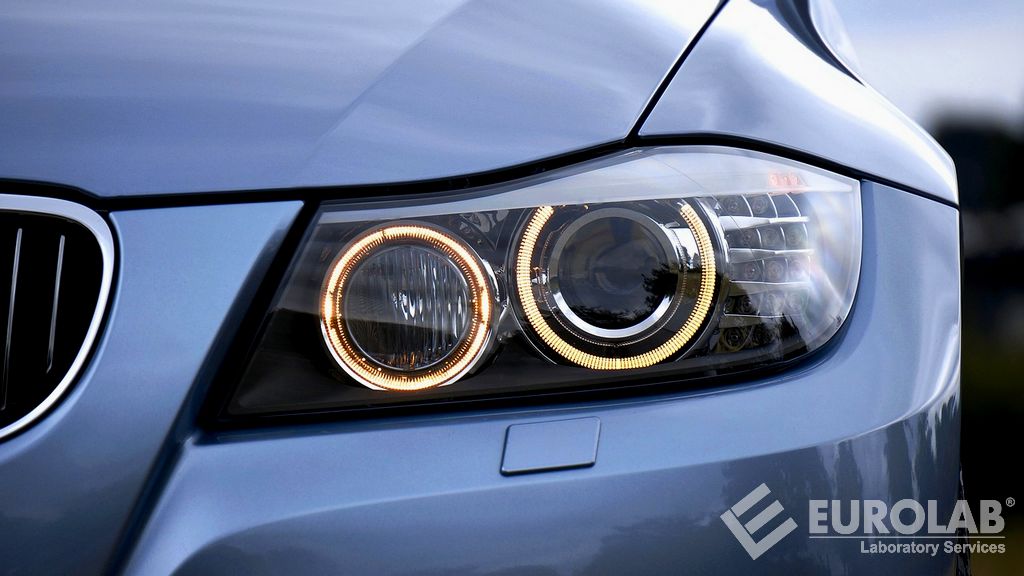
UN ECE R1 tests represent regulations for motor vehicle headlights that may contain lenses of glass or plastic material.
ECE regulations define cross-border technical regulations for establishing approval or uniform approval procedures for motor vehicles and motor vehicle parts. Automated commercial vehicles are already fully eligible for approval in this respect, but only through appropriate individual measures in the country in which they will be used. What is missing is a set of rules at the international ECE level.
Regulation 1 of the United Nations Economic Commission for Europe (UN/ECE) — Includes uniform provisions and associated tests for the approval of motor vehicle headlights emitting asymmetrical low beam and/or high beam and equipped with filament lamps of R2 and/or category. .
A headlight will be considered a standard headlight if:
The conformity tests in this regulation cover the verification of the photometric properties and the change in the vertical position of the cutting line under the influence of heat. The tests are generally carried out according to the methods specified in this Regulation.
Photometric performance stability tests must be carried out in a dry and still atmosphere at an ambient temperature of 23 °C ± 5 °C, with the complete headlight mounted on a base that represents the correct installation on the vehicle.
The change test in the vertical position of the cut line under the influence of heat consists in verifying that the vertical drift of the cut line under the influence of heat does not exceed a specified value for a working short lamp.
Within the scope of UN ECE R1 tests, the following tests are carried out in accordance with the relevant regulation;
For the test to be considered successful, the test results must meet the requirements of the regulation. If the test results do not meet the requirements, the tests should be repeated on another randomly selected headlamp sample.
To get an appointment, to get more detailed information or to request an evaluation, you can ask us to fill in our form and reach you.

