UN / ECE R7 Tests
UN ECE R7 tests cover a series of tests carried out in accordance with the regulation on front and rear position (side) lamps for vehicles of categories M, N, O and T, and end outline marker lamps for vehicles of categories M, N, O and T.
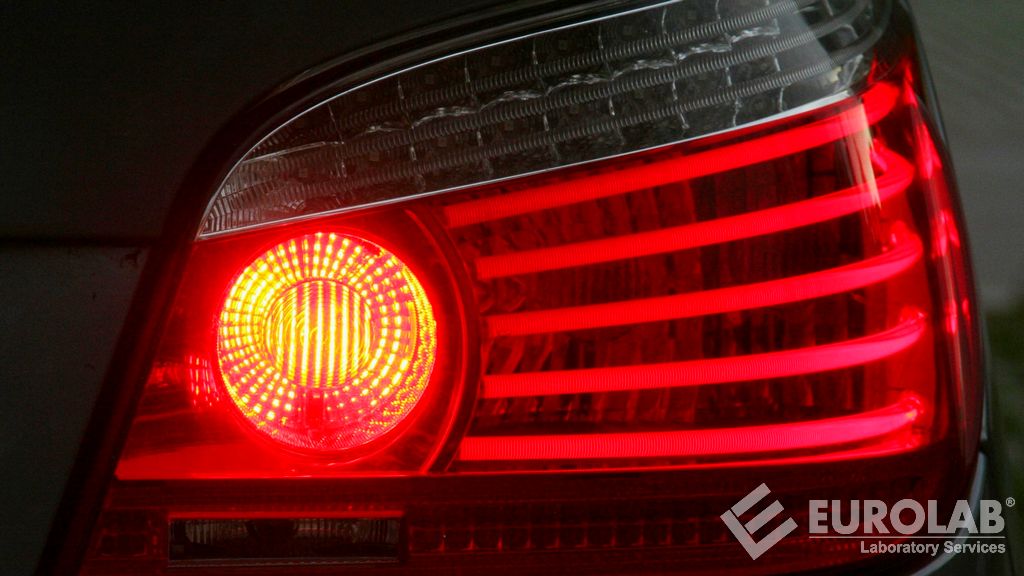
ECE regulations define cross-border technical regulations for establishing approval or uniform approval procedures for motor vehicles and motor vehicle parts. Automated commercial vehicles are already fully eligible for approval in this respect, but only through appropriate individual measures in the country in which they will be used. What is missing is a set of rules at the international ECE level.
Regulation No. 7 (UN/ECE) of the United Nations Economic Commission for Europe — Covers the uniform provisions regarding the approval of front and rear position lamps, stop lamps and end outline marker lamps for motor vehicles (excluding motorcycles) and the tests applied accordingly.
According to UN ECE R7 regulation;
- 'Front position (side) lamp' is the lamp used to indicate the presence and width of the vehicle when viewed from the front;
- 'Rear position (side) lamp' means the lamp used to indicate the presence and width of the vehicle when viewed from behind;
- 'Stop light' means the lamp used to indicate to other road users behind the vehicle that the driver has applied the service brake. Taillights can be activated by the application of a retarder or similar device;
- 'Finish line marker light' means a lamp fitted to the outermost edges of the vehicle and as close to the top as possible and intended to clearly indicate the overall width of the vehicle. In the case of certain power-driven vehicles and trailers, this lamp is intended to complement the position (side) lamps of the vehicle and draw special attention to its outline;
Test Procedure
All measurements will be made photometrically and colorimetrically:
- In the case of a lamp with a replaceable light source, it is supplied with the voltage necessary to produce the supply, by a colorless or colored standard filament lamp of the category prescribed for the device, unless provided by an electronic light source control device or variable intensity control.
- In the case of a lamp equipped with non-replaceable light sources (filament lamps and others), it is tried at 6,75 V, 13,5 V or 28,0 V, respectively.
- In the case of an electronic light source control device or a system using variable intensity control, the voltage declared by the manufacturer at the input terminals of the lamp, which is part of the lamp (4), or 6, if not specified, is set at 75 V, 13,5 V or 28,0 V, respectively.
- In the case of an electronic light source control device or a system that uses variable intensity control and is not part of the lamp, the voltage declared by the manufacturer will be applied to the input terminals of the lamp.
- However, in the case of light sources operated with variable intensity control to achieve variable light intensity, photometric measurements will be made according to the applicant's definition.
- The testing laboratory shall request from the manufacturer the light source control gear or variable intensity control necessary to provide the light source and applicable functions.
- The voltage to be applied to the lamp is specified in the communication form in Annex 2 of this Regulation.
- The boundaries of the visible surface in the direction of the reference axis of a light signal device must be determined.
- In the case of a category S3 or S4 stoplight intended to be installed inside the vehicle, a sample plate or sample plates (with different possibilities) as supplied must be placed at the front of the vehicle. The lamp will be tested at the geometric location(s) as defined in the application drawing(s).
For the test to be considered successful, the test results must meet the requirements of the regulation.