

UN ECE R152 tests cover a series of tests carried out in accordance with the relevant regulation for the evaluation of vehicles in the categories specified in the regulation in terms of Advanced Emergency Braking Systems (AEBS).
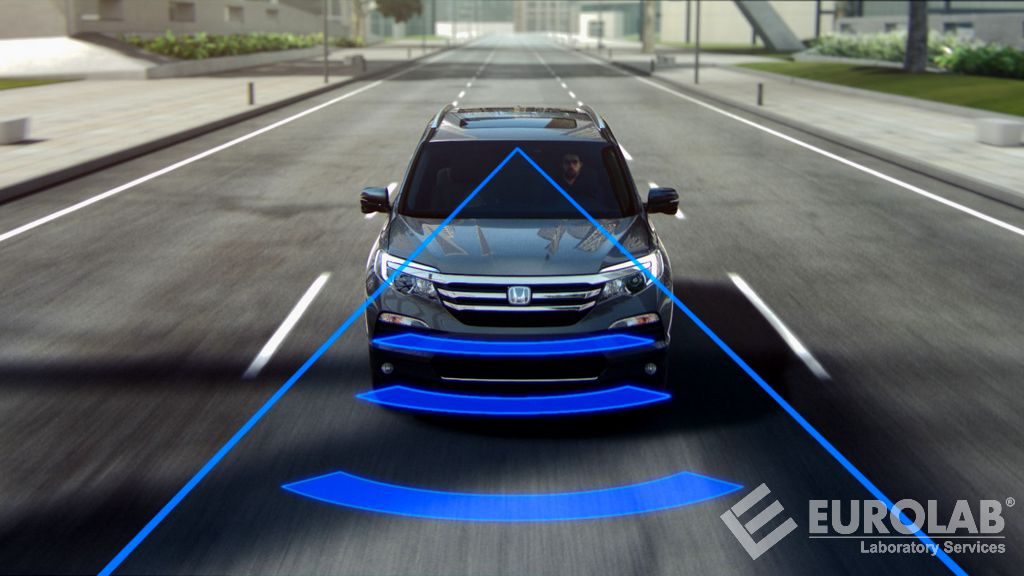
ECE regulations define cross-border technical regulations for establishing approval or uniform approval procedures for motor vehicles and motor vehicle parts. Automated commercial vehicles are already fully eligible for approval only through appropriate individual measures in the country in which they will be used. What is missing is a set of rules at the international ECE level.
Regulation (UN/ECE) No. 152 of the United Nations Economic Commission for Europe — covers the uniform provisions for the approval of motor vehicles and the tests applied accordingly with regard to the Advanced Emergency Braking System (AEBS) for M1 and N1 vehicles.
The purpose of this Regulation is to establish uniform provisions for Advanced Emergency Braking Systems (AEBS) fitted to motor vehicles of Categories M 1 and N 1 used primarily in urban driving conditions.
Advanced Emergency Braking System (AEBS) refers to a system that can automatically detect a potential forward collision and activate the vehicle braking system to slow the vehicle in order to avoid or mitigate a collision.
The system will automatically detect a possible frontal collision, give an appropriate warning to the driver, and if the driver does not react to the warning, it will activate the vehicle braking system to slow the vehicle down in order to avoid the collision or reduce its severity.
In the event of a malfunction in the system, the safe operation of the vehicle is not compromised. During any action taken by the system, the driver can at any time take control and override the system with a conscious movement, for example a steering wheel movement or the actuation of an accelerator pedal.
This Regulation cannot cover all traffic conditions and infrastructure features in the type approval process and acknowledges that the required performances cannot be achieved in all conditions (vehicle condition, road holding, weather conditions, rough road infrastructure and traffic scenarios etc. may affect system performances). Real-world conditions and features should not cause false warnings or false braking to such an extent that they encourage the driver to shut down the system.
Within the scope of the regulation, many mechanical, dynamic and environmental tests are carried out as well as measurements for the approval of the relevant equipment. For tests to be considered successful, test results must meet regulatory requirements.
To get an appointment, to get more detailed information or to request an evaluation, you can ask us to fill in our form and reach you.

