

UN ECE R95 tests cover a series of tests carried out in accordance with the relevant regulation to evaluate the vehicles in the categories specified in the regulation in terms of passenger safety in the event of a side collision.
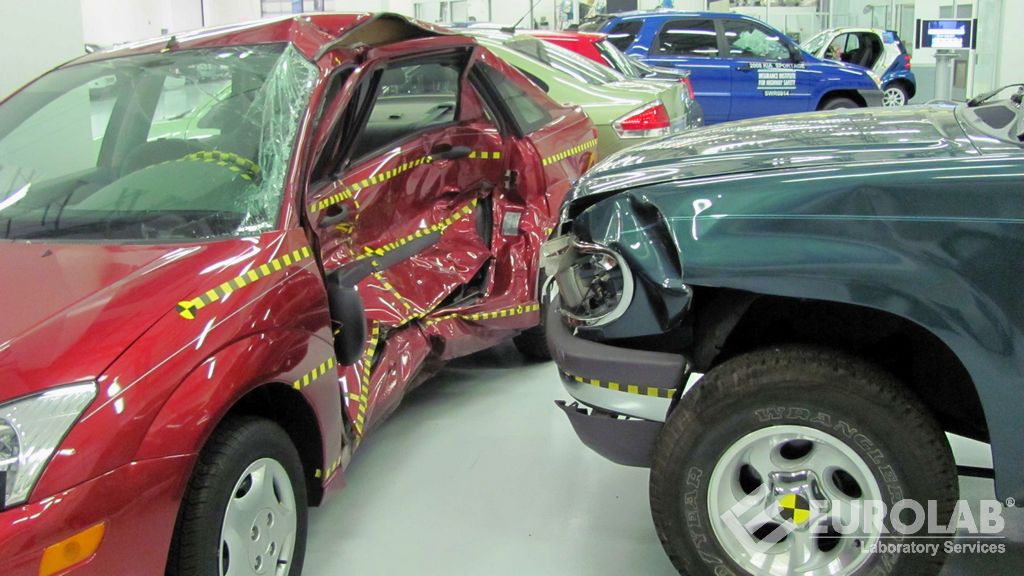
ECE regulations define cross-border technical regulations for establishing approval or uniform approval procedures for motor vehicles and motor vehicle parts. Automated commercial vehicles are already fully eligible for approval only through appropriate individual measures in the country in which they will be used. What is missing is a set of rules at the international ECE level.
United Nations Economic Commission for Europe (UNECE) Regulation No. 95 — Covers the uniform provisions regarding the approval of vehicles and the tests applied in connection with the protection of occupants in the event of a side collision.
This Regulation applies to the side impact behavior of the passenger compartment structure of vehicles in categories M 700 and N 1 where the 'R' point of the lowest seat is not more than 1 mm from the ground when the vehicle is stopped. Approval of a vehicle means the approval of a vehicle type with regard to the behavior of the passenger compartment structure in a side collision.
The passenger compartment is the living space of the occupants, bounded by the roof, floor, side walls, doors, outer windows and the front compartment and the plane of the rear compartment compartment or the plane of the rear seat backrest.
The application for approval of a vehicle type for occupant protection in the event of a side collision is made by the vehicle manufacturer or its duly accredited representative. If the asymmetrical side structures, if any, are not sufficiently different to affect performance in a side impact, the test shall be made on the driver's side. The manufacturer shall provide to the authority responsible for approval information on the compatibility of comparative performances with the driver's side when the test is carried out on that side. Different criteria may be required for vehicles equipped with electric powertrains.
Within the scope of the regulation, many mechanical, dynamic and environmental tests are carried out as well as measurements for the approval of the relevant equipment. For tests to be considered successful, test results must meet regulatory requirements.
To get an appointment, to get more detailed information or to request an evaluation, you can ask us to fill in our form and reach you.

