

UN ECE R73 tests cover a series of tests carried out in accordance with the relevant regulation for the evaluation of side protection equipment of vehicles (freight vehicles, trailers and semi-trailers) in categories N 2 , N 3 , O 3 and O 4 .
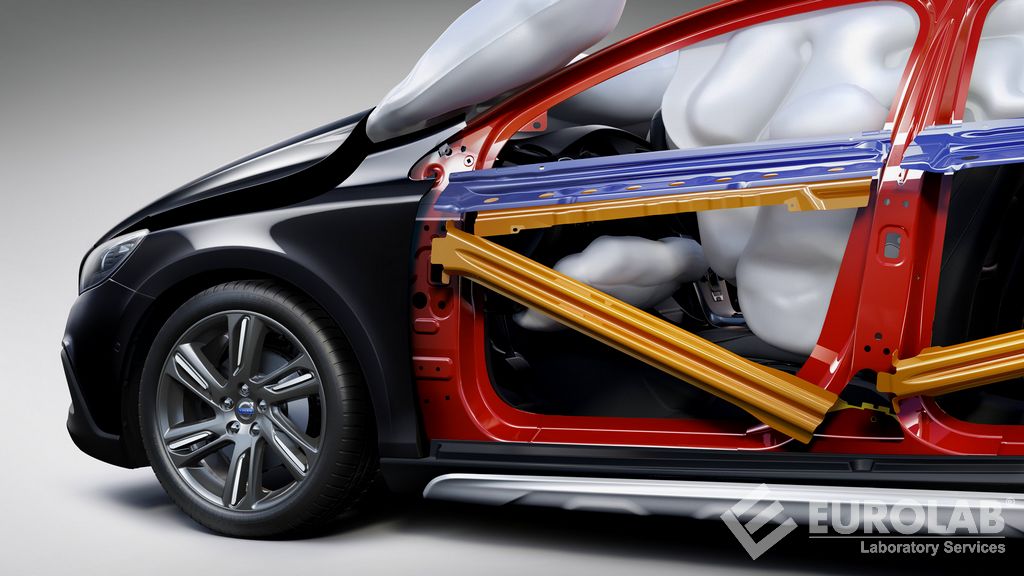
ECE regulations define cross-border technical regulations for establishing approval or uniform approval procedures for motor vehicles and motor vehicle parts. Automated commercial vehicles are already fully eligible for approval only through appropriate individual measures in the country in which they will be used. What is missing is a set of rules at the international ECE level.
Regulation 73 of the United Nations Economic Commission for Europe (UN/ECE) — It covers the uniform provisions regarding the approval of lateral protection of freight vehicles, trailers and semi-trailers and the tests applied accordingly.
Vehicles covered by this Regulation will be constructed and/or equipped to provide unprotected road users with effective protection against the risk of falling to the side of the vehicle and tripping over the wheels.
According to the regulation, 'Approval of a vehicle' means the approval of a complete vehicle type in relation to its lateral protection. 'Vehicle type' means a category of vehicle that does not differ in essential aspects such as the width of the rear axle, overall width, dimensions, shape and materials of the entire side of the vehicle.
Vehicles of categories N 2 , N 3 , O 3 and O 4 must be constructed and equipped in such a way as to provide, throughout their length, effective protection to unprotected road users against the risk of falling and being caught on the side of the vehicle.
The side protection device must not increase the overall width of the vehicle and the main part of its outer surface must not extend more than 120 mm from the outermost plane of the vehicle (maximum width). Its front end may be turned inwards to the extent permitted by law on certain vehicles. Its rear end must not extend more than 250 mm from the outermost edge of the rear tyres (excluding any bulge of the tyres close to the ground) by at least 30 mm from the rearmost edge.
For tests to be considered successful, test results must meet regulatory requirements.
To get an appointment, to get more detailed information or to request an evaluation, you can ask us to fill in our form and reach you.

