

UN ECE R79 tests cover a series of tests carried out in accordance with the relevant regulation to evaluate the steering systems of vehicles in terms of placement and performance.
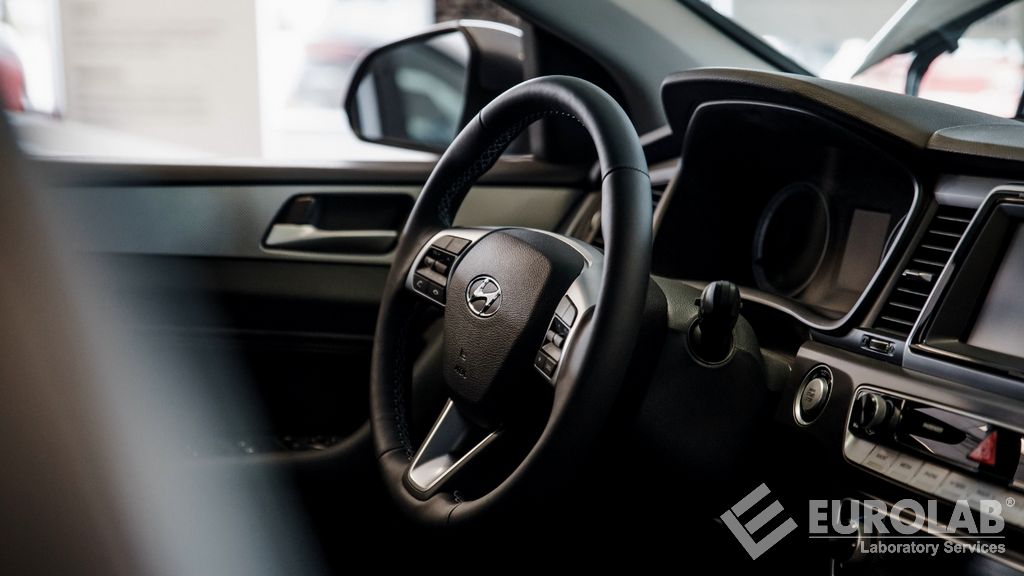
ECE regulations define cross-border technical regulations for establishing approval or uniform approval procedures for motor vehicles and motor vehicle parts. Automated commercial vehicles are already fully eligible for approval only through appropriate individual measures in the country in which they will be used. What is missing is a set of rules at the international ECE level.
Regulation (UN/ECE) No. 79 of the United Nations Economic Commission for Europe — It covers the uniform provisions regarding the approval of the steering gear of the vehicles and the tests applied accordingly.
This Regulation applies to the steering equipment of vehicles of category M, N and O. The purpose of the regulation is to establish uniform provisions for the layout and performance of steering systems fitted to road vehicles. Traditionally, the main requirement has been that the main steering system includes steering control, normally a positive mechanical link between the steering wheel and the road wheels, to determine the vehicle's path. The mechanical connection is not liable for failure if sufficiently dimensioned.
The advancing technology, the desire to improve passenger safety by eliminating the mechanical steering column, and the manufacturing advantages associated with easier transfer of steering control between left-hand and right-hand drive vehicles have led to a review of the traditional approach and the Regulation has now been amended to take account of new technologies. Accordingly, it will now be possible to have steering systems in which there is no positive mechanical link between the steering control and the road wheels.
The steering system must enable the vehicle to be driven easily and safely up to its maximum design speed or, in the case of a trailer, its technically permissible maximum speed. It must be possible to travel on a straight section of road without unusual steering correction by the driver and without unusual vibrations in the steering system at the vehicle's maximum design speed.
The test should be performed on a flat surface with good adhesion. During the test(s), the vehicle shall be loaded to its technically permitted maximum mass and to its technically permitted maximum load on the steered axle(s). On axles equipped with ASE, this test shall be repeated with the vehicle loaded to its technically maximum permissible mass and the axle equipped with ASE loaded to its maximum allowable mass. Before the test starts, the tire pressures must be within the dimensions specified in the regulation.
For tests to be considered successful, test results must meet regulatory requirements.
To get an appointment, to get more detailed information or to request an evaluation, you can ask us to fill in our form and reach you.

