

UN ECE R151 tests cover a series of tests performed in accordance with the relevant regulation for the evaluation of Blind Spot Information System (BSIS) equipment for the detection of cyclists in vehicles.
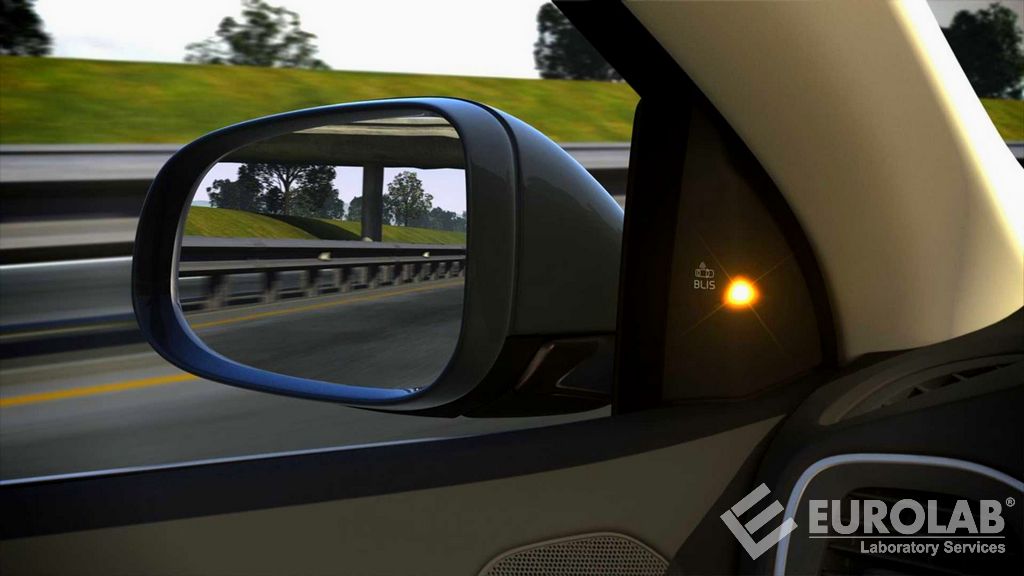
ECE regulations define cross-border technical regulations for establishing approval or uniform approval procedures for motor vehicles and motor vehicle parts. Automated commercial vehicles are already fully eligible for approval only through appropriate individual measures in the country in which they will be used. What is missing is a set of rules at the international ECE level.
Regulation No. 151 of the United Nations Economic Commission for Europe (UN/ECE) — Covers the uniform provisions regarding the approval of motor vehicles and the tests applied in connection with the Blind Spot Information System for the Detection of Bicycles.
Blind Spot Information System (BSIS) refers to a system that informs the driver of a possible collision with a nearby bicycle.
Turning maneuvers involving collisions between right-turning trucks and cyclists often occur at slower driving speeds or at a standstill, often with serious consequences for vulnerable road users (VRUs). In the past, the safety of the VRU has been enhanced by increasing the number of mirrors, equipping trucks with side underrun protection, and improving the truck driver's vision.
Since turning accidents still occur and driver assistance systems have been introduced in many vehicle segments, the necessity of using such assistance systems to prevent accidents between turning trucks and cyclists is clear. High-intensity alerts during a driving situation are only validated if the probability of an accident is high - otherwise vehicle drivers tend to ignore system alerts.
However, the (low threshold) information assistance system can be activated early enough as it helps rather than annoys the driver. It is assumed that it is possible to design a human-machine-interface for blind spot assistance systems so that it does not disturb drivers when the information is not needed, for example by selecting the position of a signal outside the primary focus area. It is convenient for drivers to be in an area that can be seen while looking straight ahead only when their gaze is slightly turned to the intended driving direction.
The UN Regulation therefore calls for early activation of an information signal if a bicycle enters a critical area on the passenger side of the vehicle, including when a counter-turn occurs when the heavy vehicle will initiate a turn towards the bicycle.
This Regulation applies to blind spot information systems for vehicles in categories N 2 (> 8 t maximum technically permissible mass) and N 3. Vehicles in categories N 2 ( ≤ 8 tonnes maximum technically permissible mass), M 2 and M 3 may be approved upon the manufacturer's request.
Within the scope of the regulation, many mechanical, dynamic and environmental tests are carried out as well as measurements for the approval of the relevant equipment. For tests to be considered successful, test results must meet regulatory requirements.
To get an appointment, to get more detailed information or to request an evaluation, you can ask us to fill in our form and reach you.

