

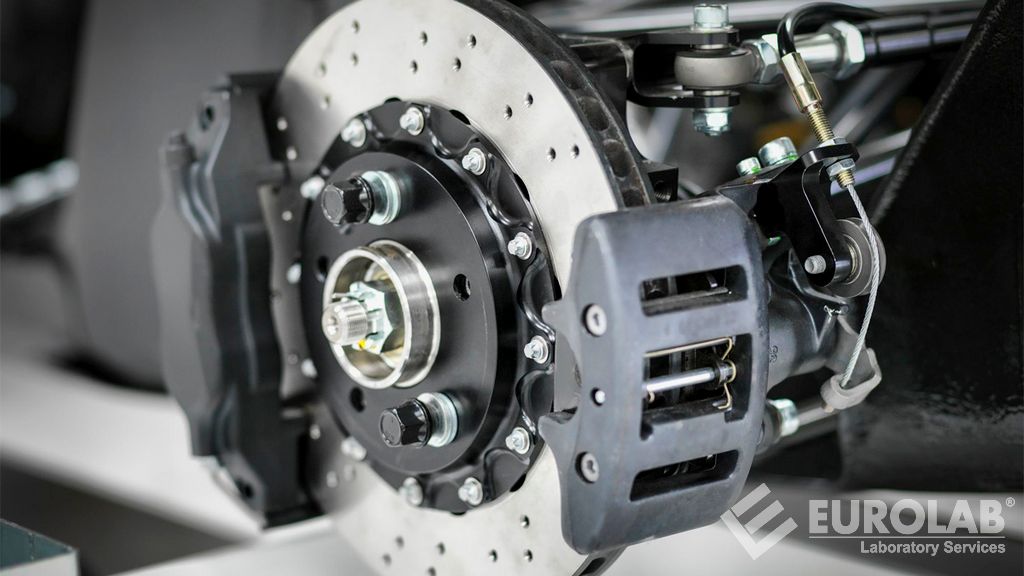
UN ECE R90 tests cover a series of tests carried out in accordance with the relevant regulation for the evaluation of brake lining equipment of vehicles in the categories specified in the regulation.
ECE regulations define cross-border technical regulations for establishing approval or uniform approval procedures for motor vehicles and motor vehicle parts. Automated commercial vehicles are already fully eligible for approval only through appropriate individual measures in the country in which they will be used. What is missing is a set of rules at the international ECE level.
Regulation No. 90 of the United Nations Economic Commission for Europe (UN/ECE) — Covers the uniform provisions regarding the approval of replacement brake lining assemblies and drum brake linings for powered vehicles and their trailers, and the tests performed accordingly.
By definition in the regulation, 'Brake pad assembly' means a component of a friction brake that is pressed against a drum or disc, respectively, to generate frictional force. A replacement brake pad assembly or a replacement drum brake pad, when replaced in place of the device or pad originally fitted to a vehicle, must be designed and constructed so that the braking efficiency of that vehicle is compatible with that of the approved vehicle type.
For performance requirements to be evaluated, at least one set of spare brake pad kits representing the pad type to be approved must meet the requirements set out in the regulation. At least one set of spare brake pads or spare drum brake pads representing the type of pad to be approved shall be fitted and tested on at least one vehicle or a brake representative of the type of vehicle for which approval is sought.
Replacement brake lining assemblies of the type for which approval is requested shall be tested for shear strength according to ISO 6312:1981 or ISO 6312:2001 Standard and compressibility according to ISO 6310:1981 or ISO 6310:2001 Standard. In addition, it will be tested for hardness according to ISO 2039-2:1987 Standard.
For tests to be considered successful, test results must meet regulatory requirements.
To get an appointment, to get more detailed information or to request an evaluation, you can ask us to fill in our form and reach you.

