

The standard “ASTM D8211-21 Standard test method for hot surface ignition temperature of gases on a flat surface” published by the American Society for Testing and Materials (ASTM) describes a test method for distinguishing between gases that will or will not ignite when they hit a hot surface when heated to a temperature of 2 degrees plus/minus 800 degrees or greater for a period of 5 minutes.
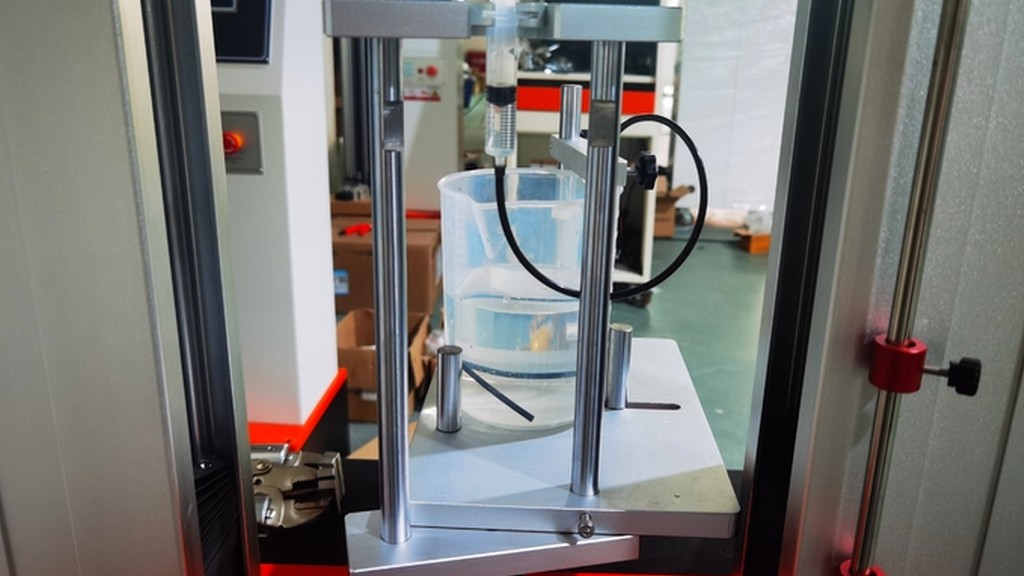
This test method is applicable to any non-pyrophoric substance that is a gas or liquefied gaseous gas at ambient temperature and pressure, in particular GHS category 1B gases.
This test method should be used subject to the limitations that a single fire hazard property, such as flash point, autoignition temperature or performance under the conditions of the present method, shall not be used to define or assess the fire hazard or fire risk of a material, product, assembly or system under actual fire conditions. Fire hazard properties measured under controlled laboratory conditions may still be used to accurately describe the response of materials, products, assemblies or systems under those controlled conditions. Properties measured under controlled laboratory conditions may be used as elements of a hazard or risk assessment only when such assessments take into account all factors relevant to the evolution of the fire hazard of a particular situation.
This standard is used to provide a quantitative measurement of the realistic surface ignition temperature of a gas or liquefied gas in a non-static environment.
For the purposes of this standard, the following terms and definitions apply:
During the test, 5 g of the substance is released from the spray nozzle onto a planchet heated to 800 degrees plus7minus 5 degrees, without external ventilation or fan operation. The environmental chamber containing the test equipment must be motionless, excluding the convection effect of the planchet. Ignitions are observed during the initial surface impact of the substance and for 2 minutes after the substance is released, in case of any ignition after impact.
The autoignition temperature of a gas mixture is the minimum temperature at which a gas mixture will ignite spontaneously without an external ignition source. Autoignition temperature is usually determined using small test vessels open to the atmosphere, where the gas is rapidly injected into the test vessel at atmospheric pressure and heated for a predetermined time, observing whether it ignites or not. Autoignition temperature is generally not directly applicable to real-world conditions. Therefore, a test is needed to determine whether a gas or liquefied gas will ignite when released onto a hot surface in a more free environment.
Among the numerous testing, measurement, analysis and evaluation studies that our organization has provided for businesses in various sectors, it also provides testing services defined in the "ASTM D8211-21 Standard Test Method for Hot Surface Ignition Temperature of Gases on Flat Surfaces" standard with its trained and expert staff and advanced technological equipment.
To get an appointment, to get more detailed information or to request an evaluation, you can ask us to fill in our form and reach you.

