

The "NFPA 1971 Protective Apparel for Structural and Close-Range Firefighting" standard, published by the National Fire Protection Association (NFPA), is among the consensus standards shaping fire safety practices worldwide. It defines minimum levels of protection against thermal, physical, environmental, and bloodborne pathogen hazards encountered during structural and close-range firefighting operations, thus protecting firefighting personnel.
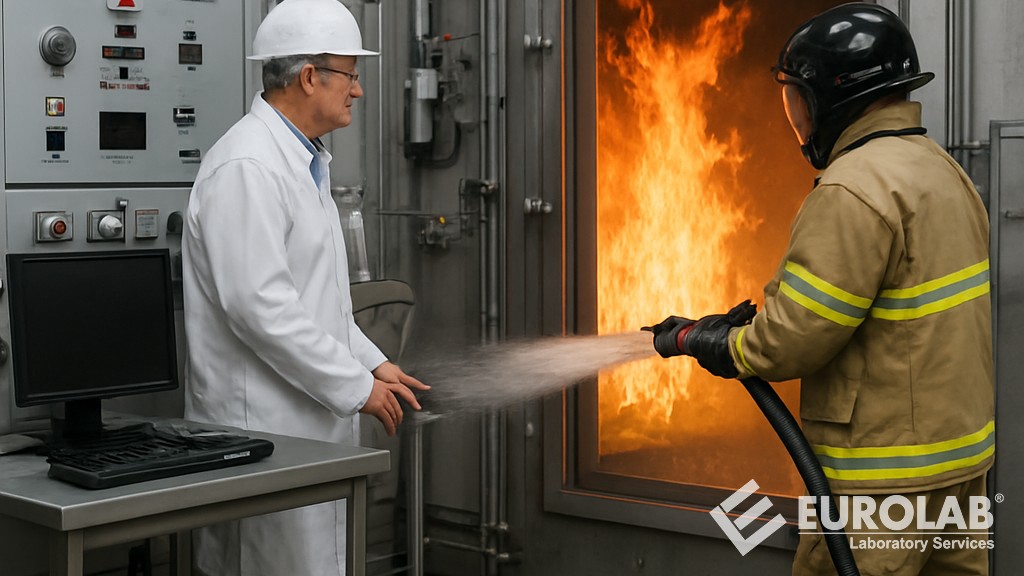
The NFPA 1971 standard requires the highest number of tests across the broadest range of protection (heat, flame, liquids, virus penetration, and durability tests). Whether it's protective clothing, boots, or gloves, rigorous testing is conducted to ensure the product can withstand extreme temperatures and the extreme impacts it is subjected to.
Among the best-known and most debated test results are thermal protection performance and total heat loss. All protective clothing fabric composites are tested and given a thermal protection performance and total heat loss rating. The term composite refers to a three-layer combination of outer fabric, moisture barrier, and thermal lining.
The thermal protection performance test is conducted to simulate a flash fire. This test method measures the time it takes for the heat of the flame to pass through three layers and cause a second-degree burn. The minimum thermal protection performance score is 35. According to the formula used, this means it will take 17,5 seconds (2 cal/cm2-s multiplied by 17,5).
Total heat loss measures the composite's ability to allow both body heat and vapor to escape. This test is now mandatory, as overexertion, stress, and medical issues are still the number one cause of death for firefighters on duty. The minimum total heat loss score is 205. Small differences in total heat loss scores are often imperceptible to the user; a difference of 20 to 25 points is necessary for the user to truly feel it.
Generally, there is an inverse relationship between thermal protection performance and total heat loss. A thicker, heavier garment should have the highest thermal protection performance but result in lower heat loss. Conversely, a thinner, lighter garment should have a higher total heat loss rating but score lower in thermal protection performance.
In addition to thermal protective performance, many other tests are applied to the materials and the entire garment to ensure protection against heat and flame. Various tests for overall durability are also conducted, such as seam strength and tear resistance tests.
The NFPA 1971 standard covers the complete garment:
Firefighter clothing conforming to the NFPA 1971 standard must provide protection against multiple hazards simultaneously:
A single failure in any of these areas could be fatal or cause lifelong injuries. The NFPA 1971 standard is the minimum performance benchmark that manufacturers must meet to remain competitive.
The basic performance tests defined in the NFPA 1971 standard are as follows:
Test
The Value it Measures
Minimum Requirements (simplified)
In conclusion, the NFPA 1971 standard is arguably the world's most important firefighter safety standard. Originally a flame resistance standard, it has evolved into a comprehensive specification covering cancer prevention, heat stress reduction, and multiple hazard protection.
For many years, our organization, with its competent and experienced staff, has been understanding the needs of its clients, providing the advanced testing services they require, and assisting in the establishment, implementation, and improvement of management systems. Within this framework, we also provide testing services to businesses in accordance with the "NFPA 1971 Protective clothing for structural fire suppression and close-range fire suppression" standard.
To get an appointment, to get more detailed information or to request an evaluation, you can ask us to fill in our form and reach you.

