

The “IMO 2010 FTP Code Part 1 - Flammability test” standard published by the International Maritime Organization (IMO) describes a test method for materials that must be non-flammable, such as mineral wools and plasterboards.
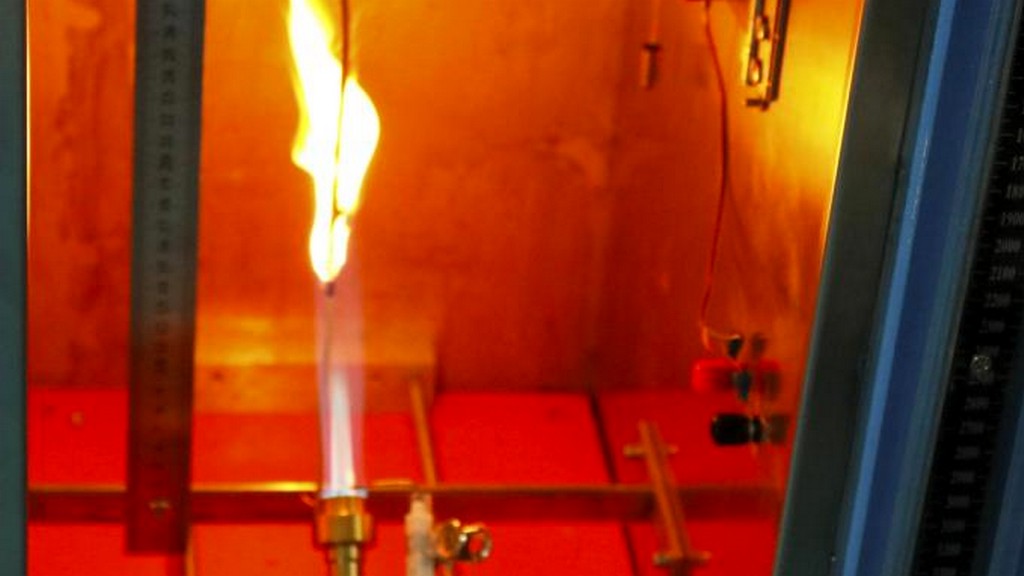
This fire test was developed to identify products that produce only a very limited amount of heat and flame when exposed to temperatures of approximately 750 degrees. The primary purpose of this test is to determine the fireproofing of products for marine use.
Products and materials intended for marine use are subjected to fire testing in accordance with this standard. The results from these tests can be used as a basis for type approval (also called wheel marking).
Type approval is regulated in accordance with the European Parliament directive 2014/90/EU. Advanced laboratories can perform the fire tests, issue certificates and perform production control necessary to obtain the wheel mark.
When applying this test method, the organic content of the product is first determined. The potential combustion of the test sample is recorded as a temperature increase or visible flames. The mass loss of the test sample is calculated after the test. These parameters are used to decide whether the product is fireproof or not.
In these tests, the moisture content of the material is calculated as a percentage of dry weight. Test samples are heated in a ventilated oven at 105 degrees for 24 hours, cooled in a desiccator and then reweighed. The samples are subjected to further testing and heated in an oven at 500 degrees for two hours, then cooled in a desiccator and reweighed. The organic content is calculated as a percentage of dry weight.
For flammability evaluation, test specimens shall be cylindrical and shall be 43 - 45 mm in diameter and 50 mm plus/minus 3 mm in height. The test specimen is then placed inside a cylindrical, vertical furnace tube at 750 degrees. Furnace and specimen temperatures are measured continuously during the test. Multiple specimens are tested.
A material is considered non-flammable according to the IMO 2010 FTP Code Part 1 standard if all the following criteria are met:
While designing this standard, the "ISO 1182 Reaction to fire tests for products - Flame retardancy test" standard developed by the International Standards Organization (ISO) was taken as a basis. This standard describes a test method to determine the flame retardancy performance of homogeneous products and basic components of non-homogeneous products under specified conditions. Information on the sensitivity of the test method is given in the standard annex (Annex A).
For the purposes of this standard, the following definitions apply:
Among the numerous testing, measurement, analysis and evaluation studies carried out for businesses in various sectors, our organization also provides testing services defined in the “IMO 2010 FTP Code Part 1 - Flammability test” standard with its trained and expert staff and advanced technological equipment.
To get an appointment, to get more detailed information or to request an evaluation, you can ask us to fill in our form and reach you.

