

The French standard “NF C32-310 Insulated cables and cords for installation purposes - Fire-resistant (class CR1) cables and cords with a rated voltage up to 0,6/1 kV” defines conductors and cables with a rated voltage of up to 0,6/1 kV that are classified as fire-resistant.
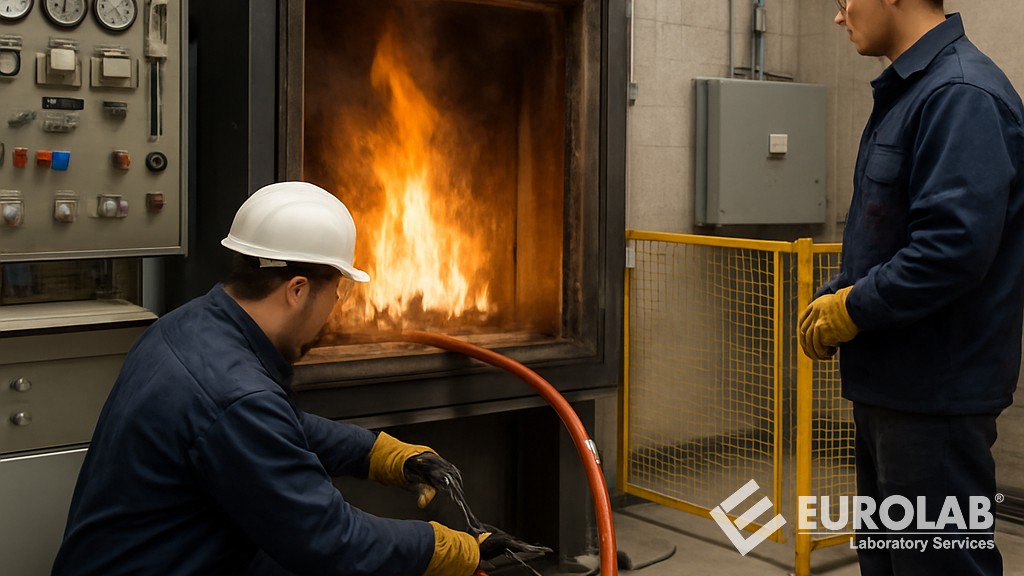
In the world of electrical engineering and safety standards, fire-resistant cables play a critical role in ensuring essential systems remain operational in emergencies. The NF C32-310 standard is one of these fundamental standards. This standard specifies the requirements for insulated conductors and cables designed to withstand fire conditions while maintaining functionality. It addresses cables with rated voltages up to 0,6/1 kV (commonly referred to as 600V/1000V). This makes it indispensable for applications where reliability in the face of fire is unquestionable, such as public buildings, industrial facilities, and critical infrastructure.
The NF C32-310 standard reflects ongoing improvements in fire safety technology and test protocols. As a national standard, it aligns with broader European and international efforts to harmonize cable performance under hazardous conditions.
Fire-resistant cables maintain circuit integrity during a fire, ensuring vital systems such as emergency lighting, fire alarms, smoke extraction, and power safety circuits can operate long enough for safe evacuation and firefighting operations. Without such cables, a fire could quickly disable these lifelines, increasing risks to life and property.
In an era of increasing urbanization and complex building designs, NF C32-310 and similar standards are vital for compliance with building regulations, such as the strict fire safety regulations under France's construction and housing law. While similar standards exist worldwide, the NF C32-310 standard has been adapted to French manufacturing and installation practices, guaranteeing interoperability with other NF C32 series standards for low-voltage cables.
The NF C32-310 standard sets strict criteria for the structure, materials, and performance of cables, ensuring they meet CR1 category fire resistance, providing a minimum duration (typically 30 minutes at 750 degrees) without loss of conductivity.
The structural features are as follows:
The cables must also pass mechanical and environmental tests, such as resistance to water, oil, and abrasion.
The NF C32-310 standard mandates testing for fire behavior according to relevant standards such as NF C32-062. The basic tests include:
Cables conforming to the NF C32-310 standard are commonly used in scenarios requiring high safety margins:
For example, multi-core variants are ideal for bulk circuits in control panels, while single-core flexible cables are suitable for temporary installations. Some manufacturers produce lines that explicitly meet this standard, emphasizing their role in sustainable and low-emission construction.
The NF C32-310 standard is part of the NF C32 family, which covers various low-voltage cables. The NF C32-321 standard focuses on unarmored power cables for general fixed installations that do not require specific fire resistance. Armored versions of the NF C32-322 standard provide mechanical protection for buried or tray-mounted use. While the NF C32-321 standard focuses on everyday durability, the NF C32-310 standard prioritizes fire survival and typically requires specialized insulation.
Essentially, the NF C32-310 standard is internationally compatible with the EN 50200 standard in terms of circuit integrity.
The NF C32-310 standard is considered important for the following specific reasons:
In short, compliance with the NF C32-310 standard is not just about compliance, but also about providing protection against the unpredictable severity of a fire. Today, in most public, commercial, and high-rise buildings, this standard is a legal requirement for every circuit whose failure during a fire could endanger human lives.
For many years, our organization, with its competent and experienced staff, has been understanding the needs of its customers, providing the advanced testing services they require, and assisting in the establishment, implementation, and improvement of management systems. Within this framework, we also provide testing services to businesses in accordance with the "NF C32-310 Insulated cables and flexible cords for installation purposes - Fire-resistant (class CR1) cables and flexible cords with a rated voltage up to 0,6/1 kV" standard.
To get an appointment, to get more detailed information or to request an evaluation, you can ask us to fill in our form and reach you.

