

Wood components degrade into hemicellulose, cellulose and lignin. Wood and wood-based materials are composed of carbon and hydrogen components, and combustion behavior is observed when the temperature reaches approximately 275 degrees. Carbonization takes place between 500-800 degrees. Wood burning is life-threatening when it affects livable structures and wood-based contents. In wood and cellulosic materials, fire retardant chemicals are often applied to wood to reduce flammability and ensure safety. Meanwhile, boron-based products are recommended to be used individually or together due to their smoke suppressing properties. Fire retardant chemicals used in wood products often contain phosphorus and nitrogen. Boric acid and borax are used extensively in the wood protection industry as they reduce the spread of flames to the wood's surface when exposed to extreme heat. These chemicals also have a low melting point and form a glassy film on the surface. Borax prevents the spread of flames, while boric acid increases carbonization, so it must be mixed together when used.
Ammonium polyphosphate creates a carbon layer effect on combustion behavior. Such a layer blocks the access of oxygen and heat, which prevents combustion and reduces the amount of smoke. Fire retardant chemicals do not completely stop wood from burning, but they do create a fire retardant effect. When fire retardant chemicals are applied to wood, they retard combustion by releasing phosphoric acid esters, wood polysaccharides, and water. These oscillations affect the dehydration reactions of wood. Boron components are preferred in wood and wood-based materials due to their thermal resistance properties.
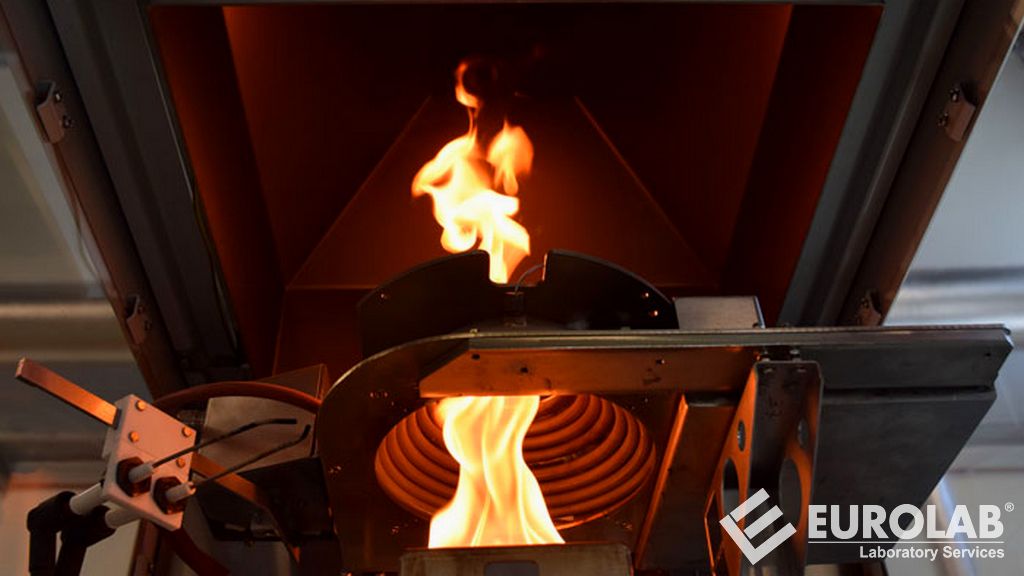
In general, the ASTM E69 standard developed by the American Testing and Materials Organization (ASTM) is applied in fire resistance tests (ASTM E69-15 standard test method for flammable properties of wood treated with fire extinguisher apparatus). This standard describes fire tube test methods for fire tests for the flammable properties of wood treated to reduce flammability. These test methods are concerned with the properties of the treated wood rather than the performance of a fabrication used as a structural element. Performance under this test method should be as specified in the requirements applicable to materials intended for specific uses. The standard in question is a fire test-response standard.
Our organization also provides fire resistance testing services with its trained and expert staff and advanced technological equipment, among the numerous test, measurement, analysis and evaluation studies it provides for businesses in various sectors.
To get an appointment, to get more detailed information or to request an evaluation, you can ask us to fill in our form and reach you.

