

The ASTM E108 Standard Test Methods for Fire Testing of Roofing Coverings, developed by the American Society for Testing and Materials (ASTM), is a fire test-response standard that covers the measurement of the relative fire properties of roofing coverings exposed to simulated fire sources originating from outside the building. This standard applies to roofing coverings intended for installation on combustible or non-combustible roof decking, when applied according to their intended use.
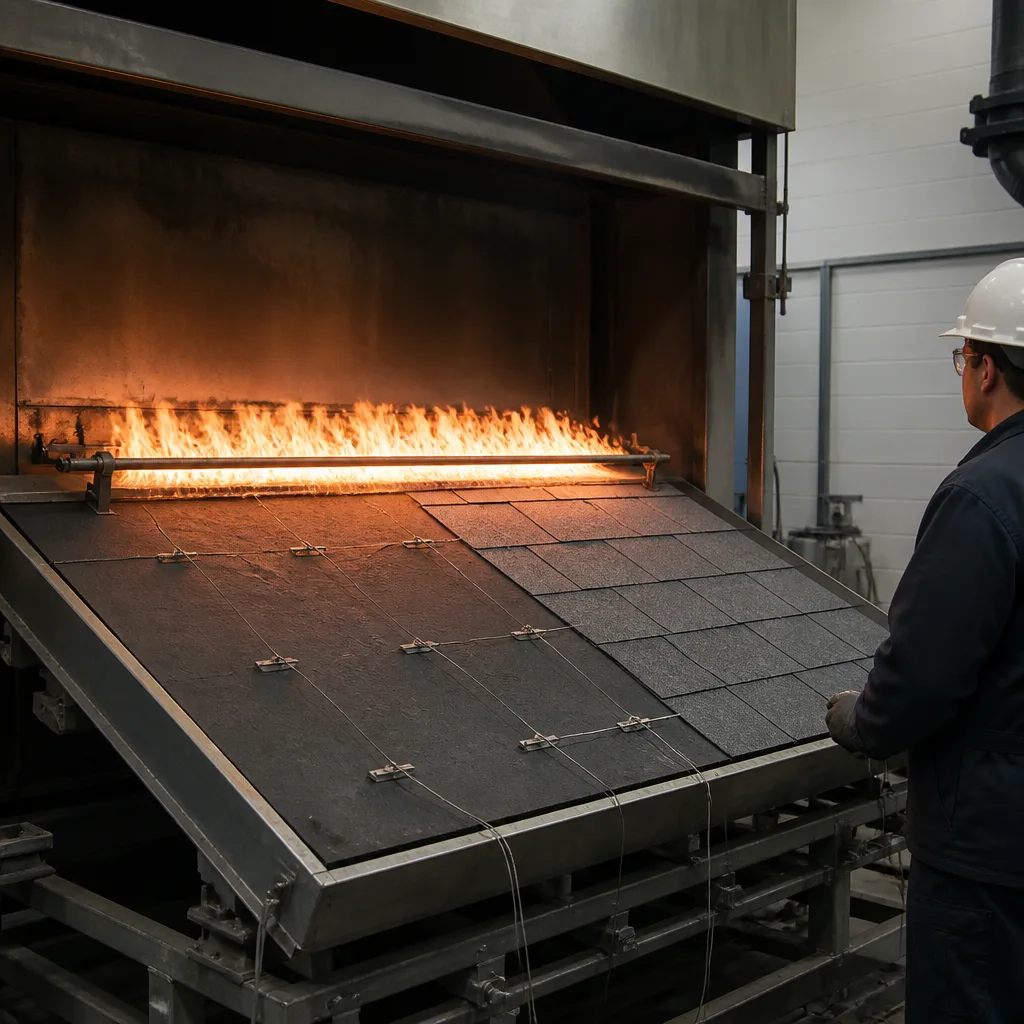
The ASTM E108 standard defines the following test methods:
This standard describes three classes of fire test exposure:
The test methods described here aim to provide a basis for the relative comparison of roofing materials. The test methods involve simulated fire exposure to the external surface of the roofing materials and, where applicable, determining whether the fire performance characteristics of the roofing materials are adversely affected by prolonged exposure to rain.
These test methods measure the surface spread of flame and the ability of the roofing material or system to resist fire penetration from the exterior surface to the underside of the roof decking under exposure conditions.
These test methods also provide criteria for determining whether roofing material will generate airborne combustible material (defined as flying fragments) when exposed to winds of 5,3 m/s during simulated fire exposure tests.
These test methods do not necessarily demonstrate the expected performance of roofing materials under all real fire conditions, but they provide a basis for comparing roofing materials when exposed to the fire sources described here.
These testing methods do not provide any basis for determining the fire resistance properties of the roofing material when exposed to a fire in the building where it is applied.
ASTM E108 is one of the most widely accepted fire safety standards for evaluating the fire performance of roofing materials and roofing systems. This standard specifies laboratory test methods to determine how roofing materials respond to external fire exposure.
This standard is widely used by manufacturers, architects, building designers, code authorities, and certification bodies to verify that roof systems provide adequate protection against fire hazards.
The primary purpose of the ASTM E108 standard is to evaluate the resistance of roofing materials to the following:
This standard evaluates the fire performance of complete roofing systems under realistic fire scenarios, rather than assessing the flammability of individual roofing materials.
The ASTM E108 standard applies to many types of roofing systems, including:
This standard evaluates the complete roof system, including:
The ASTM E108 standard includes various test methods designed to simulate different fire hazards:
A roofing system with minimal flame spread provides greater protection against outdoor fires.
The test assesses whether the roof system is flammable or allows fire to penetrate.
This ensures that fire performance remains effective even after environmental aging.
During testing, engineers evaluate the following:
The ASTM E108 standard is widely applied in many industries, including:
Roofing manufacturers use the ASTM E108 standard for the following purposes:
Many certification programs require a successful ASTM E108 test before roofing.
The ASTM E108 standard offers many benefits:
For many years, our organization, with its competent and experienced team, has been understanding the needs of its clients, providing the advanced testing services they require, and assisting them in the establishment, implementation, and improvement of management systems. Within this framework, we also provide testing services in accordance with the ASTM E108 standard.
To get an appointment, to get more detailed information or to request an evaluation, you can ask us to fill in our form and reach you.

