Fire resistance tests are tests performed to evaluate how long building materials, building components and structural systems can maintain their integrity, insulation properties and load-bearing capacity in case of fire. These tests are carried out within the framework of international standards and regulations in order to classify and determine the performance of materials and systems during fire.
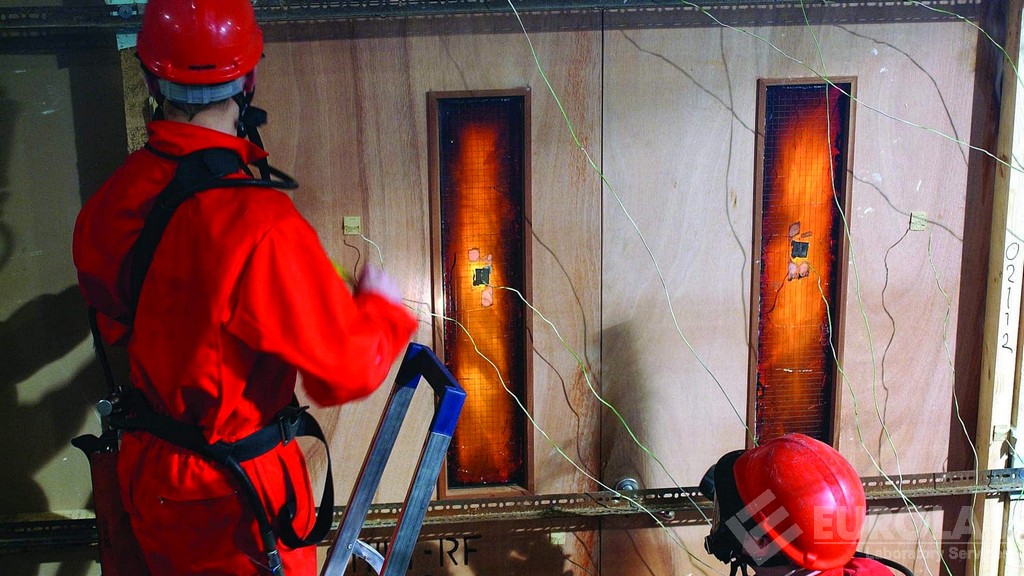
The purpose of fire resistance tests is to ensure the safety of people during a fire, minimize property damage and give firefighting teams more time to intervene.
Important Features of Fire Resistance Tests
- Integrity (E): It refers to the fire barrier's ability to prevent the passage of flame or hot gases. Integrity prevents fire from spreading from one area to another.
- Insulation (I): It is the capacity to limit the temperature increase on the side of the structure that is not affected by fire. Insulation keeps under control the temperature increase on the other side of the material exposed to high temperatures on the fire side.
- Load Carrying Capacity (R): It is the ability of structural elements to maintain their mechanical durability for a certain period of time in case of fire. This feature reduces the risk of buildings collapsing.
Testing Process
-
Determining Standard-Compliant Test Scenarios : Fire resistance tests are generally conducted according to internationally accepted standards (e.g., ISO 834, ASTM E119). Test scenarios are determined in accordance with these standards.
-
Preparation and Assembly of Test Specimens : The material or structural system to be tested is placed in the test setup in accordance with standards.
-
Conducting the Fire Test : The test specimen is exposed to controlled fire conditions for a specified period. During this process, parameters such as flame, temperature, and sometimes smoke density are monitored and recorded.
-
Performance Evaluation : The test results assess how long the samples maintain their integrity, insulation, and load-bearing capacity.
-
Reporting and Classification : Test results are presented in a detailed report, and the material or system is classified according to the performance achieved.
Aplication Areas
- Construction materials: Fire resistance of building materials such as doors, windows, walls and ceilings.
- Structural Elements: Performance of structural elements such as beams, columns and load-bearing systems during fire.
- Partition Systems: The capacity of fire partition walls and floors to provide protection against fire.
Fire resistance tests are vital to understanding the contribution to fire safety of materials and systems used in building design and construction. These tests aim to reduce the risk of fire and increase the safety of buildings and the people inside them.



