

The ASTM E1354 Standard Test Method for Determining Heat and Apparent Smoke Release Rates of Materials and Products Using Oxygen Consumption Calorimetry, developed by the American Society for Testing and Materials (ASTM), is a fire test response standard that allows measuring the response of materials exposed to controlled levels of radiant heating, with or without an external igniter.
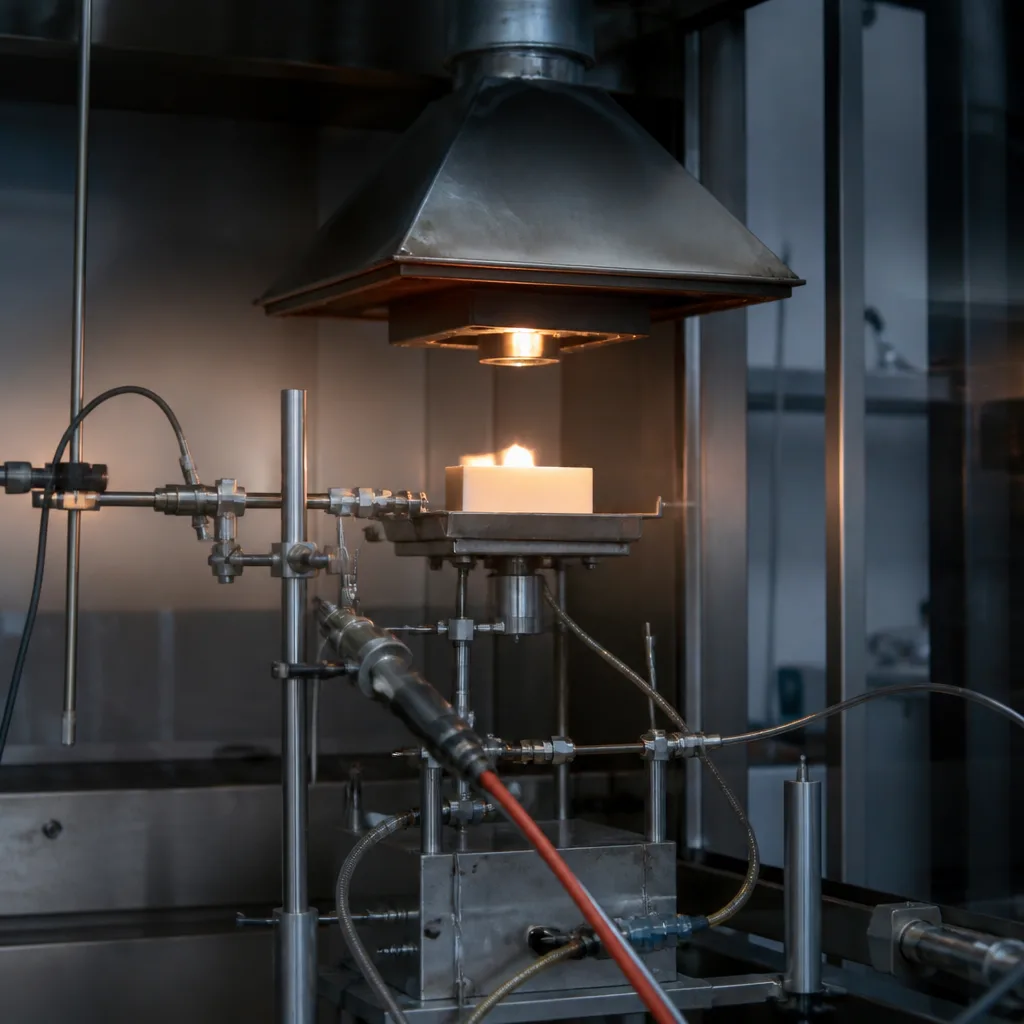
The test method described here is used to determine the flammability, heat release rates, mass loss rates, effective heat of combustion, and visible smoke formation of materials and products.
The rate of heat release is determined by measuring oxygen consumption, which is determined by the oxygen concentration and flow rate in the exhaust product stream. The effective heat of combustion is determined from the simultaneous measurement of the sample mass loss rate along with the rate of heat release. Smoke formation is measured by obstructing light by the combustion product stream.
Samples should be subjected to initial test heat fluxes ranging from 0 kW/m² to 100 kW/m² . When external ignition is used, it should be done with an electric spark. The initial test heat flux value and the use of external ignition should be as specified in the relevant material or performance standard. The normal sample test orientation is horizontal, regardless of whether the end-use application involves a horizontal or vertical orientation. The device also includes provisions for vertical orientation testing, which is only used for exploratory or diagnostic work.
Flammability is defined as the time elapsed from initial exposure to sustained flame.
This testing method was developed for use in material and product evaluations, mathematical modeling, design purposes, or development and research. Examples of material samples include parts of the end-use product or various components used in the end-use product.
ASTM E1354 is a widely used fire testing standard and one of the most important laboratory-scale fire testing methods used to evaluate how materials behave when exposed to fire conditions. The test is performed using a device called a cone calorimeter, which simulates real fire exposure in a controlled laboratory environment.
The primary purpose of the ASTM E1354 standard is to measure the fire reaction properties of materials when exposed to a defined level of radiant heat. This standard specifically evaluates the following parameters:
These parameters are critical because the rate of heat release is the most important factor in the growth and spread of a fire.
The ASTM E1354 standard test method is based on the principle of oxygen consumption calorimetry, which is as follows:
The conical calorimeter used in the tests consists of several basic components:
This system allows for detailed real-time monitoring of combustion behavior.
The testing process generally follows these steps:
The test continues until the combustion ceases or a defined period of time is reached.
These outputs help engineers understand how a material contributes to fire intensity.
The ASTM E1354 standard is used in many industries, including:
Typical applications of this standard include:
The advantages of the ASTM E1354 standard are as follows:
However, this standard has some limitations:
In conclusion, the ASTM E1354 standard is one of the most important fire testing standards for evaluating material behavior under fire exposure. By measuring heat release, smoke production, and combustion characteristics, it provides critical data for fire safety design, material selection, and regulatory compliance. Its ability to simulate realistic fire conditions on a small scale makes this standard an indispensable tool in modern fire science and engineering.
For many years, our organization, with its competent and experienced team, has been understanding the needs of its clients, providing the advanced testing services they require, and assisting them in the establishment, implementation, and improvement of management systems. Within this framework, we also provide testing services in accordance with the ASTM E1354 standard.
To get an appointment, to get more detailed information or to request an evaluation, you can ask us to fill in our form and reach you.

