MSC.1 Circ.1315 Approval of Stationary Dry Chemical Powder Fire Suppression Systems for the Protection of Ships Carrying Liquefied Gases in Bulk
The International Maritime Organization (IMO) circular, “MSC.1 Circ.1315 Revised Guidelines on the Approval of Stationary Dry Chemical Powder Fire Suppression Systems for the Protection of Ships Carrying Liquefied Gases in Bulk,” outlines the requirements for stationary dry chemical powder fire suppression systems used to protect the deck cargo areas of ships carrying liquefied gases in bulk, in accordance with the SOLAS International Convention for the Safety of Life at Sea and the international standard for the construction and outfitting of ships carrying liquefied gases in bulk.
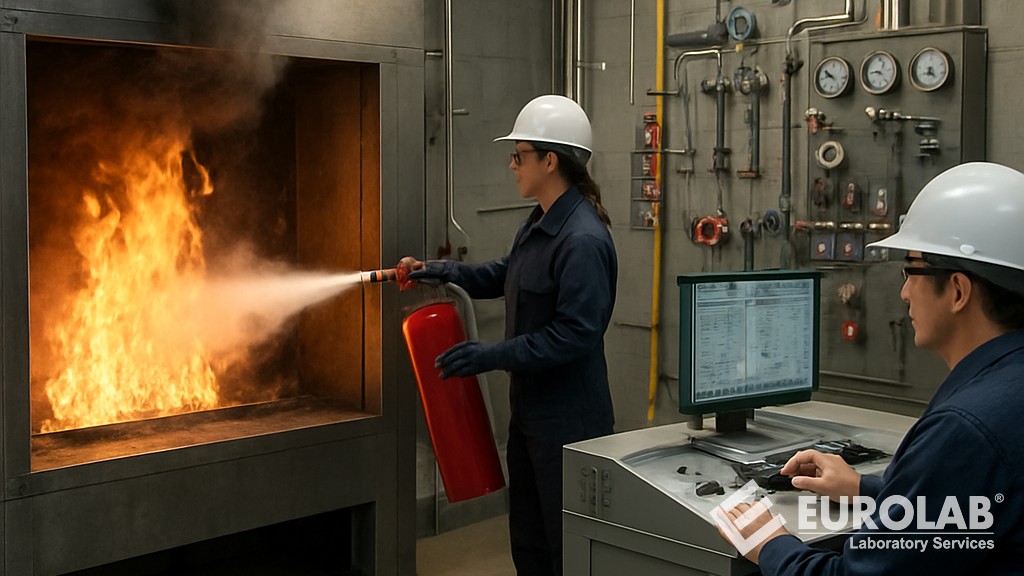
The basic requirements for dry chemical powder and systems are defined as follows:
- The system must be manually releaseable. A manual release station must be installed next to each hand hose line and each monitor. A backup release station must be present on the stationary dry chemical powder unit. Activation of any manual release station must initiate pressurization of the stationary dry chemical powder unit and initiate the discharge of dry chemical powder to all connected hand hose lines and monitors.
- The system and its components must be designed to withstand ambient temperature variations, vibration, humidity, shock, impact, and corrosion normally encountered on the open decks of ships, and must be manufactured and tested in accordance with the criteria given in the annex and receive the approval of the Administration.
- Dry chemical storage should be designed to maintain conditions on board the vessel in accordance with the manufacturer's recommendations.
- Systems must be designed according to the discharge characteristics and flow rates of a specific dry chemical powder medium (formulation and physical structure of the composition). The specific type of dry chemical powder medium in the system must not be changed unless it has been tested by a laboratory to verify performance and receive approval from the Administration. Different dry chemical powder media must not be mixed.
- Dry chemical storage containers must be designed according to the Administration's acceptable pressure application codes for the maximum system pressure occurring at 55 degrees.
- The dry chemical powder should be tested as indicated in the annex.
The test methods described in this document are as follows:
- Discharge time test
- Maximum length testing of pipes and fittings.
- Discharge interval test
- Flow rate test
- Minimum temperature test
- Hydrostatic test of hand hose line
- Salt spray test
- Temperature test
- Dry chemical powder tests
- Specifications of fire testing
- Characteristics of fires to be extinguished during fire testing.
- Establishing acceptance criteria for extinguishing fires in fire tests.
- Approval of the fire extinguishing system.
- Dry chemical powder storage
MSC.1 Circ.1315 provides detailed guidelines and approval criteria for stationary dry chemical powder fire suppression systems installed on ships carrying liquefied gas in bulk (e.g., LNG carriers, LPG carriers). These systems are critical for combating fires involving cryogenic liquid cargoes where water-based systems may be ineffective or dangerous.
This circular forms the basis for type approval of such systems under the requirements of the SOLAS International Convention for the Safety of Life at Sea and the International Standard for the Construction and Equipment of Ships Carrying Liquefied Gases in Bulk (IGC).
The latest revision of the MSC.1/Circ.1315 circular increases safety levels, updates test standards (e.g., refers to existing ISO standards for fire testing), and improves requirements for dust acceptance, discharge performance, and system reliability.
In short, MSC.1 Circ.1315 provides guidelines for the approval of stationary gas fire suppression systems equivalent to carbon dioxide systems as required by the SOLAS Convention. This document is widely used in ship design, marine fire safety engineering, and classification approval when alternative extinguishing gases are used instead of conventional carbon dioxide systems.
MSC.1 Circ.1315 specifies the performance and testing requirements for stationary gas fire suppression systems intended to be equivalent to carbon dioxide systems required by SOLAS. Its main objectives are:
- To ensure that alternative fire extinguishing agents provide the same level of protection as carbon dioxide.
- To define approval criteria and testing procedures.
- To provide guidance for administrative bodies, classification societies, and equipment manufacturers.
MSC.1 Circ.1315 circular applies to the following:
- Fixed sum gas fire suppression systems
- Systems that protect the following:
- Machine bays
- Cargo pump rooms
- Ro-ro compartments
- Other enclosed ship interior areas
This guideline applies when using extinguishing agents other than carbon dioxide, such as the following:
- Inert gases
- Clean substances
- Other approved gaseous substances.
The basic technical requirements have been defined as follows:
- Fire extinguishing performance: The system should demonstrate the following:
- Rapid extinguishing of Class B fires (fuel fires typical of engine compartments).
- Maintaining an adequate concentration of the substance for a specified period.
- Ability to prevent reignition.
Tests typically include:
- Pool fires
- Spray fires
- Fire scenarios with disabilities
- Extinguishing agent concentration and design: The design must ensure the following:
- Minimum extinguishing concentration for the protected hazard.
- Safety margin above extinguishing concentration.
- Even distribution of the extinguishing agent across the entire area.
Key design parameters include:
- Room volume
- Leakage rate
- Turning off the ventilation
- Discharge time of the extinguishing agent
- System discharge requirements: Typical requirements include:
- Complete emptying within a specified time (usually a maximum of 120 seconds).
- Automatic or manual activation option.
- Reliable distribution pipes and nozzles.
- Safety requirements: Because gas systems can pose a danger to personnel, the directive requires the following:
- Alarm systems before evacuation.
- Time-delayed systems
- Manual unloading stations outside protected areas.
- Emergency shutdown of ventilation and fuel systems.
- Approval and certification: Before being used on ships, the system must be approved by:
- Flag Administration or
- A well-known Classification Society acting on its behalf.
Approval is based on the following:
- Full-scale fire tests
- System design evaluation
- Compliance with the requirements of MSC.1 Circ.1315.
In conclusion, MSC.1 Circ.1315 provides technical guidelines for the approval of stationary gas fire suppression systems used as an alternative to carbon dioxide systems on ships, guaranteeing that they provide equivalent fire protection in accordance with SOLAS safety requirements.
For many years, our organization, with its competent and experienced staff, has been understanding the needs of its clients, providing the advanced testing services they require, and assisting them in the establishment, implementation, and improvement of management systems. Within this framework, we also provide testing services compliant with the MSC.1 Circ.1315 standard.



