

The standard “UL 10B Standard for Safety of Door Assemblies - Fire Tests,” developed by Underwriters Laboratories (UL), describes fire test methods for door assemblies constructed of various materials and types of construction for use in wall openings to retard the passage of fire. Tests conducted in accordance with these test methods record performance during the test exposure. Such tests should not be construed as determining suitability for use after fire exposure.
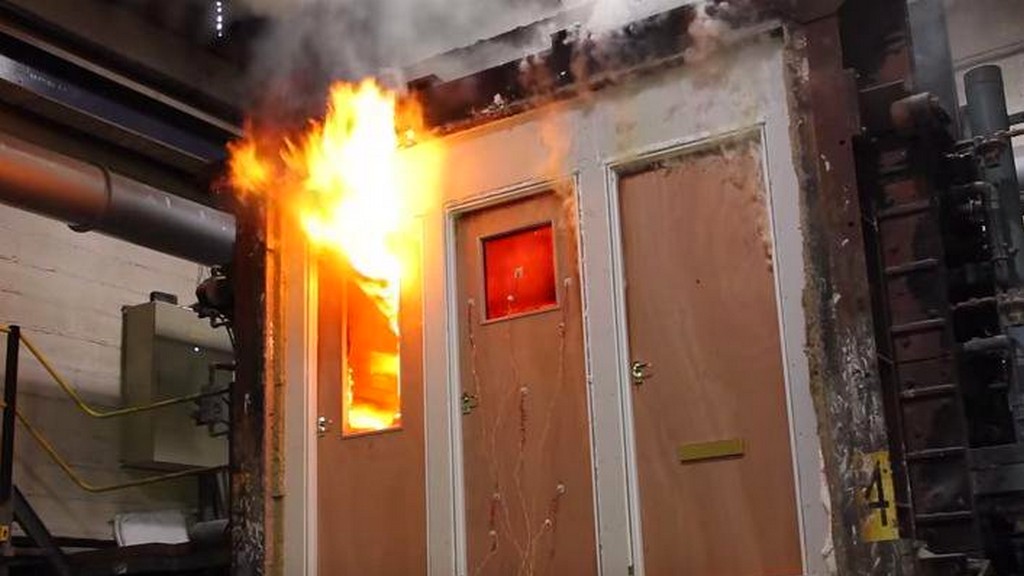
Testing in accordance with these test methods is intended to develop data that will enable regulatory agencies to determine the suitability of door assemblies for use in locations requiring fire resistance for a specified period of time. These methods are intended to evaluate the ability of a door assembly to remain in an opening during a predetermined test exposure.
These test methods subject a specimen to a standard fire exposure controlled to specified temperatures for a specified period of time, followed by the application of a specified standard fire hose stream. However, the exposure is not representative of all fire conditions, which vary with the amount, nature and distribution of fire load, ventilation, compartment size and configuration, and changes in the heat-sinking properties of the compartment. However, it does provide a relative measure of the fire performance of door assemblies under specified fire exposure conditions.
Any change in the structure or conditions under test may significantly alter the performance characteristics of the assembly.
However, these testing methods do not:
The test methods described in this standard are applicable to the following types of products: wall-mounted door and frame assemblies, including swing doors, sliding or rolling doors, horizontal sliding elevator doors, access doors, service elevator doors, service counter doors.
When testing, the test specimen (door assembly) is mounted to a test wall assembly, usually made of masonry or drywall and stud construction. The entire test assembly is then placed in a test oven and exposed to specified temperatures for a specified period of time.
These test methods are considered a neutral pressure fire test because the neutral pressure plane within the furnace is established at the top of the test specimen. Any area of the test specimen below the neutral pressure plane is subjected to negative furnace pressure and as a result ambient air from the unexposed side of the test assembly is drawn into the furnace between the door and frame interface and other preparations in the assembly.
Following the fire resistance portion of the test, the fire-exposed side of the test assembly is subjected to the cooling and abrasion effects of the hose stream for a specified period of time, depending on the test specimen size and fire resistance period. In general, acceptance conditions include, but are not limited to, specific flame requirements for the test specimen on the unexposed side of the assembly, specific deflection requirements for the door assembly, and that no through holes be formed during the fire resistance or hose flow tests.
Successful completion of these tests will result in a fire protection rating for the product based on the fire resistance period for which it was tested. Appropriate fire protection ratings are based on the test standard (i.e. 20, 30, 45, 60, 90, 180 or 240 minutes).
Among the numerous tests, measurements, analyses and evaluation studies that our organization has carried out for businesses in various sectors, it also provides testing services defined in the “UL 10B Door assembly safety - Fire testing standard” standard with its trained and expert staff and advanced technological equipment.
To get an appointment, to get more detailed information or to request an evaluation, you can ask us to fill in our form and reach you.

