

A French standard, “NF C32-070 Insulated cables and flexible cords for installations - Classification tests on cables and cords with regard to their behaviour against fire”, describes the classification tests carried out on cables and cords to determine their reaction to fire.
This numbered-conductor halogen-free control cable (C1) is a halogen-free, multi-conductor, flexible power and control cable designed for use in all electrical equipment in dry, damp, and wet conditions. Recommended applications include machinery, data processing equipment, and ventilation and air conditioning systems. In the event of a fire, no corrosive gases are produced. This cable is particularly suitable for use in situations where human life and valuable property are exposed to an extremely high fire risk.
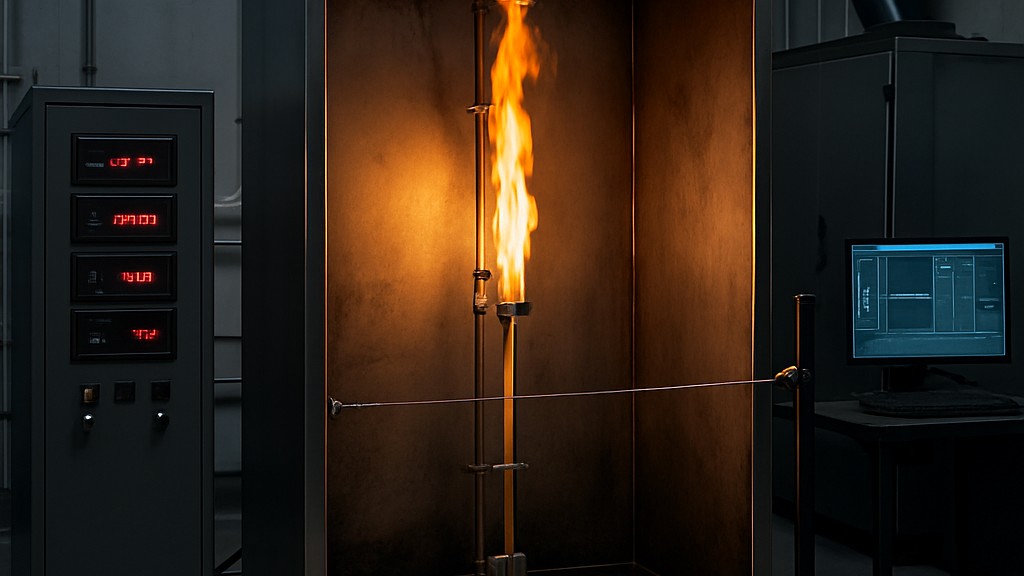
When conducting classification tests on such cables, a vertically laid cable or bundle of cables is exposed to radiation above approximately 830 degrees Celsius and forced ventilation. Pilot flames, arranged at the top, ignite the emitted gases. The test duration is 30 minutes. The cable length is 1600 mm. Classification is based on the area of destruction. The sample is then subjected to a Category C1 test of this standard. Based on the results (degraded length), it is classified into four classes: A, B, C, and D. The requirements for each class are as follows:
For many years, the question of the behavior of electrical conductors and their targets in the face of fire has been frequently addressed by a wide range of organizations, whether investigating the causes of disasters, preventing them, or implementing effective means to limit their destructive effects. The vast amount of information collected for this purpose, along with the results of numerous studies conducted in parallel to improve the fire behavior of conductors and cables, has made it possible to more clearly understand the needs in this area and to define tests that allow conductors and cables to be evaluated in this regard.
The purpose of this standard is to evaluate the test methods accepted in this field and to define them to enable a specific classification of conductors and cables and their selection according to fire safety requirements and installation conditions.
This standard defines four different tests: three for reaction to fire and one for fire resistance assessment.
Reaction to fire refers to the ability of the conductor or cable to provide fuel to the fire and subsequently contribute to the development of the fire.
In short, the NF C32-070 standard outlines specific test methods and acceptance criteria for evaluating the fire performance of cables used in electrical installations. This standard aims to evaluate how insulated cables and flexible cords respond when exposed to fire. This includes assessing flame propagation, heat release, smoke production, and fire spread potential. The standard applies to a variety of cable types used in residential, commercial, and industrial installations.
This standard divides cables into several categories based on their fire behavior:
The NF C32-070 standard falls within the scope of the European low voltage directive 73/23/EEC, as amended by directive 93/68/EEC, which guarantees that electrical equipment within certain voltage limits provides European citizens with a high level of protection.
Cables tested and classified to this standard are widely used in the following environments where fire safety is paramount:
For example, halogen-free control cables are designed to meet C1 classification, offering improved fire performance for use in automation systems and other critical applications.
The NF C32-070 standard is essential because it provides a systematic and consistent method for assessing the fire behavior of insulated cables and flexible cords, which are critical to fire safety in electrical installations. This standard is considered so important for the following reasons:
Our organization, which has been supporting businesses across all sectors for years through a wide range of testing, measurement, analysis, and evaluation activities, boasts a strong team of employees who closely follow global developments in science and technology and are constantly improving themselves. In this context, we also provide testing services in accordance with the standard "NF C32-070 Insulated cables and flexible cords for installations - Classification tests on cables and cords for fire resistance."
To get an appointment, to get more detailed information or to request an evaluation, you can ask us to fill in our form and reach you.

