Full-scale fire tunnel tests are of critical importance in the field of fire safety. These tests are performed to evaluate how building materials, building components and systems will respond in the event of fire. Fire tunnel tests simulate the conditions of a real fire, comprehensively testing the properties of materials such as fire resistance, smoke spread, toxicity and residues left by materials during fire.
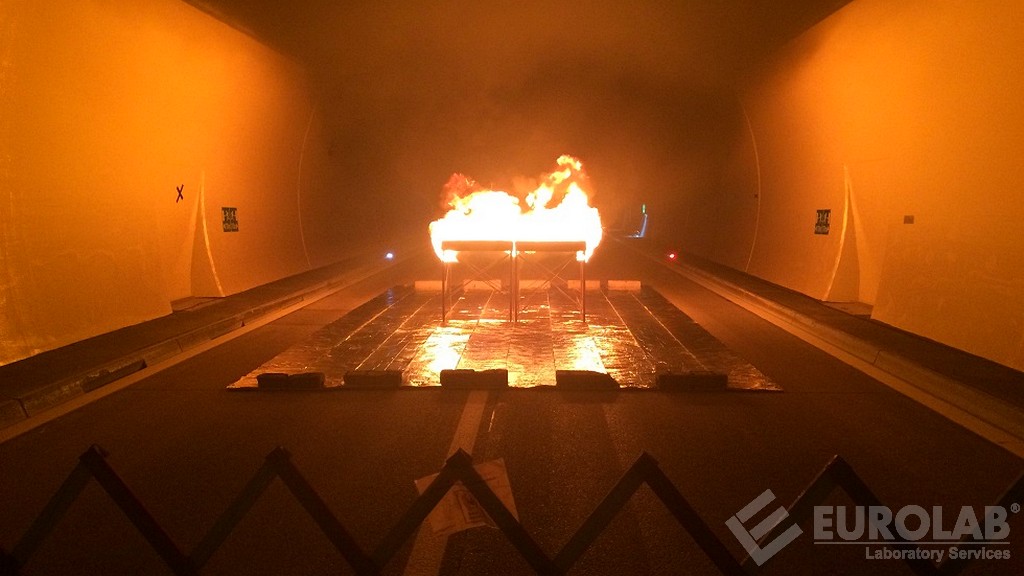
These tests play a vital role in fire safety engineering, fire protection systems design and development of building materials.
Importance of Full Scale Fire Tunnel Tests:
- Evaluation in Realistic Conditions: Full-scale fire tunnel testing provides unique opportunities to understand how materials and systems will respond to real fire conditions. This provides realistic data that cannot be obtained in a laboratory setting.
- Development of Fire Safety Standards: Test results contribute to the development of national and international fire safety standards and regulations.
- Classification of Building Materials: Fire resistance levels of materials are classified according to test results. This plays an important role in the material selection and building design processes.
- Optimization of Fire Protection Solutions: Tests provide the opportunity to evaluate the effectiveness of fire protection systems and strategies. In this way, fire safety solutions can be continuously improved.
Testing Process:
- Preparation Phase: The material or system to be tested is determined and prepared for the fire tunnel test. This phase may include the development of customized scenarios depending on the purpose of the test and the product to be tested.
- Determining Fire Scenarios: The test is designed for a specific fire scenario. This is often intended to simulate the expected conditions of use of the material or system.
- Observation and Data Collection: During the test, temperature, smoke density, toxicity and other critical parameters are continuously monitored and recorded.
- Analysis and Evaluation: The data obtained after the test is analyzed. This analysis is used to evaluate the performance of the material or system in the event of fire.
Applications:
- Construction materials: Fire resistance of walls, ceilings, doors and other structural elements.
- Fire Protection Systems: Effectiveness of sprinkler systems, smoke control systems and fire detection systems.
- Evacuation Analysis: The spread of smoke during a fire and its effects on people's ability to use evacuation routes.
Full-scale fire tunnel tests are an indispensable tool in fire safety research and the development of fire protection systems. Thanks to these tests, effective strategies and solutions can be developed to increase people's safety and reduce property loss during fire.



