

The standard "ASTM E906-07 Standard Test Method for Heat and Visible Smoke Release Rates for Materials and Products Using the Thermopile Method" developed by the American Society for Testing and Materials (ASTM) describes a test method for determining the heat and visible smoke release rates from materials, products, or assemblies when exposed to different levels of radiant heat. Visible smoke is defined in terms of the obscuration of transmitted light by combustion products released during the tests.
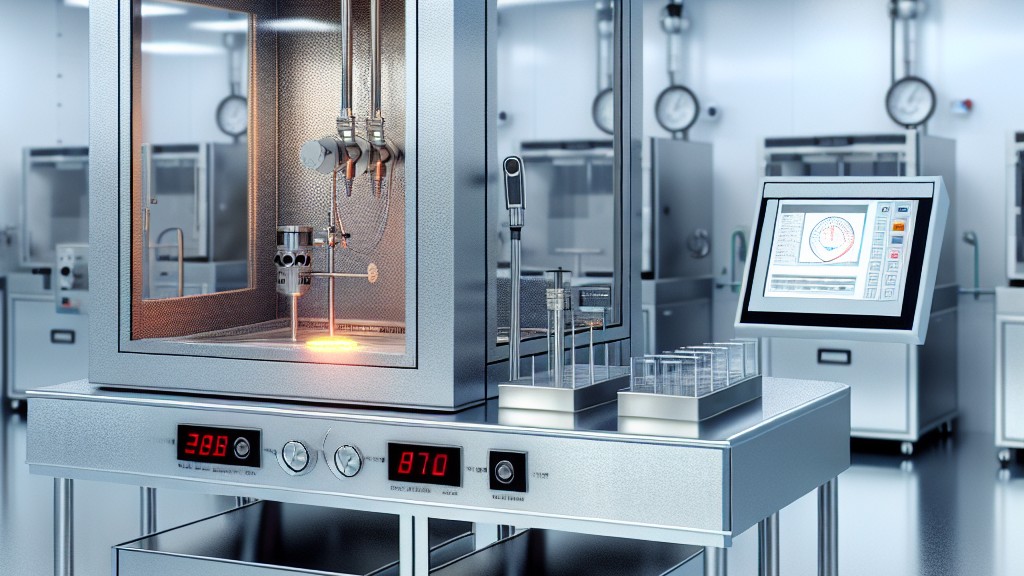
This fire test response method evaluates heat release by thermopile, a thermal method using a radiant heat source consisting of an array of four electrical resistance elements. This test method provides radiant thermal exposure of a sample with or without a pilot. Piloted ignition results from direct flame impingement on the sample (point ignition) or from the use of a pilot to ignite gases produced by pyrolysis of the sample.
Heat and smoke release are measured from the moment the sample is injected into a controlled exposure chamber. Measurements continue throughout the duration of ignition (and gradual flame involvement of the surface in the case of point ignition) and until the test is terminated.
This test method is intended for use in research and development and not as a basis for rating, regulatory, or code purposes.
The apparatus described in this test method was used in two configurations. Configuration A is the configuration used by the Federal Aviation Administration to evaluate materials for aircraft use. Configuration B is suitable for research and development purposes in a variety of incident heat flows.
This test method does not provide information on the fire performance of test specimens under fire conditions other than those specified in this test method. Known limitations of this test method include:
For the purposes of this standard, in addition to the terms and definitions given in the "ASTM E176-2121 Standard Terminology of Fire Standards" and "ISO 13943 Fire Safety - Glossary" standards, the following definitions apply:
In testing, the sample to be tested is injected into an environmental chamber through which a constant air flow is passed. The exposure of the sample is determined by a radiant heat source adjusted to produce the desired total heat flux on the sample. Exposure options include: horizontal or vertical orientations, pilotless ignition, piloted ignition of emitted gases, or point ignition of the surface. Changes in temperature and optical density of the gas leaving the chamber are monitored, and from these data the rates of heat and visible smoke release are calculated.
This test method provides a description of the behaviour of material samples in terms of heat and visible smoke release rate under a specified fire exposure. By testing samples at a series of exposures covering a range of heat fluxes, it is possible to determine the change in behaviour of materials and products with change in heat flux exposure.
The data obtained for a particular test describes the rate at which the sample will spread and release smoke when exposed to the specific environmental conditions and procedures used to perform that test.
When a pilot is used, the entire exposed surface of the sample is not burned during the stage of incorporation. Point ignition (impact) procedures are used. During staged surface incorporation, heat and smoke release rates are per square meter of original exposed surface area, not per square meter of flame-containing surface.
Both heat and smoke release rates are calculated per square meter of original exposed surface area. If a specimen swells, sags, delaminates, or otherwise deforms, thereby changing the exposed surface area, the calculated release rates refer to the original area, not the new surface area.
Heat release values depend on the ignition mode. Gas phase ignition gives a more dimensionally consistent measure of the release rate when very rapid or instantaneous interaction of the sample surface with the flame occurs.
Release rates depend on many factors, some of which cannot be controlled. It is possible that samples that have surface charring, produce a sticky ash layer, or are composites or laminates will not achieve a steady-state release rate. Thermally thin samples, i.e. samples whose unexposed surfaces change temperature during the test period, will not achieve a steady-state release rate. Therefore, release rates for a given material depend on, for example, how the material is used, its thickness, and the method of assembly.
Our organization has a strong staff that closely follows the developments in the world in the field of science and technology and constantly improves itself. Among the numerous test, measurement, analysis and evaluation studies provided for businesses in various sectors, there are also test services in accordance with the standard "ASTM E906-07 Standard test method for heat and visible smoke release rates for materials and products using the thermopile method".
To get an appointment, to get more detailed information or to request an evaluation, you can ask us to fill in our form and reach you.

