

The standard "DIN 4102-12 Fire resistance of electrical wiring systems - Requirements and tests required to maintain circuit integrity," published by the German Institute for Standardization (DIN) to determine the fire resistance of electrical wiring systems, is a critical regulation focused on ensuring the fire resistance of electrical wiring systems to maintain circuit integrity during a fire. This standard is part of the broader DIN 4102 series, which addresses the fire behavior of building materials and components. DIN 4102 consists of several subsections under the main heading "Fire behavior of building materials and components."
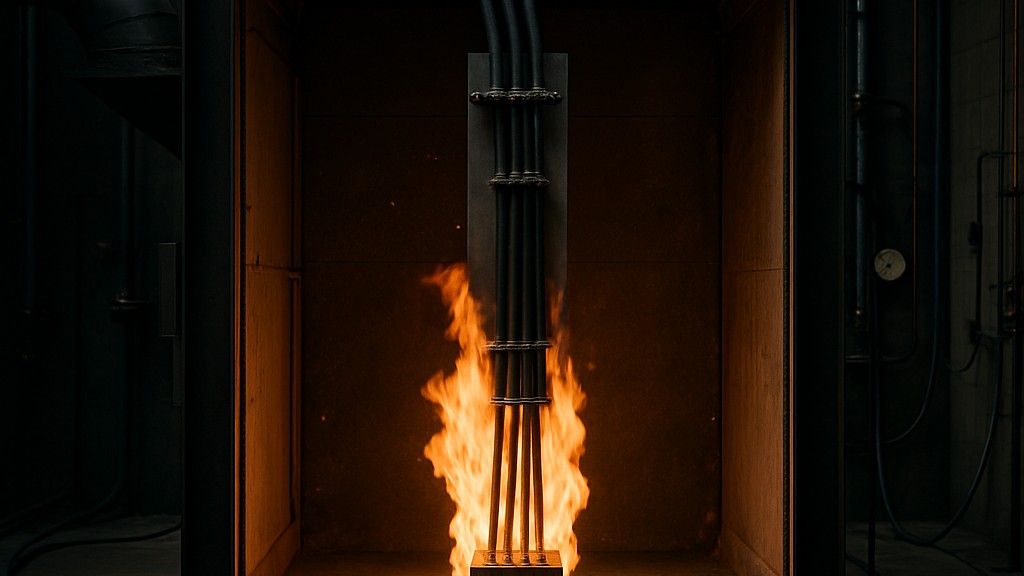
The DIN 4102-12 standard describes requirements and test methods to ensure that electrical cable systems, in particular including cables and support structures, remain functional under fire conditions, facilitate safe evacuation and minimise damage.
The DIN 4102-12 standard applies to electrical cable systems with a nominal voltage of up to 1 kV, including power cables, telecommunications cables, data cables, and associated support structures such as cable trays, ladders, and clips. It is designed to ensure that these systems maintain circuit integrity for a specified time during a fire, typically 30 minutes (E30) or 90 minutes (E90).
This standard focuses on the entire wiring system, including both cables and assembly components, to accurately simulate real-world fire conditions. However, this standard does not cover voltage drops caused by temperature-related increases in conductor resistance; instead, it focuses on preventing short circuits or interruptions in wiring.
The primary objective of the DIN 4102-12 standard is to ensure that electrical wiring systems remain operational during a fire to support critical functions such as emergency lighting, fire alarms, and ventilation systems. The key requirements are:
The testing procedure outlined in the DIN 4102-12 standard has been meticulously prepared and designed to mimic real-world fire conditions. The key elements of the testing process are:
The testing process is considered one of the most rigorous as it evaluates the entire cable system rather than individual components, providing a realistic assessment of performance during a fire.
The DIN 4102-12 standard plays a vital role in improving fire safety in buildings and industrial facilities. By ensuring that electrical wiring systems maintain circuit integrity during a fire, the standard supports the operation of critical systems required for:
This standard is particularly important in high-risk environments such as oil and gas facilities, petrochemical plants, infrastructure projects, and the marine and energy sectors, where reliable electrical systems are critical in emergency situations.
The DIN 4102-12 standard is widely used in industries requiring strong fire safety measures. For example:
Manufacturers and project planners often rely on systems that comply with the DIN 4102-12 standard to meet legal requirements and ensure safety.
As a result, the DIN 4102-12 standard is the cornerstone of fire safety for electrical wiring systems in various countries. By specifying stringent requirements for circuit integrity maintenance and realistic testing conditions, it ensures critical systems remain operational during a fire, supporting safe evacuation and effective fire suppression. Its comprehensive approach encompassing both cables and support structures makes it a rigorous and practical standard for high-risk environments. For professionals in construction, engineering, or fire safety, implementing DIN 4102-12 is crucial for designing and installing reliable electrical systems that prioritize life and property safety.
Our organization, which has been operating for many years and meticulously follows global developments in science and technology, conducts testing, measurement, and analysis in a wide range of areas with a skilled team and extensive infrastructure for businesses across all sectors. In this context, we also provide testing services in accordance with the DIN 4102-12 Fire resistance of electrical cable systems required to maintain circuit integrity - Requirements and tests.
To get an appointment, to get more detailed information or to request an evaluation, you can ask us to fill in our form and reach you.

