

The National Fire Protection Association (NFPA) develops consensus-based standards that shape fire safety practices worldwide. The “NFPA 258 Recommended Practice for Determining Smoke Formation from Solid Materials” standard, published within this framework, stands out as a critical resource for fire protection engineers battling large industrial fires. While not a mandatory standard, it provides evidence-based guidance on smoke and heat management in high-ceiling, large-volume areas, one of the most complex aspects of fire dynamics.
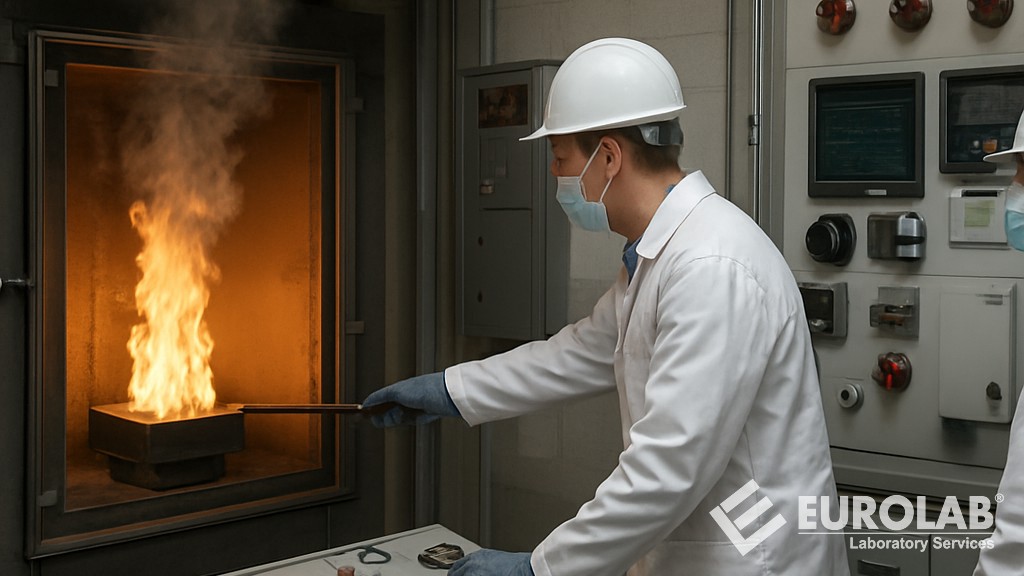
NFPA 258, known as the standard for smoke and heat extraction in large industrial fires, is a recommended practice (not a standard with enforceable requirements) focused on estimating smoke production and designing ventilation systems for fires in large industrial facilities such as warehouses, manufacturing plants, aircraft hangars, and distribution centers. The latest revision of this standard incorporates modern fire test data, computational fluid dynamics modeling, and lessons learned from real-world events. Essentially, this standard applies to areas with ceiling heights of at least 6 m and fire loads exceeding typical sprinkler environments.
NFPA 258 addresses three key challenges in large-area fires:
Smoke production rate: The essence of the NFPA 258 standard is the empirical model it uses to estimate the convective heat release rate and the resulting smoke production. This rate is calculated according to the formula given in the standard and contributes to the axially symmetric plume model.
Ventilation sizing and spacing: NFPA 258 standard recommends ventilation area ratios based on fire size, ceiling height, and air curtains.
Automatic ventilation systems need to activate at a temperature of 121 degrees to prevent premature activation.
With e-commerce warehouses reaching enormous sizes and lithium-ion battery storage facilities rapidly increasing, the risk of large-volume fires has reached an all-time high. The NFPA 258 standard bridges the gap between experimental data and performance-based design, enabling engineers to:
Today, the NFPA 258 standard forms the backbone of effective smoke control in the world's largest buildings. In an age of massive warehouses and complex commodities, ignoring this standard is impossible.
In conclusion, smoke generation from solid materials is a significant factor in fire safety: smoke can impair visibility, cause exposure to toxic substances, and disrupt evacuation and firefighting efforts. NFPA 258 addresses how to measure smoke generation from materials under controlled test conditions.
The primary aim of this standard is to provide a standardized test method for determining the specific optical density of smoke produced by solid materials when exposed to specified heat flux and test conditions. Specific optical density is a measure of how much smoke is produced per unit mass of the test specimen in relation to the reduction in visibility. In other words, this proposed application helps manufacturers, specification developers, laboratories, and regulators to:
This standard applies to solid materials (as opposed to liquids or gases) under defined exposure conditions, which enables consistent comparison.
Some key characteristics of the described test method are as follows:
Because of this equivalence, many laboratories and equipment suppliers use smoke density chambers designed for the ASTM E662 standard and describe them as conforming to the NFPA 258 standard.
For many years, our organization, with its competent and experienced staff, has been understanding the needs of its clients, providing the advanced testing services they require, and assisting in the establishment, implementation, and improvement of management systems. Within this framework, we also provide testing services to businesses in accordance with the "NFPA 258 Recommended Practice for Determining Smoke Formation from Solid Materials" standard.
To get an appointment, to get more detailed information or to request an evaluation, you can ask us to fill in our form and reach you.

