

The standard “UNI 9796 Reaction to fire of flame-retardant coating products for wood-based materials - Test methods for classification purposes”, developed by the Italian Organization for Standardization (UNI), describes a test method for the classification of flame-retardant coating products regarding their effectiveness in modifying the reaction to fire of wood-based materials when used in buildings.
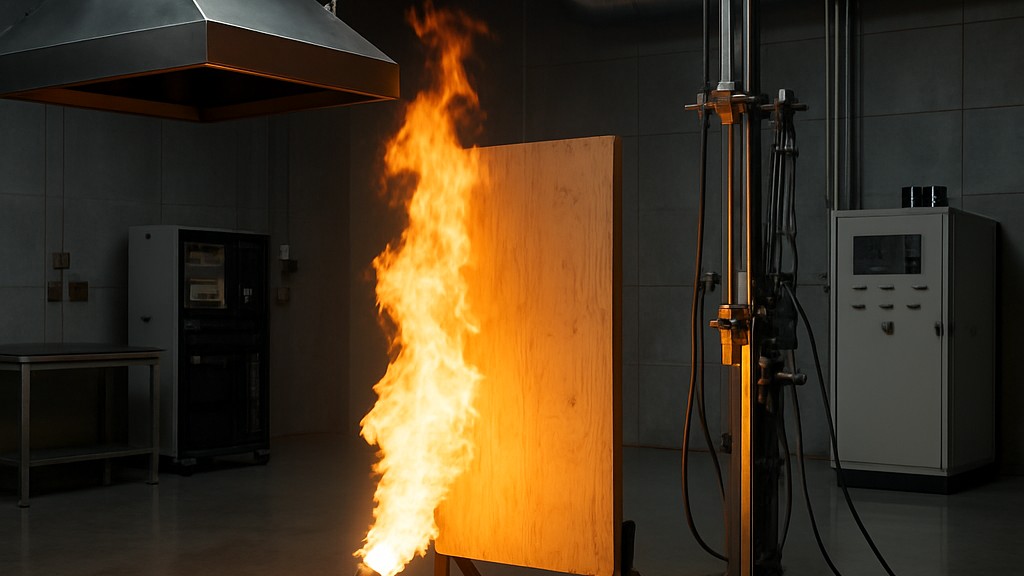
The term "fire-retardant wood coatings" encompasses a wide range of coating products typically required in public buildings such as schools, hospitals, gyms, cinemas, libraries, theaters, airports, banks, tourist facilities, sports halls, exhibition stands, shops, and similar buildings. In such locations, it is crucial that the furniture exhibits self-extinguishing or fire-retardant behavior and ceases combustion when the ignition trigger is stopped.
The aim is to delay the spread of fire as much as possible, because every minute of delay in flame spread can be vital in saving human life.
According to UNI 9796, a fire-retardant coating product may alter the fire resistance class of the wood to which it is applied. This standard applies to fire-retardant coating products designed for application to wood, but the following are outside the scope of this standard:
According to Italian law, it must be approved in order to be used in activities subject to fire prevention regulations.
The fire reaction classification of fire retardant paint products designed for application on wooden materials is made as specified in the UNI 9796 standard.
The UNI 9796 standard is designed to ensure the safety, functionality, and environmental compatibility of various technical and industrial products. This standard specifically addresses the installation, maintenance, and testing of gas-fired heating systems and specifies the requirements for materials, equipment, and procedures that ensure efficiency and safety in the design, installation, and operation of these systems.
The UNI 9796 standard was created to provide technical guidelines and establish quality criteria for companies and professionals in gas heating technology. As gas-fired heating systems are widely used in residential, commercial, and industrial environments across Europe, ensuring safety and efficiency is critical to preventing accidents, improving energy consumption, and complying with legal regulations.
Focusing on ensuring that gas systems are properly installed, regularly maintained, and rigorously tested, the UNI 9796 standard provides detailed protocols for these processes. This standard provides comprehensive guidance that directly impacts those working in construction, engineering, and heating-related technical services.
The UNI 9796 standard is valid for:
This standard is designed to ensure that equipment not only operates efficiently but also complies with environmental and safety regulations.
The UNI 9796 standard provides clear instructions for the correct installation of gas-fired heating systems. These instructions include detailed specifications for:
After installation is complete, the system must undergo a comprehensive testing procedure. The standard defines the following testing methods:
After these tests, a certificate of conformity must be issued to confirm that the system complies with the standards.
The UNI 9796 standard emphasizes the importance of regular maintenance and inspection of gas-fired heating systems to ensure long-term safety and optimum performance. Maintenance tasks include:
The UNI 9796 standard plays a vital role in the European heating sectors, offering several benefits:
Consequently, the UNI 9796 standard is the cornerstone of safety and efficiency for gas-fired heating systems. Its comprehensive guidelines ensure these systems are installed, maintained, and tested to the highest safety standards, benefiting both users and the environment. As the industry evolves, the UNI 9796 standard will continue to be updated and adapted to ensure the highest quality and compatibility in the ever-changing landscape of gas technology.
Our organization, which has been supporting businesses across all sectors for years through a wide range of testing, measurement, analysis, and evaluation activities, boasts a strong team of employees who closely follow global developments in science and technology and are constantly improving themselves. In this context, we also provide testing services in accordance with the "UNI 9796 Reaction to fire of flame-retardant coating products for wood-based materials - Test methods for classification purposes" standard.
To get an appointment, to get more detailed information or to request an evaluation, you can ask us to fill in our form and reach you.

