

The standard “DIN 53438 Testing of flammable substances - Reaction to ignition by a small flame”, published by the German Institute for Standardization (DIN), consists of the following sub-sections published under the same title:
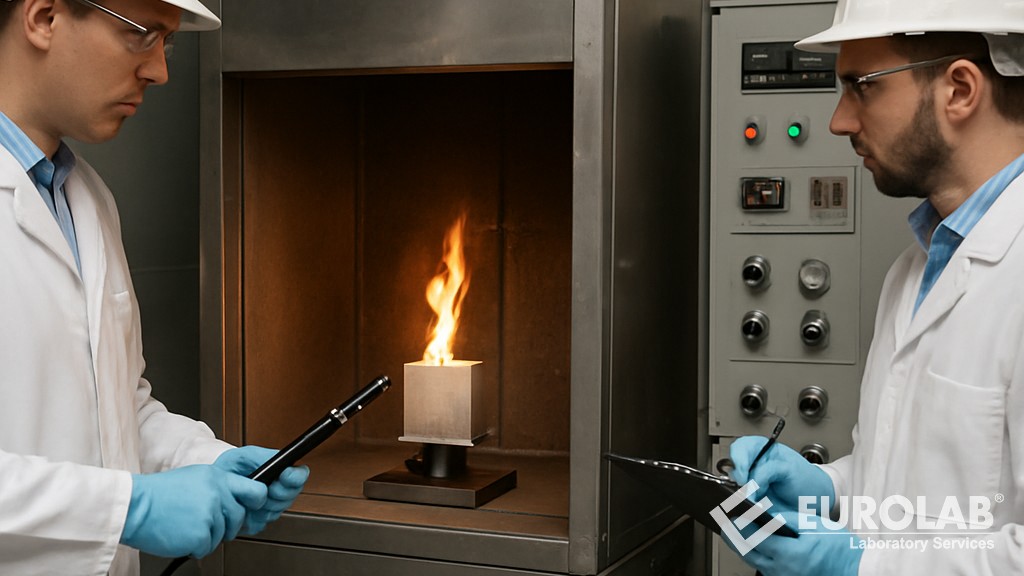
This standard is widely used in fields such as plastics, textiles, foams, and construction materials, where understanding a material's flammability and flame spread properties is essential for fire safety design.
The primary purpose of the DIN 53438-1 standard is to determine how combustible materials behave when exposed to a burner flame under standardized conditions. The test is carried out specifically for the following purposes:
The results allow manufacturers and engineers to compare the fire performance of different materials and monitor product consistency in production.
The DIN 53438-1 standard is commonly used in the following areas:
Manufacturers frequently use this standard during material development, fire safety assessment, and quality control.
The DIN 53438 standard series contributes to fire safety assessment by providing repeatable laboratory methods for evaluating ignition response. While laboratory tests cannot fully reproduce real fire conditions, they allow engineers to:
These tests are often combined with other fire standards to obtain a comprehensive assessment of material behavior in fire scenarios.
The primary purpose of this standard is to determine how easily a material ignites and how it behaves when a small flame is applied to its edge. This test helps to evaluate the following:
These characteristics are particularly important for fire safety assessments in enclosed environments such as railway vehicles, aircraft interiors, and transportation equipment.
According to the DIN 53438-2 standard, a small flame is directed at the edge of the test specimen for a specific period of time. The material's reaction to this ignition source is carefully observed. This process evaluates whether the specimen possesses the following properties:
Edge ignition simulates situations where flames spread from joints, edges, or exposed components—common ignition points in real fire scenarios.
The results of the DIN 53438-2 standard are generally used to classify materials into flammability categories, typically designated as K1, K2, and K3. These classifications indicate increasing levels of flammability and help determine whether the material meets safety requirements for specific applications.
The DIN 53438-2 standard is particularly important in sectors where fire safety is critical:
The purpose of this standard is to determine how a material's surface behaves when exposed to a small ignition flame. The test evaluates the following aspects:
The results help engineers and manufacturers understand how quickly flames can spread across a material's surface and how easily the material can be extinguished.
The testing method typically follows these steps:
This procedure is applied to all 10 samples. The results are then averaged and included in the test report.
Based on the speed of flame spread and burning time, the tested material is divided into the following categories:
This classification provides a quick indication of the surface flame propagation behavior. Materials achieving an F1 classification generally exhibit better fire performance compared to materials with an F3 classification.
The DIN 53438-3 standard is used to evaluate the fire performance of a wide variety of materials, including:
Industries such as automotive, building materials, electronics, and textiles rely on this test to verify compliance with fire safety requirements.
For many years, our organization, with its competent and experienced staff, has been understanding the needs of its clients, providing the advanced testing services they require, and assisting them in the establishment, implementation, and improvement of management systems. Within this framework, we also provide testing services in accordance with the DIN 53438 standard.
To get an appointment, to get more detailed information or to request an evaluation, you can ask us to fill in our form and reach you.

