

The “UNI 9177 Fire reaction - Classification of combustible products” standard, developed by the Italian Standardisation Organization (UNI), is a national regulation defining how combustible materials are classified according to their reaction to fire. This standard is widely used to ensure fire safety in buildings, public spaces, and interior materials such as textiles and furniture.
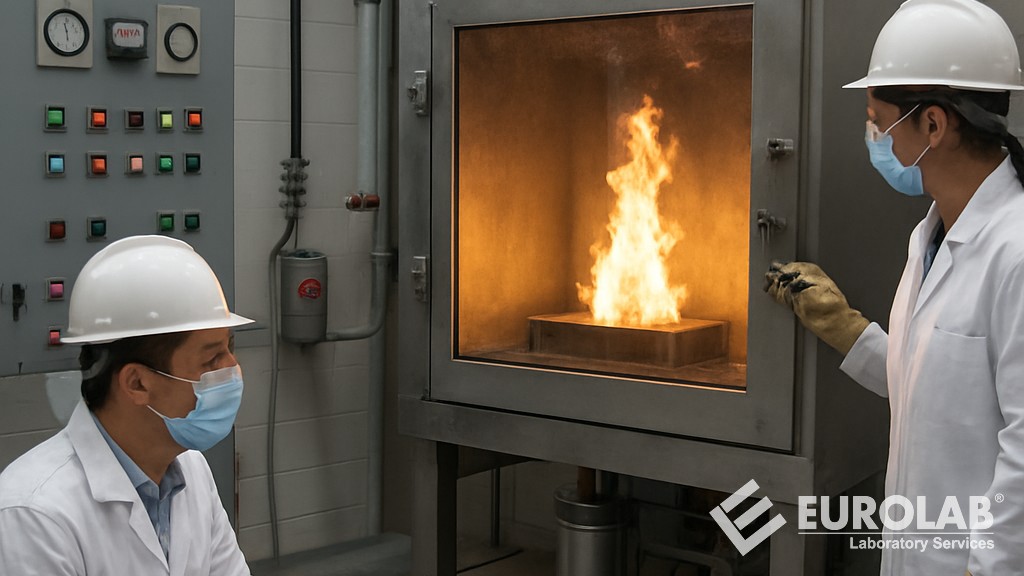
This standard plays a critical role in fire prevention regulations, particularly for materials used in settings such as hotels, theaters, schools, and commercial buildings.
Widely used in fire safety and material classification, particularly in construction and textile applications, the purpose of this standard is as follows:
Unlike some standards, the UNI 9177 standard does not define test methods on its own. Instead, it uses results from other test standards such as UNI 8456, UNI 8457, and UNI 9174 to determine the final fire classification.
The UNI 9177 standard applies to a wide range of combustible materials, including:
These materials must meet the requirements of the UNI 9177 standard when used in public or high-risk environments.
The UNI 9177 standard classifies materials into five main categories based on their fire performance:
Class 1 is generally required for materials used in public buildings.
Class 0 (non-combustible materials such as metal or concrete) is outside the classification system.
The UNI 9177 standard classification is based on the results of various important fire tests:
According to the UNI 9177 standard, materials are evaluated according to the following criteria:
To achieve a high classification (e.g., Class 1), a material must meet strict limits on all criteria.
The UNI 9177 standard differs from other fire standards for the following reasons:
The UNI 9177 standard is essential because it ensures that materials used in buildings and public spaces behave safely in the event of a fire. Its importance goes beyond simple classification; it directly contributes to life safety, legal regulations, and risk reduction. Furthermore, this standard is important for the following reasons:
This is especially important in hospitals, schools, hotels, and theaters. Using classified (e.g., Class 1) materials can slow the spread of fire, giving people more time to escape.
In conclusion, the UNI 9177 standard is a crucial fire safety classification system that ensures materials used in buildings meet stringent fire performance requirements. By combining multiple test methods and assigning clear classes, it provides a reliable framework for:
For industries such as automotive, textiles, construction, and interior design, understanding the UNI 9177 standard is crucial.
For many years, our organization, with its competent and experienced team, has been understanding the needs of its clients, providing the advanced testing services they require, and assisting them in the establishment, implementation, and improvement of management systems. Within this framework, we also provide testing services compliant with the UNI 9177 standard.
To get an appointment, to get more detailed information or to request an evaluation, you can ask us to fill in our form and reach you.

