

The International Maritime Organization (IMO) published the standard “IMO 2010 FTP Code Part 2 – Smoke and toxicity testing” describes a test method applied to ensure that materials do not produce excessive amounts of smoke or toxic gases when exposed to heat. This method is used to evaluate how much smoke is produced when a product is exposed to a certain amount of radiation and flame. The main area of application is to classify products for use on ships.
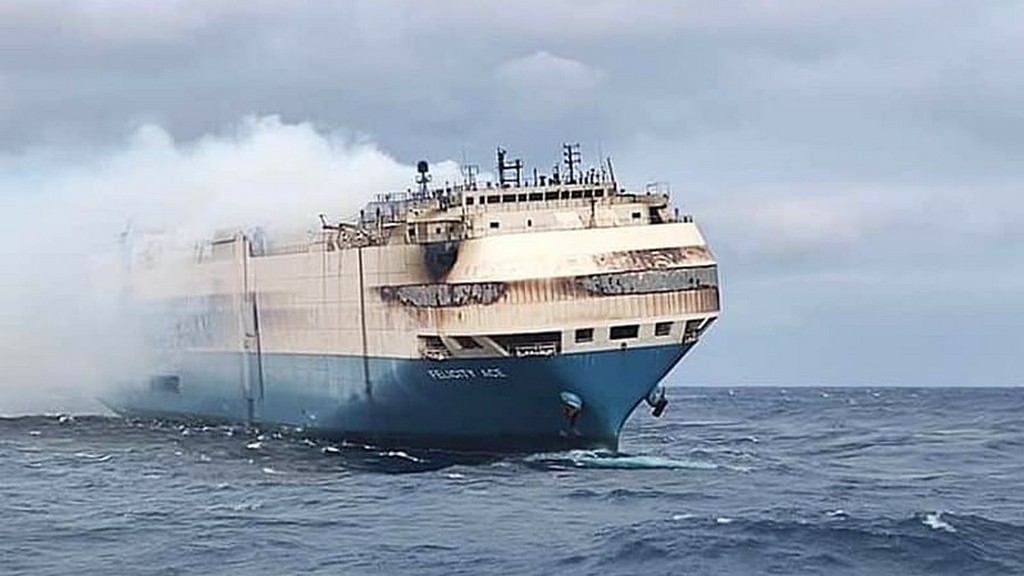
Products and materials used in marine applications are subjected to fire testing in accordance with this standard. The results from these tests can be used as a basis for type approval (also called wheel marking).
Type approval is regulated in accordance with the European Parliament directive 2014/90/EU. Advanced laboratories can perform the fire tests, issue certificates and perform production control necessary to obtain the wheel mark.
These tests are performed in a closed chamber. The test sample is placed horizontally and exposed to thermal radiation. When the sample is exposed to radiation, smoke collected in the chamber begins to spread. The specific optical density (transparency) of the smoke is measured with a light source and a photocell. When performing toxicity analysis, a portion of the smoke produced is removed from the chamber for analysis. The analysis is performed for each of the three radiation levels and, among others, the following substances can be detected by Fourier transform infrared spectroscopy (FTIR) analysis: carbon dioxide, carbon monoxide, hydrochloric acid, hydrogen bromide, hydrogen fluoride, hydrogen cyanide, nitrogen oxides and sulfur dioxide.
The test method described in this standard covers surface materials for partitions and ceilings and similar exposed surfaces and floor coverings. The test duration is 10 minutes, recording all smoke density and gas content. During the test, the samples are exposed to radiant heat conditions of 25 or 50 KW/m2.
This standard is based on the ISO 5659-2 Plastics - Smoke production - Part 2: Determination of optical density by a single chamber test, developed by the International Organization for Standardization (ISO), with some modifications. This standard provides a method for measuring smoke production from the exposed surface of specimens of substantially flat materials, composites or assemblies not exceeding 25 mm in thickness, when placed in a horizontal orientation and exposed to specified thermal radiation levels in a closed cabinet, with or without the application of a pilot light. This test method is applicable to all plastics and can also be used to evaluate other materials, e.g. rubbers, textile coatings, painted surfaces, wood and others.
The optical density values determined by this method are intended to be specific to the sample or assembly material in the tested form and thickness and not to be considered as intrinsic, fundamental properties.
This method is primarily intended for use in research and development and fire safety engineering of buildings, trains and ships and is not intended to be used as the basis of ratings for building codes or other purposes. No basis is provided for predicting the smoke density which materials would produce if exposed to heat and flame under other actual exposure conditions and no correlation has been established with measurements derived from other test methods.
According to the IMO 2010 FTP Code Part 2 standard, under any test condition, the maximum optical density must be higher than the average value by:
Among the numerous testing, measurement, analysis and evaluation studies that our organization has carried out for businesses in various sectors, it also provides testing services defined in the “IMO 2010 FTP Code Part 2 - Smoke and toxicity testing” standard with its trained and expert staff and advanced technological equipment.
To get an appointment, to get more detailed information or to request an evaluation, you can ask us to fill in our form and reach you.

