

A European standard, “EN 15493 Candles - Fire safety specification”, describes the requirements and test methods for the fire safety of candles intended for burning indoors.
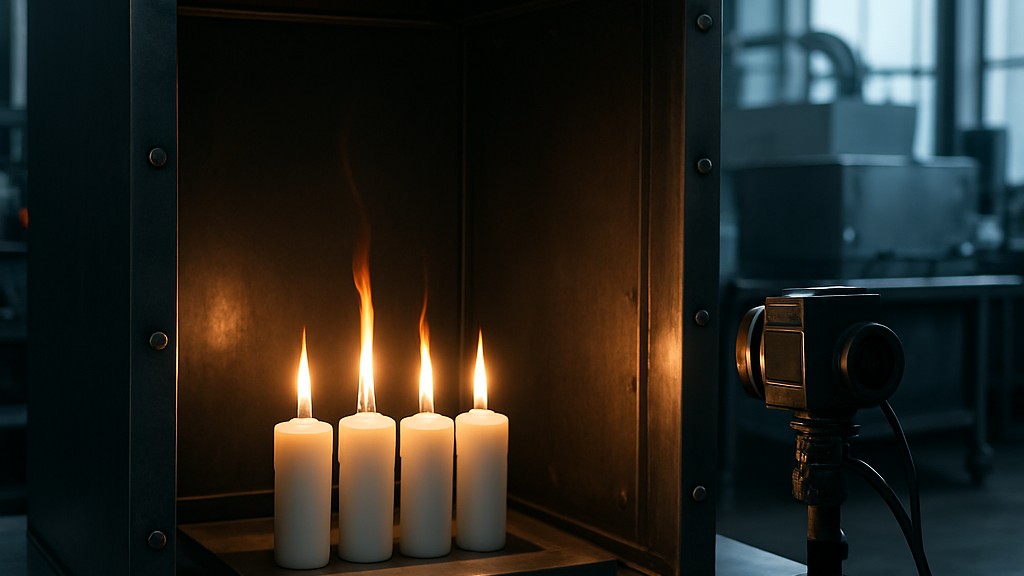
Candles have accompanied humanity for millennia, serving primarily as a source of light. Closely linked to the history of candle development is the work being done to improve candle quality and safety in use. Controversies, both historical and current, regarding the potential for harmful emissions and fires caused by unsafe candles or improper use during candle burning have raised concerns among consumers. This standard helps ensure a reasonable level of safety during use, thus increasing personal safety and reducing the risk of fire, death, and injury.
The EN 15493 standard is designed to minimize fire hazards, increase consumer safety, and reduce the risk of injury and property damage associated with candle use. This standard is particularly important for manufacturers, laboratories, and regulatory bodies involved in candle production and testing.
The primary goal of the EN 15493 standard is to establish safety standards that reduce the likelihood of fire-related incidents by ensuring controlled burning of candles. This standard addresses critical safety issues such as excessive flame height, secondary ignition, flare-ups, dripping, and container integrity, all of which can contribute to fire hazards if not properly managed. By defining requirements and test methods, the EN 15493 standard helps manufacturers produce safer products and gives consumers confidence in the safety of candles used indoors.
The EN 15493 standard outlines several critical safety requirements to ensure candles are safe for indoor use. These include:
These requirements are designed to address the most common risks associated with candle use and to ensure that products meet a basic level of safety for consumers.
The EN 15493 standard provides detailed test methods for assessing compliance with safety requirements. These methods are primarily intended for laboratories, manufacturers, and testing organizations. The key elements of the testing process are:
These testing methods are rigorous and designed to mimic real-world conditions, ensuring that candles meet safety standards in typical usage scenarios.
The EN 15493 standard is part of a wider set of European candle standards that work together to ensure comprehensive safety and quality. These include:
Together, these standards provide a holistic framework for candle safety, covering fire risks, labelling and environmental impact.
While compliance with the EN 15493 standard is not always a legal requirement, it is considered best practice for manufacturers and importers. Compliance with this standard demonstrates a commitment to consumer safety and can enhance a brand's reputation. Manufacturers are encouraged to:
As a result, the EN 15493 standard is a critical tool for ensuring the fire safety of indoor candles in the European market. By setting clear requirements for flame height, drip, container integrity, and after-smoke, and providing rigorous testing methods, the standard helps manufacturers create safer products and protect consumers from fire-related risks.
Our organization, which has been operating for many years and meticulously follows global developments in science and technology, employs a skilled team and extensive infrastructure to conduct testing, measurement, and analysis in a wide range of areas for businesses across all sectors. In this context, we also provide testing services in accordance with the EN 15493 Candles - Fire Safety Specification.
To get an appointment, to get more detailed information or to request an evaluation, you can ask us to fill in our form and reach you.

