

Businesses sensitive to the need to minimize the consequences of a fire subject their cable trays to stringent fire resistance tests to ensure the behavior of their products. In the event of a fire, it is necessary to maintain the functionality of certain electrical installations, such as smoke evacuation devices, emergency lighting, fire alarms or pressure installations for extinguishing. Depending on the time needed to maintain the functionality of the business, there is the ideal cable management system for every situation. The functionality of these facilities gains greater strength in public places. In such facilities, more time is needed for evacuations due to the large accumulation of people.
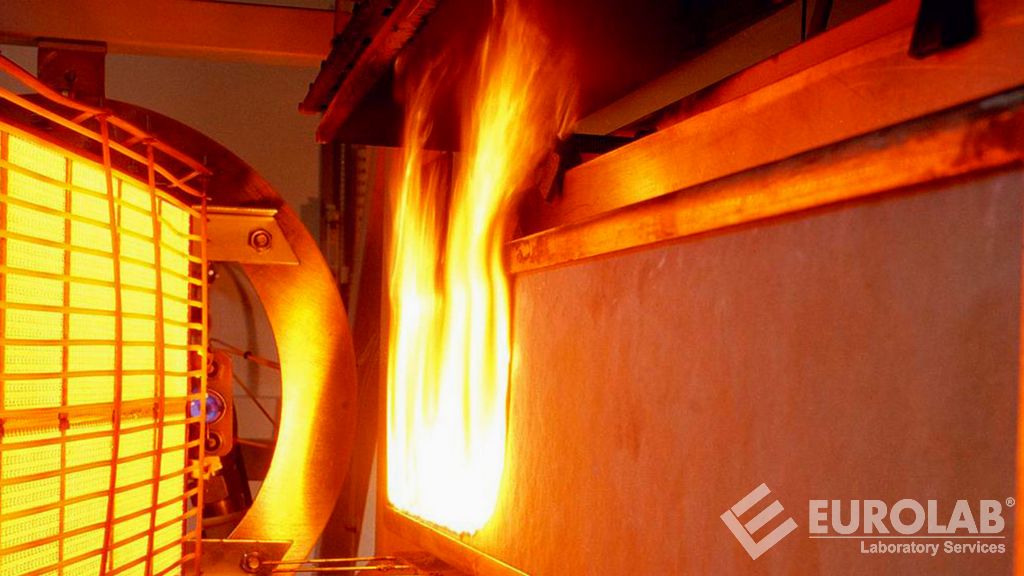
There are standards that examine the fire behavior of electrical wiring systems necessary to maintain the integrity of the circuit. These standards contain test conditions to verify that the system consisting of fire resistant ducts, supports, accessories and cables maintains the power supply for a certain period of time even under extreme fire conditions.
As time passes, the conduit deforms and the cable sheath wears off, but the assembly retains the electrical signal without shorting or interrupting the signal.
Depending on the time, in minutes, it is classified as E30, E60 or E90 with the capacity to keep the installation in service. The choice of installation (E30, E60 or E90) in each case depends on the time required to organize evacuation and emergency services.
Fire resistant cables are cables that carry energy and signals to emergency safety circuits that must work in case of fire for the safety of people in public buildings, the protection of valuables and devices, and the facilitation of fire response.
Halogen-free flame retardant cables, which are inherently fire-safe, can delay the spread of flame during a fire in the building, do not emit toxic and corrosive gases, and have low smoke density. However, it cannot be used in electrical circuits (emergency safety circuits) where continuity of insulation is required. The cables of these circuits must have the characteristics of fire performance cables and at the same time, they must ensure the continuity of electrical transmission for a certain period of time during the fire.
The numbers after the letter E express the time in minutes. Periods of 30, 60 and 90 minutes are commonly preferred.
Our organization also provides E30 - E60 - E90 fire resistance test services with its trained and expert staff and advanced technological equipment, among the numerous test, measurement, analysis and evaluation studies it provides for businesses in various sectors.
To get an appointment, to get more detailed information or to request an evaluation, you can ask us to fill in our form and reach you.

