

The “UL 790 Standard Test Methods for Fire Testing of Roofing Coverings” standard, developed by Underwriters Laboratories (UL), describes the requirements for measuring the relative fire properties of roofing coverings exposed to simulated fire sources originating from the outside of the building where they are installed. These requirements apply to roofing coverings intended to be installed on combustible or non-combustible roof decking, as intended.
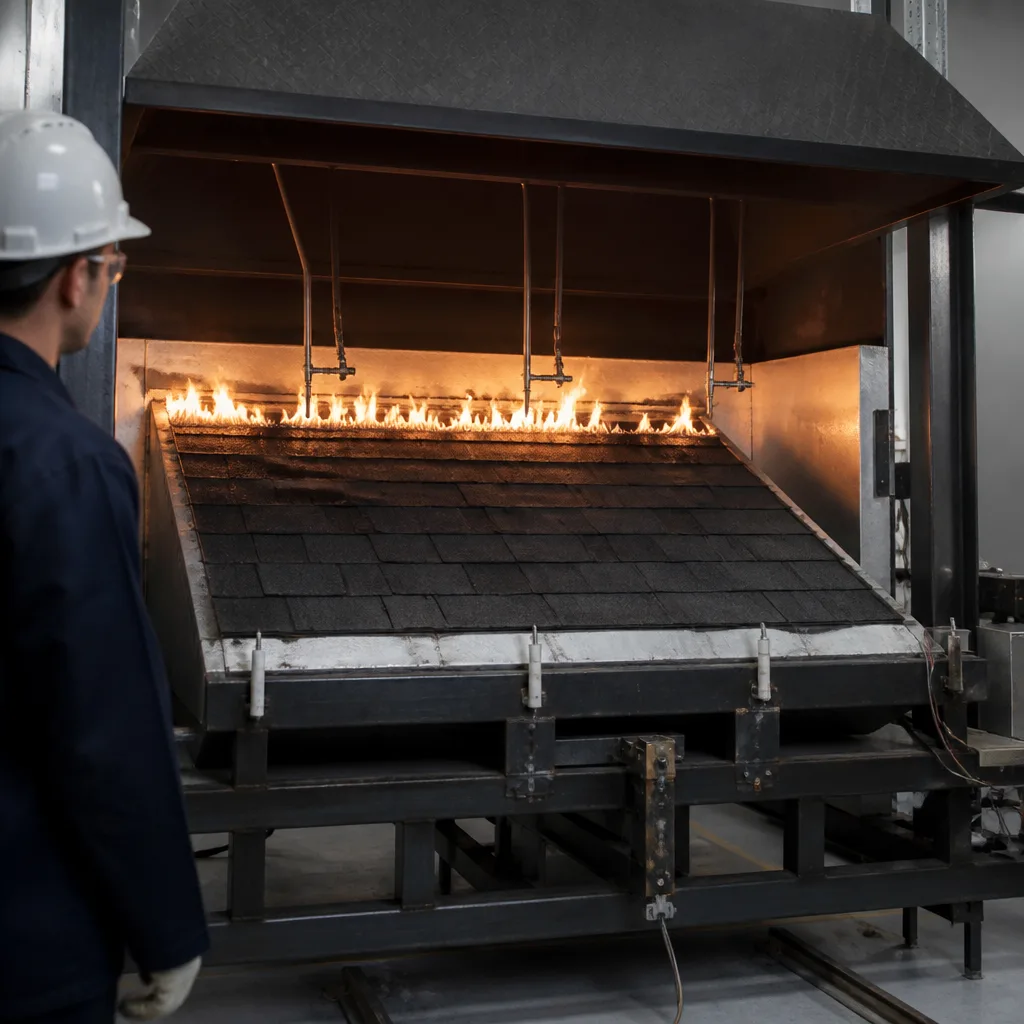
The UL 790 standard defines the following test methods:
This standard defines three fire exposure classes:
These classifications allow designers and regulators to select roofing systems that are suitable for the fire hazards associated with a particular building location.
Tests conducted in accordance with these requirements aim to demonstrate the performance of roofing materials over the types and durations of fire exposure in question, but do not aim to determine the acceptability of roofing materials for use after fire exposure. These fire testing methods do not provide a baseline for comparing expected performance under all real fire conditions, but they do provide a baseline for comparing the response of roofing materials when exposed to the fire sources described herein.
These test methods address roofing materials used on both combustible and non-combustible decking. Combustible decking is typically constructed using materials that do not meet the ASTM E136 standard requirements. These include wood sheathing, oriented strand board (OSB), or plywood. Non-combustible decking, on the other hand, is typically constructed entirely from materials that fully meet the ASTM E136 standard requirements. These include metal, concrete, or cast plaster.
The UL 790 standard is one of the most widely recognized fire safety standards for evaluating the external fire performance of roof systems. This standard establishes laboratory test methods to determine how roof coverings react when exposed to fire sources originating from outside the building, such as burning embers, flames from adjacent structures, or wind-borne fire fragments.
The UL 790 standard is widely referenced by building codes, roofing manufacturers, architects, and certification bodies throughout North America. It provides a standardized method for comparing the fire performance of different roofing materials and installations.
The primary purpose of the UL 790 standard is to evaluate the relative fire performance of roofing materials when subjected to simulated external fire exposures. This standard helps determine whether a roofing system can:
The UL 790 standard, rather than measuring the fire resistance of an entire building, specifically evaluates the performance of roofing systems installed on combustible or non-combustible roof decking.
This standard applies to numerous roofing products, including:
This standard evaluates complete roof systems, including roofing, underlayment, fastening system, and support decking, as all components affect overall fire performance.
The UL 790 standard includes various standardized fire exposure tests:
The UL 790 standard plays a vital role in modern building safety because roof systems are often the first building component to be exposed to external fires. This standard helps to:
Many building codes require roof systems to meet specific UL 790 standard classifications, depending on the type of use, roof structure, and regional fire risk.
The UL 790 standard is widely used in the following areas:
Roofing manufacturers also rely on UL 790 certification when marketing their products in North America.
The UL 790 standard is technically compatible with the ASTM E108 Standard Test Methods for Fire Testing of Roofings standard. Both standards use essentially equivalent fire testing procedures and are often used interchangeably by building codes and certification bodies.
Compliance with the UL 790 standard offers manufacturers several advantages:
Manufacturers typically conduct UL 790 standard testing during product development to optimize roof system design before commercial release.
For many years, our organization, with its competent and experienced team, has been understanding the needs of its clients, providing the advanced testing services they require, and assisting them in the establishment, implementation, and improvement of management systems. Within this framework, we also provide testing services compliant with the UL 790 standard.
To get an appointment, to get more detailed information or to request an evaluation, you can ask us to fill in our form and reach you.

