EN 12101 Smoke and Heat Control Systems
The "EN 12101 Smoke and heat control systems" standard, which is a European standard, consists of the following subsections published under the same title:
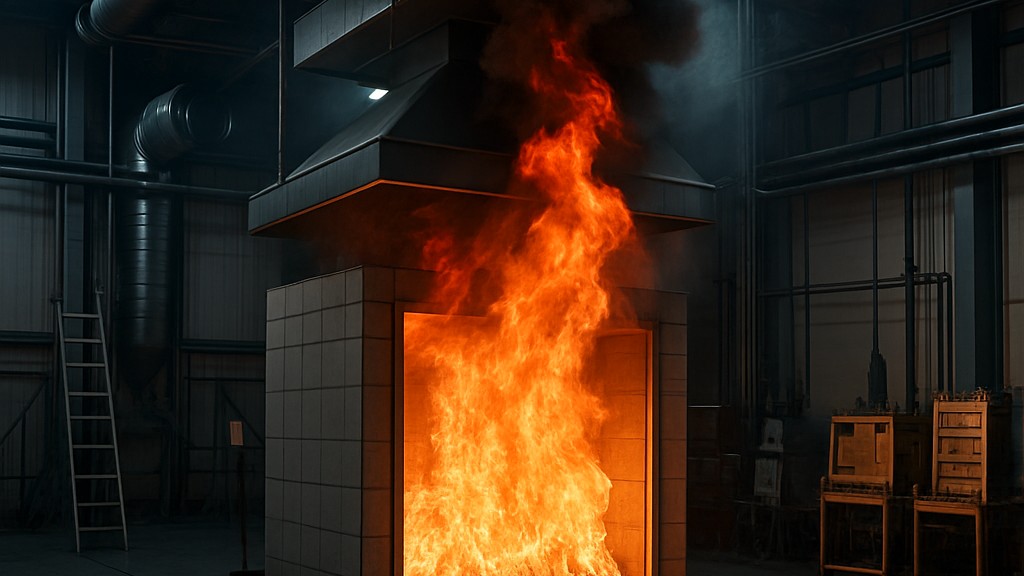
- The standard "EN 12101-1 Part 1: Specification for Smoke Barriers" describes the product characteristics, test and evaluation methods, and test result conformity criteria for smoke barriers, including the barrier itself, with or without associated actuation and actuating devices. This standard does not cover barriers constructed from part of the building structure. Smoke barriers are designed for installation in smoke control systems in construction works.
- The standard "EN 12101-2 Part 2: Natural smoke and heat exhaust ventilators" describes the requirements for natural smoke and heat exhaust ventilators placed on the market and operating as part of smoke and heat exhaust systems. This standard specifies the requirements and provides test methods for natural smoke and heat exhaust ventilators intended for installation in smoke and heat control systems in buildings.
- The standard "EN 12101-3 Part 3: Technical specifications for powered smoke and heat control ventilators (fans)" describes the product specifications for powered smoke and heat control ventilators (fans) intended for use as part of a powered smoke and heat control ventilation system in construction. This standard provides the test and evaluation methods for the specifications and the conformity criteria for the test evaluation results. This standard covers:
- Fans for smoke and heat control ventilation
- Pulse/jet fans for smoke and heat control ventilation
Smoke and heat control ventilation systems help:
- Keeping escape and access routes clear of smoke.
- To facilitate firefighting operations by creating a smoke-free layer.
- To delay or prevent deflagration and hence the full development of the fire.
- Protecting equipment and furnishings.
- To reduce thermal effects on structural components during fire.
- Reducing damage caused by thermal decomposition products and hot gases.
The standard "EN 12101-4 Part 4: Installed SHEVS systems for smoke and heat ventilation" applies to SHEVS when installed in a building. This standard specifies the ability of the system to meet the required SHEVS performances as specified in its design. It is intended to assist in translating the detailed engineering plan into an installed system, but does not specify how the design is carried out. It also specifies requirements for compatibility between components and components to ensure that the requirements in the installed system are met. This standard includes requirements for the assembly, installation, commissioning, functional testing, maintenance, periodic servicing, and routine testing of SHEVS.A smoke and heat extraction ventilation system (SHEVS) is a set of components selected together to extract smoke and heat to form a floating layer of hot gases above cooler, clean air.
- EN 12101-5 Part 5: Guidelines for Functional Recommendations and Calculation Methods for Smoke and Heat Exhaust Ventilation Systems" describes recommendations and provides guidance on functional and calculation methods for smoke and heat exhaust ventilation systems for steady-state design fires. This standard is designed for a variety of building types and applications, including single-story buildings, mezzanines, warehouses with pallet or rack storage, shopping malls, atriums and complex buildings, car parks, entertainment and public meeting spaces, and unpartitioned spaces in multi-story buildings.
This standard does not include any functional recommendations for design parameters where the primary purpose of a SHEVS is to assist in firefighting. Such functional recommendations should be agreed upon with the fire department responsible for the particular building.
The calculation procedures specified in the annexes to this standard can be used to design the SHEVS to meet the agreed recommendations.
This standard does not cover:
- Smoke evacuation, where smoke is vented out of a building after the fire has been suppressed.
- Cross ventilation is the use of wind or fan-driven air currents to sweep smoke from inside and outside a building (usually as part of firefighting operational procedures).
- Ventilation of stairwells generally represents a specialized application of smoke extraction and does not necessarily protect the continuous use of the stairwell.
- Full-blown fires.
The standard "EN 12101-6 Part 6: Requirements for pressure differential systems - Kits" applies to commercially available pressure differential system kits and components intended to operate as part of a pressure differential system. The purpose of a pressure differential system is to prevent smoke propagation within protected spaces using pressure differences and airflow. This standard specifies the requirements and test methods for components and kits for pressure differential systems to generate and control the required pressure differences and airflow between the protected and unprotected space.
- The standard "EN 12101-7 Part 7: Smoke duct sections" applies to smoke control duct sections placed on the market and intended to operate as part of a pressure differential system or smoke and heat extraction system. This standard specifies the requirements and refers to the test methods defined for smoke control duct sections and associated components (e.g., hangers and other items proven during testing) intended for installation in such systems in buildings. It also enables the assessment of product conformity with the requirements of this standard. It also includes information on the marking of these products and their installation and maintenance.
According to this standard, EN 1366-8, EN 1366-9, and EN 1366-1 apply for the details of fire resistance testing, and EN 13501-4 applies for the relevant classification. This standard does not address in detail the harmful or corrosive effects that may be caused by process chemicals present in the atmosphere and intentionally or unintentionally drawn into the system. This standard also regulates associated components, such as rotary vanes and silencers used in conjunction with smoke control duct sections, with the exception of natural and powered smoke fans and smoke control dampers. These are covered by separate standards. Ducts used outside of smoke and heat exhaust and control systems are not covered by this standard.
- The standard "EN 12101-8 Part 8: Smoke control dampers" applies to smoke control dampers placed on the market and intended to operate as part of a pressure differential system or smoke and heat control system. This standard specifies requirements and references the test methods defined for smoke control dampers and their associated components, such as actuators, intended for installation in such systems in buildings. It also enables the assessment of the conformity of these products to the requirements of this standard. It also includes information on the marking of these products and their installation and maintenance.
This standard distinguishes two categories of smoke control dampers: single-compartment smoke control dampers and multi-compartment fire-resistant smoke control dampers. The smoke control dampers covered by this standard can be installed in smoke control system ducts or on the surface of ducts. They can also be installed on a wall, floor, or ceiling/roof element, or on the surface of these elements. EN 13501-4, EN 1366-10, and EN 1366-2 apply to the details of furnace testing in accordance with this standard. This standard does not address in detail the harmful or corrosive effects that may be caused by process chemicals present in the atmosphere and intentionally or unintentionally drawn into the system.
- The “EN 12101-9 Part 9: Control panels” standard describes product performance requirements, classifications and test methods for control panels designed for use in smoke and heat control systems in buildings.
Control panels are required to control all moving components in a SHEVS system, such as natural fans, motorized fans, smoke barriers, smoke dampers and air inlets.
SHEVS control panels can also provide daily ventilation control and send signals to other fire safety equipment under fire conditions. SHEVS control panels can be for extra-low voltage or low-voltage electrical systems, pneumatic systems, or any combination thereof. Power supply equipment for control panels is covered in EN 12101-10.
- EN 12101-10 Part 10: Power supplies" specifies the requirements and test methods for primary and secondary electric and pneumatic power supply equipment designed for use in smoke and heat control systems in buildings. It also provides an assessment of the conformity of such equipment to the requirements of this standard.
The power supply equipment for a smoke and heat control system may be pneumatic systems, low-voltage or very-low-voltage electrical systems, or a combination of these. Smoke and heat control system power supplies may also provide power for daily ventilation and other fire safety equipment under fire conditions.
- The standard "EN 12101-11 Part 11: Horizontal-flow ventilation systems for indoor car parks" describes the minimum design, installation, and commissioning requirements for reinforced smoke and heat control systems for indoor car parks for cars and light commercial vehicles (maximum 3,5 t) using horizontal-flow ventilation, with or without sprinkler protection, on one or more levels. This standard is applicable to car parks accommodating vehicles powered by gasoline, diesel, electricity, CNG, or LPG.
Hydrogen-powered vehicles are not covered by this standard. This standard only covers conventional parking lots with shared vehicle access lanes, with adjacent parking spaces. It does not cover other types of parking systems, such as stacked systems. Risks other than fire from vehicles are not covered by this document.
Smoke control systems can generally be designed for one or more of three purposes in the event of a fire:
- Protecting escape routes from the parking lot.
- To ensure that firefighters have adequate smoke-free access to a point near the seat of the fire.
- Helping firefighters clear smoke from the parking lot.
The standard "EN 12101-12 Part 12: Design and calculation of smoke and heat exhaust ventilation systems using time-dependent fire" describes the design principles, functional requirements, and calculation methods for SEFC systems for time-dependent fire design to provide a smoke-free environment. This standard is intended for various building types, including single-story buildings, intermediate floors, warehouses with pallet or rack storage, shopping malls, atriums and complexes, car parks, entertainment venues, and spaces within historical buildings. This standard uses methods to define some design parameters, such as the time required for safe evacuation or the time required for firefighting crews to be present, but does not cover them.
- The standard "EN 12101-13 Part 13: Pressure differential systems (PDS) - Design and calculation methods, installation, acceptance tests, routine tests and maintenance" describes calculation methods, guidance and requirements for the design, installation, acceptance testing, routine testing and maintenance of pressure differential systems (PDS). PDSs are designed to contain smoke at a leaky physical barrier in a building (an open or closed door or other similarly restricted opening) and, depending on the application, maintain sustainable conditions in escape and access routes. It covers systems intended to protect escape routes such as stairwells, corridors, lobbies, and systems intended to provide a protected fire-fighting area (bridgehead) for the fire services. It provides details on the critical features and associated procedures for installation. It describes the commissioning procedures and acceptance test criteria required to verify that the calculated design has been achieved in the building.
This standard provides rules, requirements, and procedures for designing PDSs for buildings up to 60 m. The same requirements apply to buildings taller than 60 m, but additional calculation and verification methods are required. These methods and verification requirements are included in the standard's appendix (Annex D), but the methods are beyond the scope of this standard. Routine testing and maintenance requirements are also defined in this standard. In the absence of national requirements and under the expected environmental and external conditions, the PDS shall meet the requirements in the table. The PDS shall be designed to perform its function for the required operating time (e.g., 30, 60, or 90 minutes) in accordance with national requirements.
Our organization, which has been supporting businesses across all sectors for years through a wide range of testing, measurement, analysis, and evaluation activities, has a strong team of employees who closely follow global developments in science and technology and are constantly improving themselves. In this context, we also provide testing services to businesses in accordance with the "EN 12101 Smoke and Heat Control Systems" standard.



