

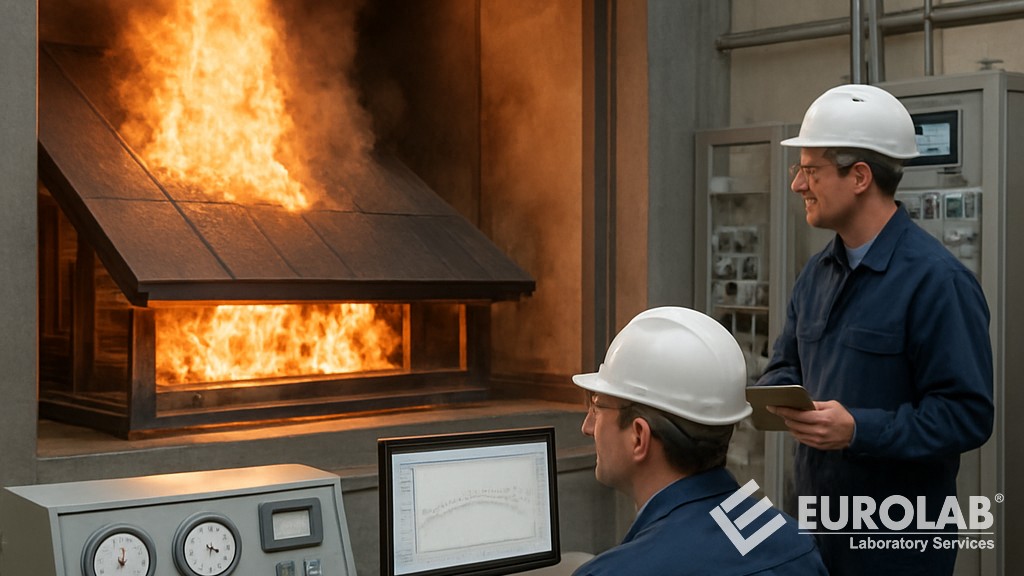
The European standard “EN 13501-7 Fire classification of building products and building elements - Part 7: Classification using data from external fire exposure on roofs” defines the classification of the fire reaction performance of roof coverings when exposed to fire from outside the building (external fire exposure). This standard is part of the broader EN 13501 series, but specifically addresses roofs and roof coverings, with a focus on ventilation systems.
The main purpose of the EN 13501-7 standard is as follows:
The EN 13501-7 standard is critically important for building and fire safety because:
The places where this standard is applied in publication are as follows:
Standard fire reaction standards (EN 13501-1) test products on a small scale (single burning element test, non-combustibility, etc.), which works well for walls and ceilings. However, roofs can be punctured by flying debris, radiating heat, and flame droplets from an external fire (e.g., embers from a burning neighboring building or forest fire). Therefore, special, large-scale tests have been developed that better simulate a real external fire attack on roofs. The EN 13501-7 standard is always used in conjunction with one or more of the following test methods.
The standard “CEN/TS 1187 Test methods for exposure of roofs to external fire” describes four possible test methods:
The tests evaluate the spread of fire to the exterior surface of the roof, its spread within the roof (tests 1, 2, and 3), the penetration of the fire (tests 1, 3, and 4), and the formation of flaming droplets or debris falling from the underside of the roof or from exposed surfaces (tests 1, 3, and 4).
Tests 2 and 3 are not applicable to geometrically irregular roofs or roof-mounted devices such as vents and skylights.
The four tests listed above do not require any particular order. Each test is valid on its own and is not interchangeable or substituted for another.
Most countries adopt several of these methods, but their historical preferences have differed. For example, Germany uses the t1 method, while the United Kingdom initially used the t4 method and later the BS 476-3 standard.
According to the EN 13501-7 standard, the external fire performance classification of roofs and roofing materials is as follows:
“t1”, “t2”, “t3”, or “t4” should always be specified because the same product can receive different classifications depending on the test method used. Examples of classifications frequently encountered in practice are as follows:
Since 2013, the external fire performance of roofing materials has been a mandatory characteristic under the EU construction products regulation in most member states (harmonized characteristic “External fire performance”). Therefore, manufacturers must issue a declaration of performance and apply the CE mark, including the EN 13501-7 classification, when the product is placed on the market.
Some countries also impose distance rules to the border: the lower the performance, the greater the required distance from the border or neighboring buildings.
In conclusion, the EN 13501-7 standard is the applicable European classification system for the external fire performance of roofs and roofing materials. This classification is based on the comprehensive tests in the CEN/TS 1187 standard. Since the accepted test method and minimum class may vary, it is essential to check the national building regulations of the country of use.
For many years, our organization, with its competent and experienced staff, has been understanding the needs of its clients, providing the advanced testing services they require, and assisting in the establishment, implementation, and improvement of management systems. Within this framework, we also provide testing services to businesses in accordance with the "EN 13501-7 Fire classification of construction products and building elements - Part 7: Classification using data from external fire exposure on roofs" standard.
To get an appointment, to get more detailed information or to request an evaluation, you can ask us to fill in our form and reach you.

