

The International Organization for Standardization (ISO) standard ISO 1716 Reaction to fire tests for products — Determination of gross heat of combustion (calorific value) describes a method for determining the gross heat of combustion of products at a constant volume in a bomb calorimeter. This method is intended for application to solid products. Liquids can be tested using the test equipment described in ISO 1928 Solid mineral fuels — Determination of gross calorific value and calculation of net calorific value by the bomb calorimetric method in accordance with IEC 61039 Classification of insulating liquids and using similar equipment and conditions described in ASTM D240-00 Standard test method for heat of combustion of liquid hydrocarbon fuels by bomb calorimeter. The appendix to the standard describes the calculation of the net heat of combustion when necessary (Annex A). Information on the sensitivity of the test method is given in Annex B.
For the purposes of this standard, the following terms and definitions apply:
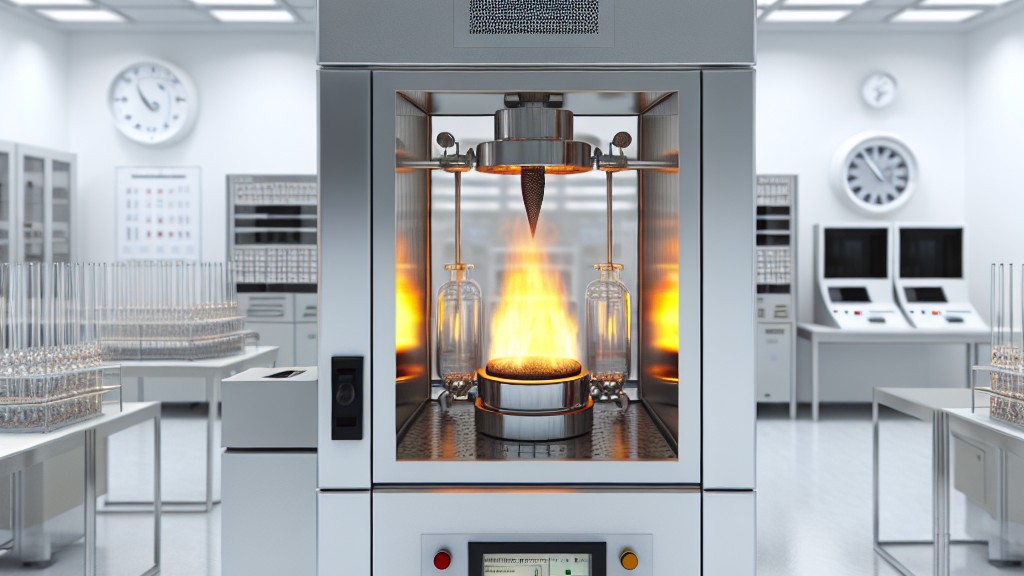
In principle, this test involves burning a test sample of a given mass in a calibrated bomb calorimeter under standardized conditions, at a constant volume, in an oxygen atmosphere, by burning certified benzoic acid. The heat of combustion determined under these conditions is calculated based on the observed temperature rise, taking into account the heat loss and the latent heat of vaporization of water. This is a test method for determining the absolute value of the heat of combustion for a product and does not take into account any inherent variability of the product.
The calorimetric bomb used in these tests is manufactured to have the following features:
The lid is designed to receive the crucible and electric ignition device. The lid, including all seals, must be able to withstand an internal pressure of 21 MPa.
These conditions define a bomb in which 3 g of coal, under an initial oxygen pressure of not more than 1 MPa (pressure gauge method), can withstand with a sufficient safety factor the maximum amount of pressure developed during combustion without the need for a calorimetric bomb of excessively large mass.
The internal surface of the bomb must be resistant to attack by combustion products and must be resistant to pitting and intercrystalline corrosion by acids formed during combustion, even when sulfur-rich fuels are used.
These tests also require the following equipment: calorimeter, temperature measuring device, crucible, timing device, electric power source, pressure gauge and needle valve, balance, “cigarette” making device and pellet making device.
Our organization has a strong staff that closely follows the developments in the world in the field of science and technology and constantly improves itself. Among the numerous test, measurement, analysis and evaluation studies provided for businesses in various sectors, there are also test services in accordance with the standard “ISO 1716 Reaction to fire tests for products - Determination of gross combustion heat (calorific value)”.
To get an appointment, to get more detailed information or to request an evaluation, you can ask us to fill in our form and reach you.

