

The ISO 9772 standard, “Cellular plastics – Determination of the horizontal combustion properties of small samples exposed to a small flame,” developed by the International Organization for Standardization (ISO), describes a small-scale laboratory screening procedure for comparing the relative combustion properties of small, horizontally oriented cellular plastic samples with a density less than 250 kg⋅m⁻³ as defined according to ISO 845, when exposed to a small flame ignition source.
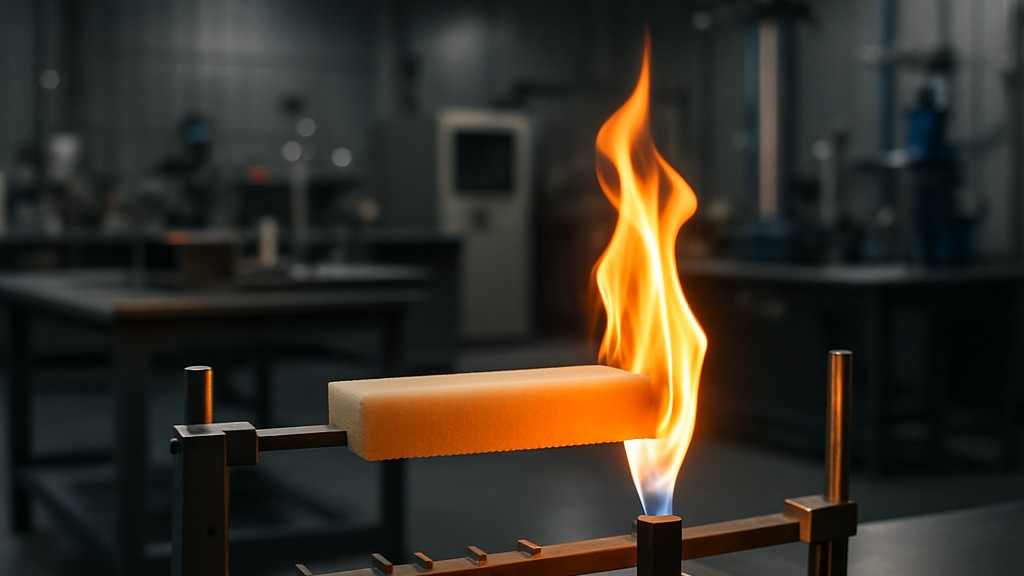
There is another international standard covering flexible cellular plastics and cellular rubber: ISO 3582 Flexible cellular polymeric materials - Laboratory evaluation of horizontal burning characteristics of small samples exposed to a small flame. This test method is intended for quality assurance and limited product evaluation of cellular plastic materials under controlled laboratory conditions and is not intended for evaluating the fire behavior of, for example, building materials or furniture under actual fire conditions. An optional classification system, described in an annex to the standard, is intended for pre-selection of cellular plastic materials for products, including the specification of ranges of material parameters that confer the same classification (Annex A).
For the purposes of this standard, the following definitions apply in addition to the terms and definitions given in ISO 13943:
Tests performed on a material under specified conditions can be of significant value when comparing the horizontal burning properties of different materials, controlling manufacturing processes, or evaluating changes in formulation or processing before use.
Assessing fire hazard requires consideration of factors such as fuel contribution, combustion intensity (heat release rate), and combustion products, as well as environmental factors such as source intensity, orientation of exposed material, and ventilation conditions.
The horizontal burning properties measured by this test procedure may be affected by factors such as density, any anisotropy of the cellular material, melting characteristics, color, and thickness.
Some materials may be pulled from an applied flame without igniting. In this case, the test results are not valid, and additional test samples are required to obtain 10 valid test results. If this proves impossible because not all samples ignite, this test is not suitable for these materials. Because the horizontal burning properties of some cellular plastic materials may change over time, tests are performed before and after thermal aging.
The ISO 9772 standard is essential because it provides a standardized method for testing the flammability of cellular plastics (foams) under controlled laboratory conditions. This standard is considered important for the following reasons:
In short, the ISO 9772 standard is essential to ensure fire safety, ensure global consistency in testing, support compliance with safety regulations, and ultimately protect life and property. The purpose of this standard is to provide a small-scale test method for determining the flammability properties of cellular plastics (foams) when exposed to a small flame ignition source.
Our organization, which has been supporting businesses across all sectors for years through a wide range of testing, measurement, analysis, and evaluation activities, boasts a strong team of employees who closely follow global developments in science and technology and are constantly improving themselves. In this context, we also provide testing services in accordance with the ISO 9772 Cellular Plastics - Determination of the Horizontal Burning Properties of Small Samples Exposed to a Small Flame.
To get an appointment, to get more detailed information or to request an evaluation, you can ask us to fill in our form and reach you.

