DIN 14811 Fire Suppression Hoses - Sealed, Straight Distribution Hoses and Hose Assemblies for Pumps and Vehicles
The standard “DIN 14811 Fire extinguishing hoses - Sealed, straight delivery hoses and hose assemblies for pumps and vehicles”, published by the German Institute for Standardization (DIN), describes the requirements for sealed, straight hoses (pressure hoses) and their components used in fire extinguishing. These hoses transport extinguishing agents (primarily water, but in some cases foam or other media) from pumps, hydrants, or fire trucks to the point of application.
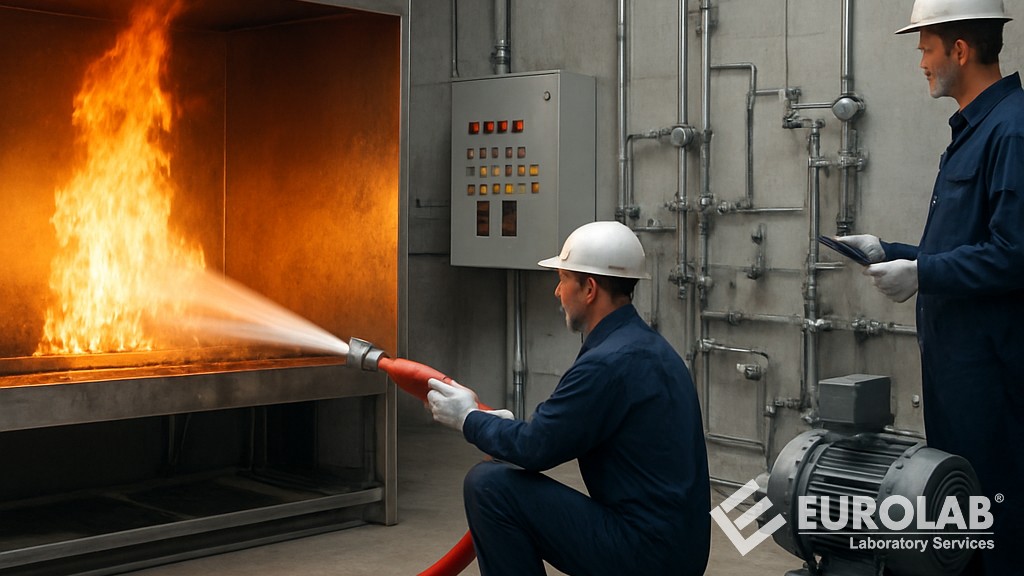
This standard applies to straight hoses that do not allow significant leakage from their outer sheath under pressure. These are the classic fire hoses carried on fire trucks and used in assault lines, transfer pumping, or supply lines.
Essentially, this standard covers the following:
- Hoses without connectors
- Ready-made hose assemblies with connectors (Storz symmetrical connectors)
Hoses must remain flexible when straight, coil compactly, and withstand the harsh conditions of firefighting (abrasion, heat, chemicals, folding).
The DIN 14811 standard defines hose classes and performance levels primarily based on nominal diameter and pressure resistance:
- B hoses: Nominal diameter approximately 75 mm
- C hoses: Nominal diameter approximately 52 mm (most common assault hose)
- D-shaped hoses: Nominal diameter approximately 25-45 mm
The classes were determined as follows:
- Class 1: Highest requirements (most common for professional fire departments)
- Class 2: Reduced requirements (sometimes used for training or industrial fire crews)
Performance levels (1-3):
- Level 1: Generally has the highest durability / lowest pressure loss.
- Lower levels: Lighter/cheaper but still meets minimum security requirements.
Typical nominal values (Class 1 / Level 1) are as follows:
- Working pressure: 16 bar
- Test pressure: 25 bar
- Burst pressure: at least 60 bar (in practice usually much higher)
The basic requirements in the DIN 14811 standard are as follows:
- Construction: Circular woven synthetic yarn outer coating (usually polyester), inner rubber lining (EPDM, NBR or similar), sometimes with special coatings.
- Pressure loss tables are crucial for hydraulic calculations.
- Dimensional tolerances (inner diameter, length variation under pressure, expansion).
- Wear resistance, bending resistance, heat resistance, aging behavior.
- Adhesion between the primer and the outer coating.
- Fastener attachment: How fasteners should be attached (e.g., by wire bonding).
- Test methods for type testing and batch testing.
- Marking requirements (manufacturer, standard, class, year, length)
In many European countries, only hoses certified according to the DIN 14811 standard are generally accepted for use in professional and volunteer fire trucks. This standard ensures the following:
- Reliable performance under high pressure.
- Compatibility with Storz fasteners.
- Interchangeability between different manufacturers
- Long service life (typically 10-20 years with good maintenance)
The DIN 14811 standard was designed because fire hoses are vital pieces of equipment. A malfunction during an operation can directly endanger firefighters, victims, property, and the entire success of the mission. Without the DIN 14811 standard, the reliability, interoperability, and performance of these hoses would vary dangerously between manufacturers, materials, and countries.
The main reasons why this standard is considered important are:
- Minimum safety is guaranteed under extreme pressure: Fire hoses routinely operate at a working pressure of 16 bar, are tested at 25 bar, and have burst pressures of at least 60 bar. Unless minimum burst strength, adhesion between the liner and outer sheath, bending resistance, and heat/chemical resistance are standardized, hoses may burst, be tossed around with lethal force, or fail to deliver water when it is most needed.
- Provides consistent hydraulic performance (pressure loss/flow): This standard includes precise pressure loss tables for each hose type and performance level. Firefighters and pump operators rely on these precise values for hydraulic calculations, determining how many lines can be supplied, what nozzle pressure can be achieved over the distance, or whether relay pumping is necessary.
- It meets abrasion, aging, and durability requirements: Fire hoses are dragged over concrete, asphalt, glass, and rubble, exposed to heat, oils, fuels, acids, UV rays, ozone, and repeated folding/rolling. This standard mandates testing for abrasion resistance, post-aging adhesion, low kink tendency, and long-term behavior. Cheaper or substandard hoses will wear out prematurely or separate into layers, leading to leaks or bursts during operation.
- It standardizes fittings and hose assemblies: In the Central European region, almost all fire departments use Storz symmetrical fittings. This standard precisely specifies how the fittings should be attached to the hose (attachment method, wire type, number of turns) to ensure that the connections hold reliably and do not break under high pressure.
Consequently, the DIN 14811 standard is the reference standard for straight pressure distribution hoses, the most important type of fire hose in Central Europe. This standard combines safety, hydraulic performance, durability, and practical usability requirements. Although the “EN 14540 Fire extinguishing hoses - Sealed, straight hoses for fixed systems” standard exists and is gradually becoming more widespread, the DIN 14811 standard remains the dominant specification for many fire departments due to its detailed, proven requirements and long history.
For many years, our organization, with its competent and experienced staff, has been understanding the needs of its customers, providing the advanced testing services they require, and assisting in the establishment, implementation, and improvement of management systems. Within this framework, we also provide testing services to businesses in accordance with the "DIN 14811 Fire extinguishing hoses - Leak-proof, straight distribution hoses and hose assemblies for pumps and vehicles" standard.



