IEC 331 Fire Resistance Properties of Electrical Cables
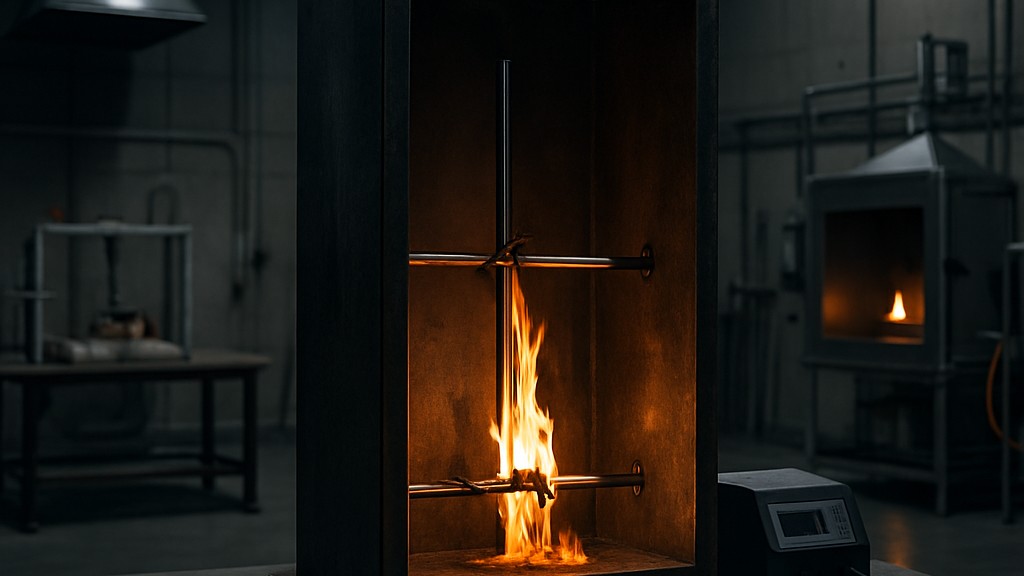
The standard "IEC 331 Fire-resistance characteristics of electrical cables," published by the International Electrotechnical Commission (IEC), describes test methods to ensure that cables maintain circuit integrity when exposed to fire for a specified period. In other words, this standard is designed to test whether a cable will still function during a fire, which is critical for emergency lighting, fire alarms, ventilation controls, and similar systems.
The IEC 331 standard was later replaced by the following standards:
- IEC 60331 Tests for electrical cables under fire conditions - Circuit integrity: This is a family of standards developed for the fire resistance of cables. The purpose of this series of standards is to ensure fire resistance (circuit integrity).
- IEC 60332 Tests on electric and optical fibre cables under fire conditions: This standard covers flame-retardant cables (not the same as fire-resistant cables). The aim of this series of standards is to provide flame retardancy (self-extinguishing).
The IEC 60331 standard for fire resistance of cables is crucial for ensuring the uninterrupted operation of critical systems in safety-critical environments such as power plants, hospitals, airports, tunnels, and high-rise buildings. This standard is a globally accepted criterion for assessing the fire resistance of electrical cables.
This standard ensures that cables will continue to carry electricity for a specified period during a fire and provide power to essential equipment such as emergency lighting, alarms, communication systems and fire pumps.
The primary purpose of this standard is to simulate real-world fire scenarios and assess whether a cable can still function under such conditions. Cables that pass the IEC 60331 test are referred to as fire-resistant cables or circuit integrity cables. However, this standard should not be confused with flame-retardant cables, which are tested according to a different standard, such as IEC 60332.
The IEC 60331 standard consists of the following subsections published under the same title:
- The standard "IEC 60331-1 Part 1: Test method for cables having a rated voltage up to 0,6/1,0 kV and a total diameter exceeding 20 mm by shock at a temperature of at least 830 degrees Celsius" describes a test method for cables that are required to maintain circuit integrity when exposed to fire and mechanical shock under specified conditions. This standard is applicable to cables having a rated voltage not exceeding 600/1000 V, including rated voltages below 80 V, metallic data and telecommunication cables, and optical fiber cables. This standard is intended for use in testing cables having a total diameter greater than 20 mm. Cables with smaller diameters are intended to be tested using the apparatus, procedures, and requirements of IEC 60331-2.
- The standard "IEC 60331-2 Part 2: Part 2: Method of test for cables having a rated voltage up to 0,6/1,0 kV and a total diameter not exceeding 20 mm by shock at a temperature of at least 830 degrees" describes a test method for cables that are required to maintain circuit integrity when exposed to fire and mechanical shock under specified conditions. This standard is applicable to cables having a rated voltage not exceeding 600/1000 V, including metallic data and telecom cables and optical fiber cables with a rated voltage below 80 V. This standard is intended for use in testing cables having a total diameter not greater than 20 mm. Cables with larger diameters are intended to be tested using the apparatus, procedures and requirements of IEC 60331-1.
- The standard "IEC 60331-3 Part 3: Test method for fire by shock at a temperature of at least 830 degrees Celsius for cables having a nominal voltage up to 0,6/1,0 kV and an overall diameter exceeding 20 mm" describes a test method for cables that are required to maintain circuit integrity when tested in a metal enclosure and subjected to fire and mechanical shock under specified conditions. This standard applies to cables having a nominal voltage not exceeding 600/1000 V, metallic data and telecom cables, and fiber optic cables, including those having a nominal voltage below 80 V. This standard is intended for use in testing cables with an overall diameter not greater than 20 mm.
- The standard "IEC 60331-4 Part 4: Test method for fire by shock at a temperature of at least 830 degrees Celsius for cables having a rated voltage greater than 1 kV up to 30 kV" describes the test apparatus and procedure, including recommended flame application times and flame temperatures, and gives performance requirements for maintaining circuit integrity when exposed to fire and mechanical shock under specified conditions for power cables having a rated voltage greater than 0,6/1,0 kV. This test method is limited to conductor sizes up to 120 mm2. Test results for 120 mm2 conductor structures also cover larger cross-sections of the same cable structure.
- The standard "IEC 60331-12 Part 12: Apparatus - Fire Shock at a Temperature of at least 830°C" describes the test apparatus for testing cables required to maintain circuit integrity when exposed to fire and mechanical shock. The test condition is based on a flame with a controlled heat output corresponding to a nominal temperature of 850°C. This standard is intended for use in testing cables with diameters greater than 20 mm. Additionally, the standard's annex includes a method for verifying the burner and control system used for the test (Annex A).
Tests generally work as follows:
- Sample preparation: Cable samples are placed in a test rig.
- Fire exposure: A flame of 830 degrees to 1.000 degrees is applied to the cables for a specified period of time (usually 90 minutes).
- Mechanical shock (optional): Cables can be subjected to mechanical shock or water spray to simulate real-life stress during a fire.
- Application of voltage: A voltage (usually 230 Volts or higher) is applied during the test to check if the cable maintains circuit integrity.
- Pass/fail criteria: Pass if the cable continues to carry voltage throughout the entire test without short circuit or open circuit faults.
In short, the IEC 60331 standard tests whether a cable will function in the event of a fire (fire resistance). The IEC 60332 standard tests whether a cable can limit the spread of fire (flame retardancy). These standards are complementary, and cables used in critical infrastructures generally comply with both.
Cables complying with these standards are typically used in the following areas:
- Fire alarm systems
- The progress in the field of emergency lighting systems
- Voice evacuation systems
- Power supplies to smoke extractors
- Life safety systems in public transport infrastructure
Ultimately, these standards play a vital role in ensuring electrical systems continue to operate during a fire, potentially saving lives and reducing property damage. As global infrastructure continues to evolve with safety in mind, these and similar standards ensure that cable manufacturers and building designers meet stringent fire resistance and reliability requirements.
Our organization, which has been serving for many years and meticulously following global developments in science and technology, employs a skilled team and extensive infrastructure to conduct testing, measurement, and analysis in a wide range of areas for businesses across all sectors. In this context, we also provide testing services in accordance with the IEC 331 Fire Resistance Properties of Electrical Cables standard.



