

The European standard "EN 61034 Measurement of smoke density of burning cables under defined conditions" consists of the following subsections published under the same title:
For the purposes of this standard, the term electrical cable covers all insulated metallic conductor cables used for power or signal transmission. The main changes made in the latest update of this standard are:
The measurement of smoke density of cables burning under defined conditions is an important aspect in assessing the combustion performance of cables, as it is relevant to occupant evacuation and accessibility for firefighting. The two parts of this standard together provide a test method for measuring smoke density of cables burning under defined conditions. Users of this test should be aware that the cable configurations in the test, i.e., test pieces or bundles of test pieces, may not represent actual installation conditions.
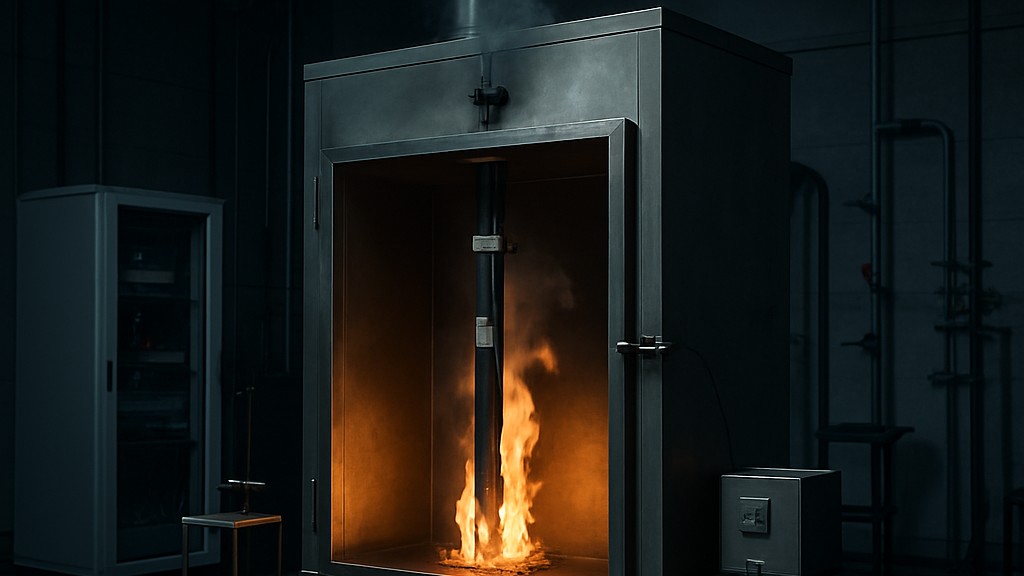
The EN 61034-1 standard details a 27 m3 test enclosure, a photometric system for light measurement, a fire source, a smoke mixing method and a qualification procedure. An annex to the standard provides guidance on various aspects of the test apparatus that may be useful in the initial construction of the test enclosure (Annex A).
In the context of product development, it's important to investigate early on the extent to which cables contribute to smoke generation in the event of a fire. Fire testing according to EN 61034-2 produces data used to determine smoke density when cables are burned.
Requirements under the Construction Products Directive (CPR) mean that cables must be CE marked and classified as fire resistant according to the European Reaction to Fire Classification System (Euro Classes) to be sold as construction products. This system is the common European Union standard for assessing the properties of building materials in the event of fire. In some applications, additional smoke density classification is required. Data obtained from tests according to EN 61034-2 form the basis for CE marking.
During the tests, the cable to be tested is mounted in 1-meter lengths on a frame placed over a container containing a mixture of ethanol, methanol, and water. The mixture is ignited and allowed to burn until consumed, approximately 40 minutes. Smoke density is measured during the test period.
The EN 61034 standard generally provides a method for determining the smoke emission characteristics of electrical and optical fiber cables. This standard is crucial for assessing the amount of smoke a cable produces when burning, which directly impacts visibility and safety in fire scenarios.
In the event of a fire, smoke from burning materials (especially cables) can significantly hinder evacuation and rescue operations. Dense, toxic smoke can cause death not from flames but from asphyxiation and impaired visibility. Therefore, this standard ensures:
The EN 61034 standard applies to:
This standard applies to both halogen-free and halogen-containing cables and is often used in conjunction with other fire-related standards such as the EN 60332 standard (flame spread) and the EN 60754 standard (halogen acid gas emission).
The test setup includes:
The key measurement, minimum light transmittance (expressed as a percentage), reflects the transparency of the smoke. Higher transmittance indicates less dense smoke and better visibility.
A commonly used benchmark among sample penetration criteria for low-smoke cables is a minimum light transmittance of at least 60 percent, which indicates acceptable smoke production for low-smoke cables. This value may vary depending on specific requirements, local regulations, or application.
The EN 61034 standard is widely applied in the following sectors:
In short, the EN 61034 standard plays a critical role in modern fire safety engineering. By measuring how much smoke a cable produces under fire conditions, it helps manufacturers design safer products and allows regulatory bodies and designers to select the appropriate cables for safety-critical applications.
Our organization, which has been supporting businesses across all sectors for years through a wide range of testing, measurement, analysis, and evaluation activities, has a strong team of employees who closely follow global developments in science and technology and are constantly improving themselves. In this context, we also provide testing services in accordance with the EN 61034 standard for "Measurement of smoke density of burning cables under defined conditions."
To get an appointment, to get more detailed information or to request an evaluation, you can ask us to fill in our form and reach you.

