

The ASTM E659 Standard Test Method for Self-Ignition Temperature of Chemicals, developed by the American Society for Testing and Materials (ASTM), describes a test method for determining the self-ignition temperatures of a liquid chemical in air at atmospheric pressure in a homogeneously heated container, using both hot and cold flames.
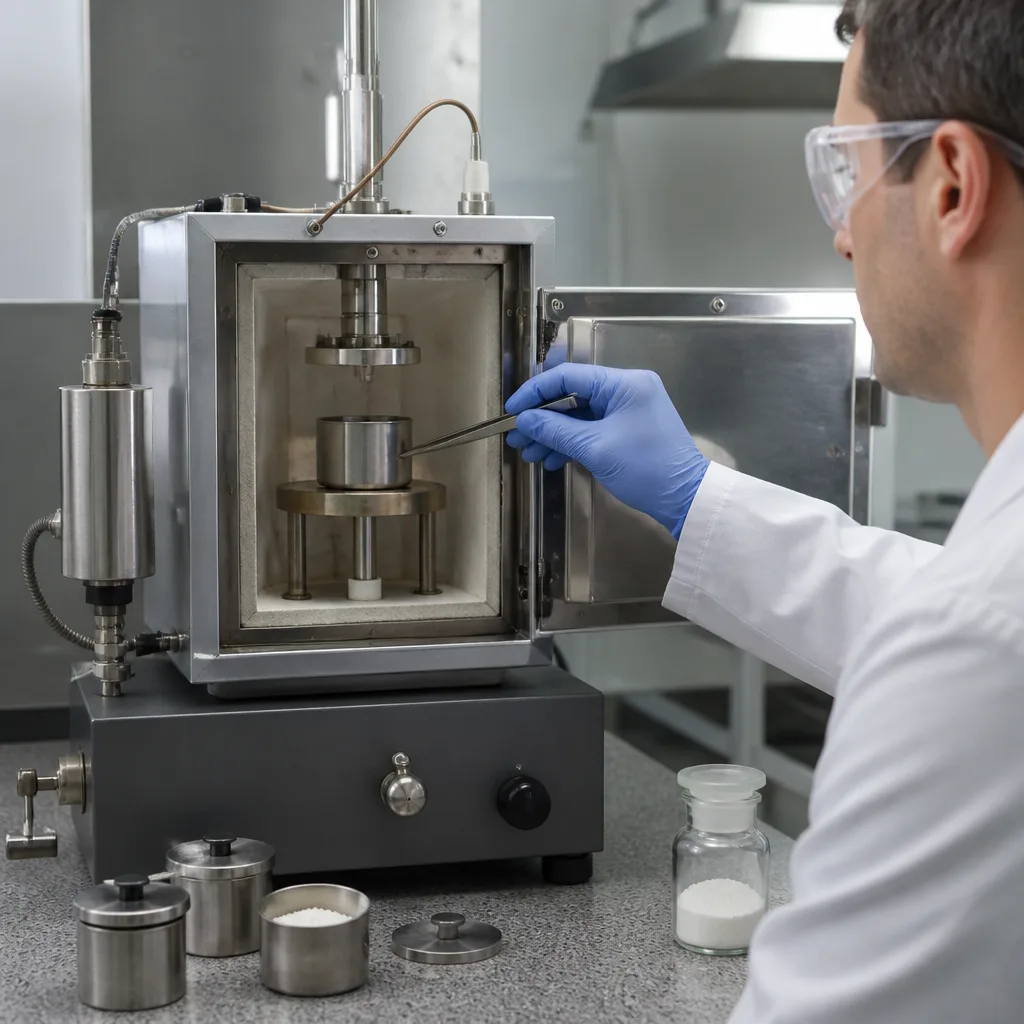
Within certain limitations, this test method can also be used to determine the spontaneous ignition temperature of solid chemicals that readily melt and evaporate at temperatures below the test temperature, and of chemicals that are in gaseous form at atmospheric pressure and temperature.
Spontaneous ignition, by its very nature, depends on the chemical and physical properties of the material and the method and equipment used to determine it. A spontaneous ignition temperature determined by a particular method does not necessarily represent the minimum temperature at which a given material will spontaneously ignite in air. The volume of the container used is particularly important, as lower spontaneous ignition temperatures are obtained in larger containers. The container material can also be an important factor.
The temperatures determined by this test method are the temperatures at which air oxidation leads to ignition. These temperatures are expected to vary depending on the test pressure and oxygen concentration.
This test method is not designed to evaluate materials prone to exothermic decomposition. For such materials, ignition depends on the thermal and kinetic properties of the decomposition, the mass of the sample, and the heat transfer characteristics of the system.
This test method can be used for solid chemicals that melt and evaporate or sublimate readily at the test temperature. There should be no condensed phase, liquid or solid, present when ignition occurs.
This test method is not designed to measure the spontaneous ignition temperature of materials that are solid or liquid at the test temperature (e.g., wood, paper, cotton, plastics, and high-boiling-point chemicals). Such materials will thermally decompose in the bottle, and the accumulated decomposition products may be flammable.
With appropriate modifications, this test method can be used for chemicals that are in gaseous form at atmospheric temperature and pressure.
This test method was originally developed for liquid chemicals, but it has also been used to test readily evaporating solids. The operator is responsible for extending this test method to solids whose thermal stability, boiling point, or decomposition properties are unknown.
ASTM E659 is a widely recognized test standard developed to determine the autoignition temperature of chemicals. The autoignition temperature is the lowest temperature at which a substance will spontaneously ignite in air without an external ignition source such as a flame or spark.
The ASTM E659 standard provides a laboratory test method for measuring the spontaneous ignition temperature of the following substances:
This standard defines a controlled procedure for evaluating how materials behave when exposed to high temperatures in an oxygen-containing environment.
The described method involves gradually heating a chemical sample in a preheated flask inside an oven and observing whether ignition occurs. This method generally follows these steps:
The ASTM E659 standard is critical in industries dealing with flammable and combustible materials, including:
It is generally used for the following purposes:
Although the ASTM E659 standard is widely used, it has some limitations:
At first glance, measuring the spontaneous combustion of a chemical may seem like an insignificant detail, but in reality, it is one of the most critical safety parameters in industry. The ASTM E659 standard was designed because uncontrolled spontaneous combustion is a major cause of industrial fires and explosions. The main reasons why this standard is considered necessary are as follows:
This standard provides a reliable and repeatable way to determine this critical threshold.
Without this standard, safety limits would be inconsistent or guesswork-based, both of which are unacceptable in high-risk environments.
This standard helps identify the conditions under which ignition can occur without any external trigger, allowing engineers to redesign processes before such events occur.
In conclusion, the ASTM E659 standard is a fundamental standard in fire safety engineering, providing a consistent and reliable way to determine the autoignition temperature of chemicals. Its role in preventing accidental fires and explosions makes it indispensable in many high-risk sectors.
For many years, our organization, with its competent and experienced team, has been understanding the needs of its clients, providing the advanced testing services they require, and assisting them in the establishment, implementation, and improvement of management systems. Within this framework, we also provide testing services in accordance with the ASTM E659 standard.
To get an appointment, to get more detailed information or to request an evaluation, you can ask us to fill in our form and reach you.

