EN 50267 Tests on Gases Emitted During the Combustion of Materials from Cables
The European standard “ EN 50267 General test methods for cables under fire conditions - Tests on gases released from cables during combustion of materials” consists of the following sub-sections published under the same title:
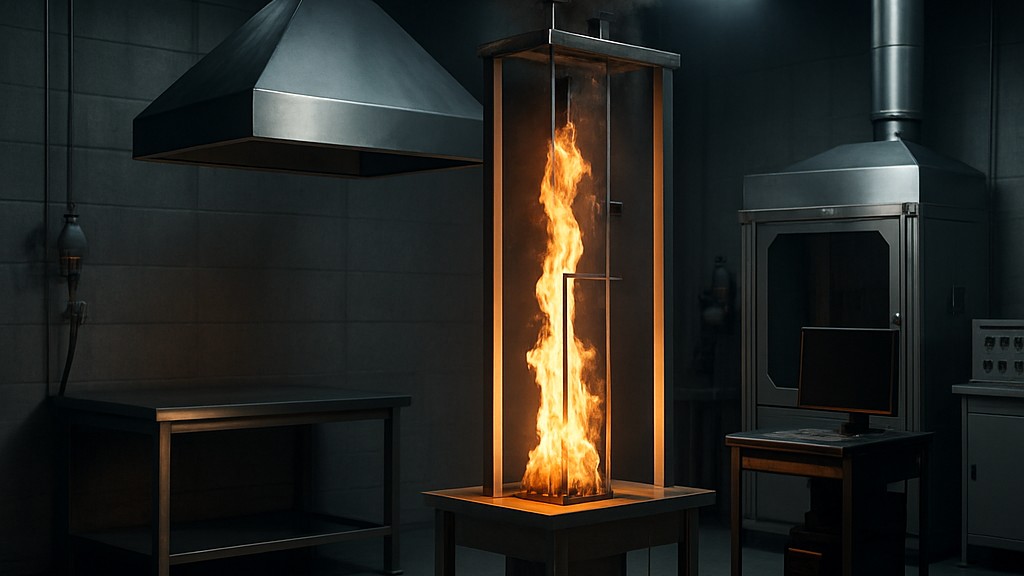
- The standard “EN 50267-1 Part 1: Device” describes devices suitable for use with procedures for the quantitative determination of gases, especially acidic and corrosive gases, produced by the combustion of non-metallic materials taken from cables.
The components of the equipment used in these tests must be assembled leak-proof. The connection distances between the tube and the first wash bottle, and between the first and second wash bottles, should be as short as possible. Glass or silicone rubber tubing should be used for these connections. A silica cellulose plug (usually weighing approximately 3 g) may be placed on the outlet side of the tube, as close to the end as possible, to aid in the collection of condensate.
The equipment used in these tests includes:
- Tube furnace: The effective length of the furnace's heating zone should be 500 mm to 600 mm and the inner diameter should be 40 mm to 60 mm. It should be equipped with an electrically regulated heating system.
- Tube: The furnace contains a fireproof tube made of silica resistant to the effects of corrosive gases. The tube should be approximately concentric with the tube furnace. The inside diameter of the silica tube should be within 32 mm to 45 mm. The tube protrudes from 60 mm to 200 mm at the furnace inlet and 60 mm to 100 mm at the outlet. The initial clearance should allow for thermal expansion.
- Combustion vessels: These are recommended to be made of porcelain, fused quartz, or soapstone and should have the following dimensions: 45 mm to 100 mm long, 12 mm to 30 mm wide, and 5 mm to 10 mm deep. A preferred method for placing the combustion vessels in the tube is shown in the figure. Each vessel should be used only three times before firing or renewing.
- Bubblers for gases: At the tube exit, the gases pass through two wash bottles. A magnetic stirrer should be installed in the first bottle to ensure good rotation and better absorption of combustion gases. The tubes entering the wash bottles should have a maximum internal diameter of 5 mm at their ends (also to facilitate better absorption). The liquid height above the end of the tube should be 100 mm to 120 mm in each bottle.
- Air supply system: The gas used in combustion is important. The air supply pipe flow rate should be adjusted according to the actual internal cross-sectional pressure of the pipe, thus allowing the air speed to flow through the sample, as specified in the standard. Since air speed cannot be measured directly, it must be adjusted according to the air flow rate. The derivative of the air flow rate required to achieve the specified air speed is given in the standard.
The air supply, which is to be obtained from a high purity source, should be regulated and controlled by a needle valve and the flow rate should be monitored by a flow meter of appropriate range.
- Method 1: Using synthetic air (compressed air in a bottle as delivered). The air is introduced into the inlet side of the combustion tube.
- Method 2: Use of compressed air provided in the laboratory. The air is introduced into the inlet side of the combustion tube and must be filtered.
- Method 3: Ambient laboratory air is used after proper filtration. In this case, the air and combustion gas mixture is sucked in by a pump.
The standard “EN 50267-2-1 Part 2-1: Procedures - Determination of the amount of halogen acid gas” describes the methods and principles for determining the amount of halogen acid gas, other than hydrofluoric acid, released as a result of the combustion of halogenated polymer-based compounds and compounds containing halogenated additives taken from cable constructions.
- The standard "EN 50267-2-2 Part 2-2: Procedures - Determination of the acidity of gases for materials by measuring pH and conductivity" describes the test method and procedure for determining the acidity of gases produced during the combustion of materials taken from electrical or optical cables by measuring pH and conductivity. The relevant cable standard should specify when materials taken from the cable should be tested.
- The standard "EN 50267-2-3 Part 2-3: Procedures - Determination of the acidity of gases for cables by determining the weighted average of pH and conductivity" describes a test method and procedure for determining the acidity of gases evolved during combustion of electrical or optical cables by determining the weighted average of pH and conductivity of the constituent materials. The relevant cable standard must specify which materials in the cable should be tested.
In short, the EN 50267 series of standards is important because it provides test methods for determining the corrosive and acidic nature of gases released when materials from cables are burned. These tests are particularly important for low-smoke, halogen-free, and fire-resistant cable applications. The EN 50267 standard is considered important for the following reasons:
- Fire safety in public and industrial spaces: This standard helps ensure that cable materials do not emit harmful acidic or corrosive gases during combustion. This is critical in public buildings, tunnels, transportation systems, data centers, and power plants.
- Human health protection: Halogen-containing cables can release gases such as hydrogen chloride, which, when burned and combined with moisture, forms hydrochloric acid and can pose serious respiratory and health risks (e.g., to the lungs). This standard provides safer material formulations that reduce these hazards.
- Protecting equipment and infrastructure: Corrosive gases can severely damage electronic equipment, communications systems, and metal structures and connectors. This standard helps select cables that minimize damage during a fire, provide better continuity, and lower repair costs.
- Compliance and regulation: This standard is widely referenced in European Union regulations for construction products and electrical installations. It supports issues such as CE marking, building safety codes, and insurance requirements.
- Environmental aspects: Finally, the EN 50267 standards contribute to reducing environmental pollution during fires and waste disposal by promoting the use of halogen-free materials.
Our organization, which has been supporting businesses across all sectors for years with a wide range of testing, measurement, analysis, and evaluation activities, has a strong team of employees who closely follow global developments in science and technology and are constantly improving themselves. In this context, we also provide testing services in accordance with the standard "EN 50267 General test methods for cables under fire conditions - Tests on gases released during the combustion of materials in cables."



