

The standard “NFPA 285 Standard Fire Test Method for Evaluating Fire Spread Characteristics of Exterior Wall Assemblies Containing Combustible Components,” published by the National Fire Protection Association (NFPA), describes a test method for determining the fire spread characteristics of exterior wall assemblies and panels constructed using combustible materials or used as components of curtain wall assemblies containing combustible components.
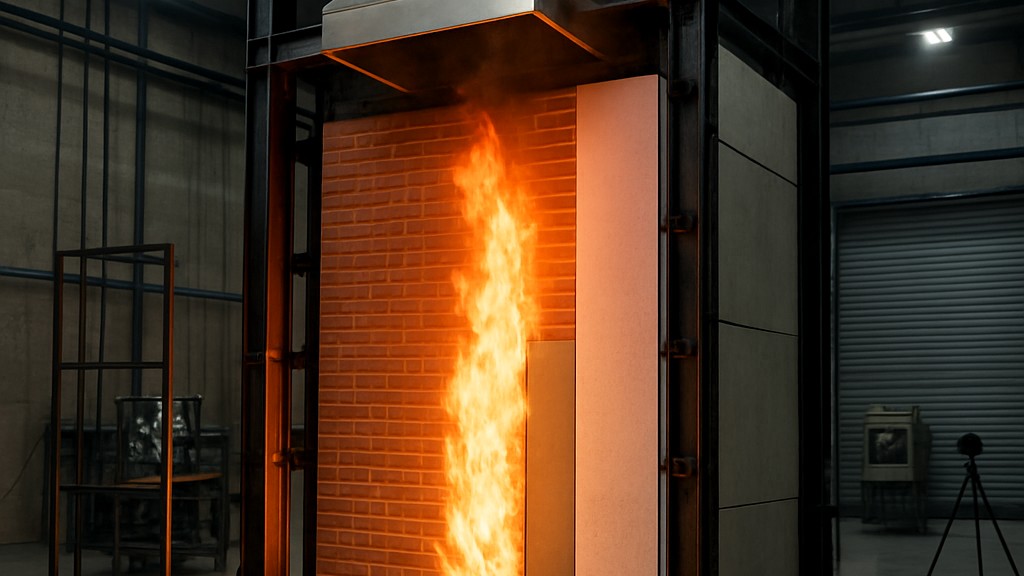
National Fire Protection Association (NFPA) 285 is a critical standard designed for the construction industry to evaluate the fire spread characteristics of non-load-bearing exterior wall assemblies containing combustible components. First implemented in 1998, NFPA 285 evolved from previous fire test methods, such as UBC 17-6, to address the increasing use of combustible materials such as foam plastic insulation in modern building designs. This article provides an overview of NFPA 285, its purpose, testing methodology, compliance requirements, and its importance in ensuring fire safety in buildings.
In short, NFPA 285 is intended to evaluate the performance of exterior wall assemblies in the event of fire exposure. This standard is particularly important for buildings containing combustible materials such as foam insulation (e.g., expanded polystyrene, extruded polystyrene, or polyisocyanurate), combustible cladding, or water-resistant barriers. The primary objective of this standard is to limit the vertical and horizontal spread of fire within these structures, ensuring both life and property safety.
Testing is critical because modern building designs increasingly utilize energy-efficient materials, such as continuous insulation, which can be flammable. The NFPA 285 standard ensures that these materials, when integrated into wall structures, do not contribute to the uncontrolled spread of fire, particularly in high-rise buildings where fire spread could have catastrophic consequences.
The NFPA 285 standard involves a large-scale, two-story test assembly that simulates a real-world fire scenario. The test assembly, which must be at least 5,5 meters high and 3,8 meters wide, includes a window opening on the first floor to simulate an interior fire. The test subjects the wall assembly to a 30-minute fire, with flames escaping from both the interior partition and the exterior burner, simulating a fire breaching the building's exterior.
The basic test criteria are:
The facility is equipped with thermocouples (usually 66 or more) to collect temperature data at various points. This allows assessors to evaluate how individual components and the entire installation perform under fire exposure. The test is a pass/fail evaluation, but the data also provides valuable information about fire behavior for manufacturers and fire professionals.
NFPA 285 is referenced in the international building code, widely accepted throughout the United States. Compliance is generally required for exterior wall assemblies in Type I, Type II, Type III, or Type IV (limited flammability) buildings under the following conditions:
Type V construction, typically used for smaller residential buildings, is generally exempt from the requirements of NFPA 285. Limited exceptions exist for certain installations, but these are narrow and project-specific.
The NFPA 285 standard provides an assembly test, not a component test. This means that compliance is based on the performance of the entire wall system, including all components (e.g., insulation, sheathing, cladding, waterproofing tape, and framing). Changing even a single component can render the assembly non-compliant, requiring new testing or an engineering evaluation to extend the results of a previously tested assembly. This proprietary nature of tested assemblies can limit flexibility for contractors and designers, as they must meet the exact specifications of the tested system.
Designers and architects face challenges when selecting NFPA 285-compliant assemblies that meet both fire safety and energy efficiency requirements. For example, continuous insulation to reduce thermal bridges often contains flammable foam plastics, requiring careful detailing around openings to ensure compliance.
Testing a wall assembly for NFPA 285 compliance is costly. This high cost makes proprietary assemblies common, as manufacturers test specific configurations to market their products. Contractors should be vigilant against modifications during construction to avoid non-compliance. This can lead to costly delays or rejections by building inspectors.
Since its inception, the NFPA 285 standard has evolved with updates reflecting advancements in building materials and construction techniques. These updates have increased clarity and rigor, making the testing more representative of real-world fire scenarios.
Consequently, NFPA 285 is a cornerstone of fire safety in modern building construction, ensuring that exterior wall assemblies containing combustible components do not contribute to the uncontrolled spread of fire. Requiring rigorous testing of all wall systems, the standard prioritizes life and property safety while addressing the challenges presented by innovative and energy-efficient materials. Architects, contractors, and manufacturers must collaborate closely to select, specify, and install compliant assemblies, stay informed about evolving code requirements, and utilize available resources to ensure compliance.
Our organization, which has been serving for many years and meticulously following global developments in science and technology, employs a team of experienced professionals and a broad infrastructure to conduct testing, measurement, and analysis in a wide range of areas for businesses across all sectors. In this context, we also provide testing services in accordance with NFPA 285, Standard Fire Test Method for Assessing the Fire Spread Properties of Exterior Wall Assemblies Containing Combustible Components.
To get an appointment, to get more detailed information or to request an evaluation, you can ask us to fill in our form and reach you.

