

In the standard “IMO MSC Circular.1006 Guidelines for fire test procedures for the acceptance of fire retardant materials used in the construction of lifeboats” published by the International Maritime Organization (IMO), guidelines on fire test procedures for the acceptance of fire retardant materials are provided.
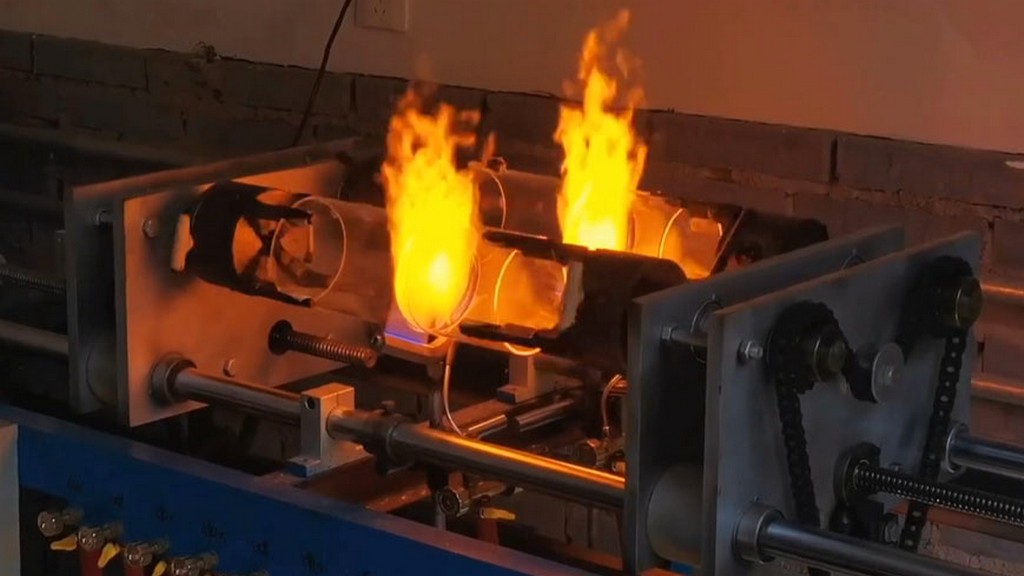
This test procedure should be used for the acceptance of fire-resistant and flame-resistant materials used in the construction of lifeboats which are required to be fire-resistant in accordance with the International Life-Saving Appliances Code and the International Convention for the Safety of Fishing Vessels.
According to the fire test procedure, flammability for fire retardant laminate systems for the construction of lifeboats should be determined in accordance with the standard “ISO 5660-1 Reaction to fire tests - Heat release, smoke production and mass loss rate - Part 1: Heat release rate (cone calorimeter method) and smoke production rate (dynamic measurement)” developed by the International Organization for Standardization (ISO). This test method should be applied for each resin used. In addition, a fire retardant resin that passes this test should be subjected to an additional test described in the standard.
According to the fire retardant test procedure, three test specimen laminates of glass fibre reinforced laminate of any form 5 mm thick and having a resin content of at least 40 percent by weight shall be prepared. Alternatively, three specimens of the particular laminate system shall be tested as constructed. When similar laminates of different thicknesses are used, the minimum thickness shall be tested. For laminates of normal thickness greater than 50 mm, including sandwich construction, the required specimens shall be obtained by cutting the unexposed face to reduce the thickness to 50 mm. All specimens shall be square with sides of 100 mm.
Prior to testing, specimens shall be exposed to sunlight below 385 nm of natural UV radiation by outdoor abrasion or acceptable equivalent accelerated artificial abrasion exposure. Both natural and artificial exposures shall include elevated temperatures of at least 30 degrees Celsius and 20 percent wet time for significant periods of exposure.
The test shall be carried out in a horizontal position using the sample edge frame and the radiation incident on the sample shall be kept constant during the test. Test samples shall be tested according to an radiation intensity of 50 kW/m2. The test shall be terminated when the test sample ignites or within 10 minutes. The average ignition time is calculated as the arithmetic mean of the ignition times of three samples. The average ignition time shall be greater than 40 seconds.
According to the flame resistance test procedure, laminates representing the layout of the prototype vessel shall be based on the minimum hull or canopy thickness to be used for that vessel and shall be tested to determine their resistance and strength to the effects of flame impingement. The test specimen shall be cut from a one metre square panel of the above minimum thickness, allowed to cure for at least 21 days and then stored for 30 days at the ambient temperature specified below.
At the end of the one minute period, the burner shall be removed and the flame impingement area shall not support combustion for more than 30 seconds after removal from the burner. After completion of the test, the specimen shall be immediately re-exposed to the heat source at the point of impact to determine the total burning time of the relevant layer. The total burning time is taken as the time for the flame to appear on the unexposed surface.
Among the numerous testing, measurement, analysis and evaluation studies that our organization has carried out for businesses in various sectors, our organization also provides testing services defined in the standard “IMO MSC Circular.1006 Guidelines for fire test procedures for the acceptance of fire retardant materials used in the construction of lifeboats” with its trained and expert staff and advanced technological equipment.
To get an appointment, to get more detailed information or to request an evaluation, you can ask us to fill in our form and reach you.

