

The standard “DIN 4102-1 Fire resistance of building materials and components - Part 1: Classification of building materials - Requirements and tests”, published by the German Institute for Standardization (DIN), was published simultaneously with the standard “DIN 4102-16 Fire resistance of building materials and components - Part 16: Fire shaft tests”. The reason for it being a separate standard is as follows:
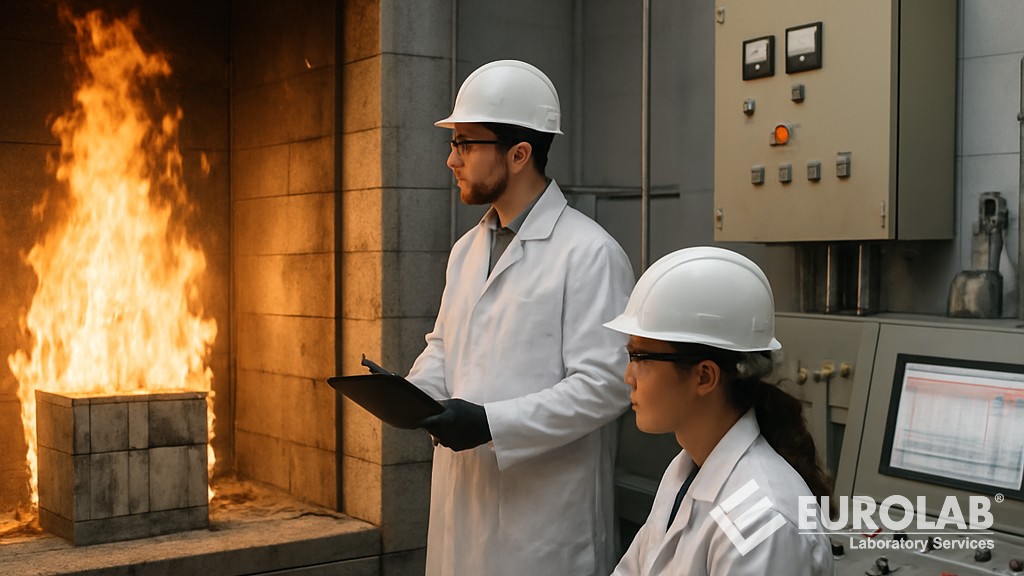
In the field of construction and building safety, fire protection standards are of paramount importance in protecting lives, property, and the environment. In this regard, the DIN 4102-1 standard stands out among the fundamental regulations in much of Europe. This standard includes criteria for evaluating how building materials react to fire. Created to minimize fire risks in buildings, this standard provides a framework for classifying materials according to their flammability, flame spread, and smoke generation. This standard remains a fundamental element for architects, engineers, and manufacturers ensuring compliance with fire safety norms.
The DIN 4102 standard is a multi-part series that addresses various aspects of fire behavior in construction, focusing on building materials such as walls, ceilings, insulation, and facades. This standard defines terminology, specifies performance requirements, and details test methodologies for classifying materials according to fire performance categories. Its scope includes homogeneous materials, composites, and surface treatments, providing a comprehensive assessment of potential fire hazards in real-world applications.
The development of the standard reflects alignment with broad legal regulations such as the EU Construction Products Regulation (CPR). Although the DIN 4102-1 standard has been partially superseded by the harmonized EN 13501-1 standard for fire reaction classifications, it continues to be referenced in national contexts and in older projects. Tests conducted under this standard allow for the prediction of material behavior in emergency situations by simulating fire scenarios ranging from small ignitions to room-wide fires.
The DIN 4102-1 standard classifies building materials into five basic categories based on their fire reaction, from non-combustible to highly flammable. These classifications guide material selection in building design, while imposing stricter requirements for high-risk areas such as escape routes and public spaces.
Classes A1 and A2 are considered low-flammability building materials, while classes B1-B3 indicate increased flammability. Materials should also be evaluated in terms of smoke generation and dripping, but these are secondary to the primary classification.
The DIN 4102-1 standard mandates specific tests for determining classifications and emphasizes repeatability and relevance to real fire conditions. The basic procedures are as follows:
This test is crucial for B1 classification and evaluates edge retention for materials such as cables or thin sheets.
A successful classification does not require flame and controlled fire growth, by evaluating full-scale behavior for walls and ceilings.
These tests are carried out in accredited laboratories under controlled atmospheres (e.g., according to DIN 50014 standard conditions). Relevant standards such as DIN 4102-12 cover the functional integrity of the cables, ensuring they maintain their performance during fire exposure.
According to legal regulations, compliance with the DIN 4102-1 standard is mandatory for new construction and renovations. This standard reduces fire-related deaths and property damage by affecting material approvals, insurance premiums, and certifications.
In practice, architects use these classifications to divide buildings into zones: A1/A2 for cores, B1 for interiors. Recent trends emphasize sustainability by integrating fire safety with environmentally friendly materials such as bio-based insulators that meet B1 standards.
For many years, our organization, with its competent and experienced staff, has been understanding the needs of its clients, providing the advanced testing services they require, and assisting in the establishment, implementation, and improvement of management systems. Within this framework, we also provide testing services to businesses in accordance with the "DIN 4102-1 Fire resistance of building materials and components - Part 1: Classification of building materials - Requirements and tests" standard.
To get an appointment, to get more detailed information or to request an evaluation, you can ask us to fill in our form and reach you.

