

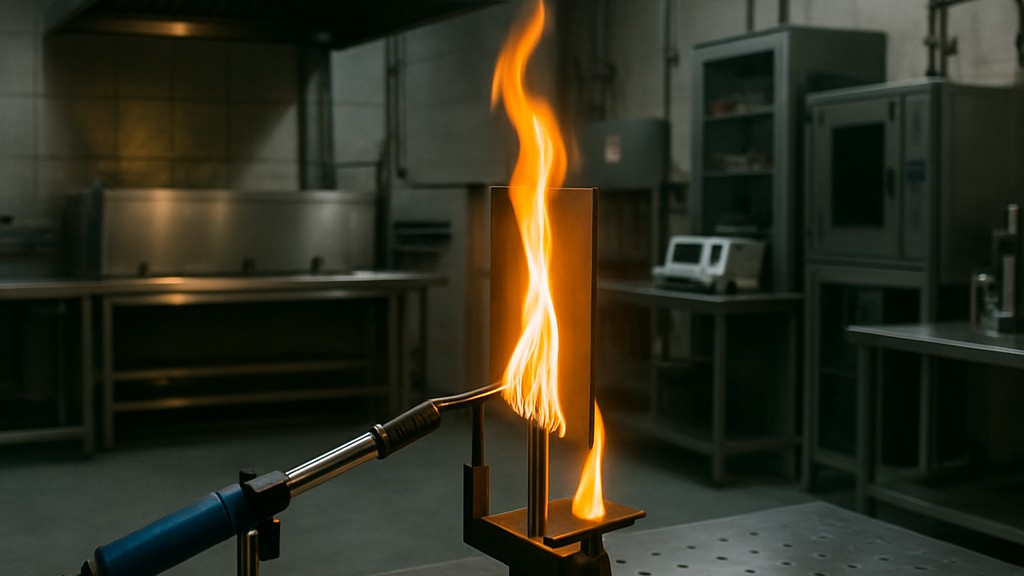
These test methods determine the linear burning rate or self-extinguishing properties of materials. These test methods are applicable to solid and cellular materials with an apparent density greater than 250 kg/m3, as determined in accordance with ISO 845.
Two test methods are described in this standard:
ISO 9772 specifies a test method for determining the burning characteristics of materials with an apparent density of 250 kg/m3 or less. ISO 9773 specifies a test method for determining the burning behavior of materials that, because of their thinness, either deform or burn to the holding clamp using Method B defined in this standard.
The test methods described provide classifications that can be used for quality assurance, pre-selection of product component materials, or to verify the required minimum flammability classification of materials used in final products. Guidance on pre-selection is contained in IEC 60695-1-30.
In principle, a test specimen in the form of a rectangular bar is supported horizontally or vertically at one end and the free end is exposed to a specified test flame. The combustion behavior of the horizontally supported bar under specified test conditions is evaluated by measuring the linear burning rate. The combustion behavior of the vertically supported bar under specified test conditions is evaluated by measuring the afterflame and afterglow durations (observing whether the materials self-extinguish), the degree of combustion, and the dripping of flame particles.
Fire tests performed on a material under specified conditions are of significant value for comparing the relative burning behavior of different materials, controlling manufacturing processes, or assessing any changes in burning characteristics. The results obtained from these fire test methods depend on the shape and orientation of the test specimen, the surrounding environment, and ignition conditions. A key feature of these fire test methods is the ability to arrange the test specimens horizontally or vertically. These test arrangements allow for different material flammability classes.
The results obtained in accordance with this standard should not be used solely to describe or assess the fire hazard posed by a particular material under actual fire conditions. The assessment of fire hazard also requires consideration of other factors such as fuel content, combustion intensity (heat release rate), combustion products, and environmental factors such as the nature of the ignition source, the orientation of exposed material, and ventilation conditions.
The combustion behavior measured by these test methods is affected by physical properties such as density, anisotropy of the material, and thickness of the test specimen.
Some test specimens may shrink or deteriorate without igniting after flame application. In this case, additional test specimens of the same thickness are required to obtain valid results. If valid results cannot be obtained at this thickness, the materials of that thickness are not suitable for evaluation by these test methods. To determine the flammability classification for thin and flexible test specimens, and in cases where multiple test specimens shrink without igniting after flame application, ISO 9773 provides a suitable test method.
The burning behavior of some plastic materials may change over time. Therefore, it is recommended to conduct pre- and post-conditioning tests using an appropriate procedure. The preferred oven conditioning is 168 hours at 70°C (plus/minus 2°C) for 2 hours. However, other conditioning times and temperatures may be used by agreement between the parties involved and, if used, must be stated in the test report.
In short, the EN IEC 60695-11-10 standard is a key document in the field of fire hazard testing for electrical and electronic products. It plays a crucial role in ensuring product safety by assessing the flammability of materials used in electrical devices. This standard is particularly important for regulatory compliance, product development, and quality assurance processes.
The main objectives of this standard are:
This standard applies to the following types of materials:
The EN IEC 60695-11-10 standard includes both horizontal and vertical flame test methods:
These tests help classify materials based on their flammability, which is crucial for selecting appropriate materials for product design.
Compliance with the EN IEC 60695-11-10 standard helps manufacturers:
As a result, the EN IEC 60695-11-10 standard is a critical tool in fire hazard testing, providing reliable and consistent methods for assessing the flammability of materials used in electrical and electronic equipment. By implementing this standard, manufacturers can significantly improve the safety profile of their products, ensure regulatory compliance, and reduce fire-related risks.
As technology advances and devices become more compact and complex, compliance with such standards becomes even more vital to protect both users and infrastructure.
Our organization, which has been operating for many years and meticulously follows global developments in science and technology, conducts testing, measurement, and analysis in a wide range of areas for businesses across all sectors with a skilled team and extensive infrastructure. In this context, we also provide testing services in accordance with the standard "EN IEC 60695-11-10 Fire hazard testing - Part 11-10: Test flames - 50 W horizontal and vertical flame test methods."
To get an appointment, to get more detailed information or to request an evaluation, you can ask us to fill in our form and reach you.

