ASTM A1003/A1003M Carbon, Metallic, and Non-Metallic Coated Steel Sheets for Cold-Formed Frame Members
The American Society for Testing and Materials (ASTM) standard, "ASTM A1003/A1003M Standard Specification for Carbon, Metallic, and Nonmetallic Coated Steel Sheets for Cold-Formed Framing Members," describes the requirements for coated steel sheets used in the manufacture of cold-formed framing members such as studs, beams, ridge beams, stringers, and rails. Steel sheets used in cold-formed framing members include sheets with metallic coatings, painted metallic coatings, or painted nonmetallic coatings.
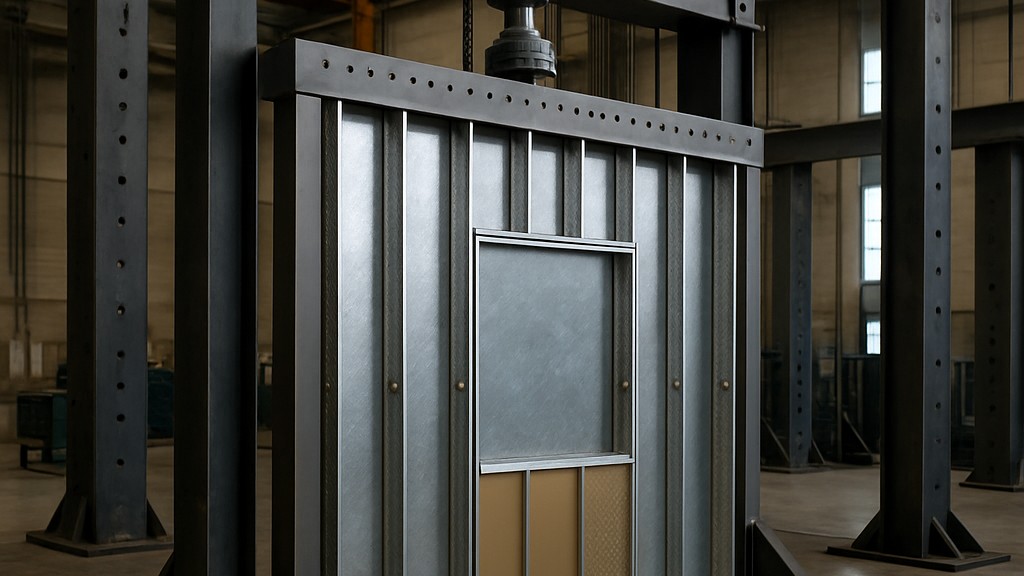
This standard covers metal-coated, painted metal-coated, and painted non-metal-coated steel sheets used in the manufacture of cold-formed framing members (e.g., studs, beams, ridge beams, stringers, and rails). Steel sheet is available in the following designations:
- Structural class 50 type H (ST50H)
- Structural class 340 type H (ST340H)
- Structural class 40 type H (ST40H)
- Structural class 275 type H (ST275H)
- Structural class 37 type H (ST37H)
- Structural class 255 type H (ST255H)
- Structural class 33 type H (ST33H)
- Structural class 230 type H (ST230H)
- Structural class 50 type L (ST50L)
- Structural class 340 type L (ST340L)
- Structural class 40 type L (ST40L)
- Structural class 275 type L (ST275L)
- Structural class 37 type L (ST37L)
- Structural class 255 type L (ST255L)
- Structural class 33 type L (ST33L)
- Structural class 230 type L (ST230L)
- Non-structural class 33 (NS33)
- Non-structural class 230 (NS230)
The ordered thickness shall be the base metal thickness. The base metal shall meet the specified chemical composition requirements for carbon, manganese, phosphorus, sulfur, copper, nickel, chromium, molybdenum, vanadium, columbium, and titanium, as determined by heat and product analysis. Mechanical and corrosion tests shall be performed as specified. The base metal shall also meet mechanical property requirements, including yield strength, tensile strength, and elongation. This standard includes coating requirements such as coating weight (mass), corrosion standard, thickness, flexibility, and adhesion.
This standard plays an important role in the construction and manufacturing industries, particularly in light-frame steel building systems. This standard provides the following features:
- Base metal thickness
- Mechanical properties (yield strength, tensile strength, elongation)
- Coating types and weights
- Chemical composition
- Formability and weldability requirements
This standard is valid for steel sheets with the following properties:
- Steel is cold formed into frame members such as beams and rails
- Generally used in wall, floor and roof systems
- Coated with metallic coatings (e.g., zinc, aluminum-zinc alloy) or non-metallic coatings (e.g., paint) for corrosion resistance
This standard supports various coating types, including:
- Hot dip metallic coatings such as G40, G60, AZ50 (e.g. galvanized and galvalume)
- Products with paint or organic coating for extra durability
This standard ensures that the coating provides adequate corrosion protection without compromising the formability and structural integrity of the sheet.
The ASTM A1003 standard divides steel sheets into different types and classes based on their mechanical properties and end uses:
- Type H (high strength): Designed for structural skeleton elements
- Type L (light strength): Designed for non-structural applications such as partition walls
- Type NS (non-structural): Designed for drywall frameworks
Grades vary in yield strength and elongation requirements, for example:
- Class 33 (33 ksi yield)
- Class 50 (50 ksi yield)
The main usage areas of steel sheets within the scope of this standard are:
- Light steel frames for residential and commercial buildings
- Partition walls and ceilings
- Floor joists and roof trusses
- Endoskeletal and exoskeletal components
The ASTM A1003 standard is considered particularly important in the construction and fabrication of cold-formed steel framing systems. The primary reasons for its importance are:
- Ensures material quality and consistency: This standard specifies strict criteria for chemical composition, mechanical properties, and coating requirements. This ensures that steel sheets used in framing are consistently produced to meet performance expectations, regardless of supplier.
- Improves structural safety: This standard specifies minimum values for yield strength, tensile strength, and elongation, which are critical for maintaining the load-carrying capacity and structural integrity of buildings. These properties are essential for resisting stresses from loads, wind, and seismic forces.
- Meets corrosion resistance requirements: This standard covers metallic and non-metallic coatings (such as galvanization or aluminum-zinc) that protect steel from corrosion. This is especially important in humid, coastal, or industrial environments where unprotected steel would deteriorate rapidly.
- Supports cold-formed steel construction: Cold-formed steel framing is becoming increasingly popular due to its light weight, strength, and recyclability. This standard provides a standard specification supporting this type of construction, helping to ensure safe and durable skeletal elements for walls, floors, and roofs.
- Ensures regulatory compliance: Most building codes refer to ASTM A1003 when requiring specifications for cold-formed steel framing. Compliance with this standard ensures that projects meet legal and regulatory requirements.
- Promotes interchangeability and compatibility: By providing standardized criteria, this allows builders and designers to confidently mix and match components from different manufacturers and be confident they will perform similarly. This reduces project delays and increases supply chain flexibility.
- Supports sustainable construction: Steel that meets this standard is 100 percent recyclable, and its durability means it lasts longer with less maintenance. This aligns with modern goals for sustainable building practices and green certifications (e.g., LEED Sustainable Green Building certification).
As a result, the ASTM A1003 standard plays a key role in modern construction, as it ensures product quality, structural safety and long-term durability of steel sheets, especially those used in cold-formed frameworks.
Our organization, which has been supporting businesses across all sectors for years through a wide range of testing, measurement, analysis, and evaluation activities, has a strong team of employees who closely follow global developments in science and technology and are constantly improving themselves. In this context, we also provide testing services in accordance with the "ASTM A1003/A1003M Standard Specification for Carbon, Metallic, and Non-Metallic Coated Steel Sheets for Cold-Formed Frame Members."



