

The European standard “EN 12939 Thermal performance of construction materials and products - Determination of thermal resistance by the protected hot plate and heat flow meter methods - Thick products with high and medium thermal resistance” describes procedures for determining the thermal resistance of products with thicknesses exceeding the maximum thickness for the protected hot plate or heat flow meter apparatus.
In all cases, most of the procedures described in this standard require apparatus that allows testing on samples up to 100 mm thick. This standard provides guidelines for assessing the significance of the thickness effect, i.e. to determine whether the thermal resistance of a thick product can be calculated as the sum of the thermal resistances of slices cut from the product. These guidelines complement the indications given in ISO 8302 on protected hot plate apparatus. This standard describes test conditions that prevent the onset of convection that may occur in some products under the temperature differences and thicknesses considered.
For the purposes of this standard, the terms and definitions given in "EN ISO 7345 Thermal insulation - Physical quantities and definitions" apply. While EN ISO 9288 defines the spectral directional extinction, absorption and scattering coefficients and only the spectral directional reflectivity, this standard uses the total hemispherical coefficients, which can be obtained from the previous ones by appropriate integrals.
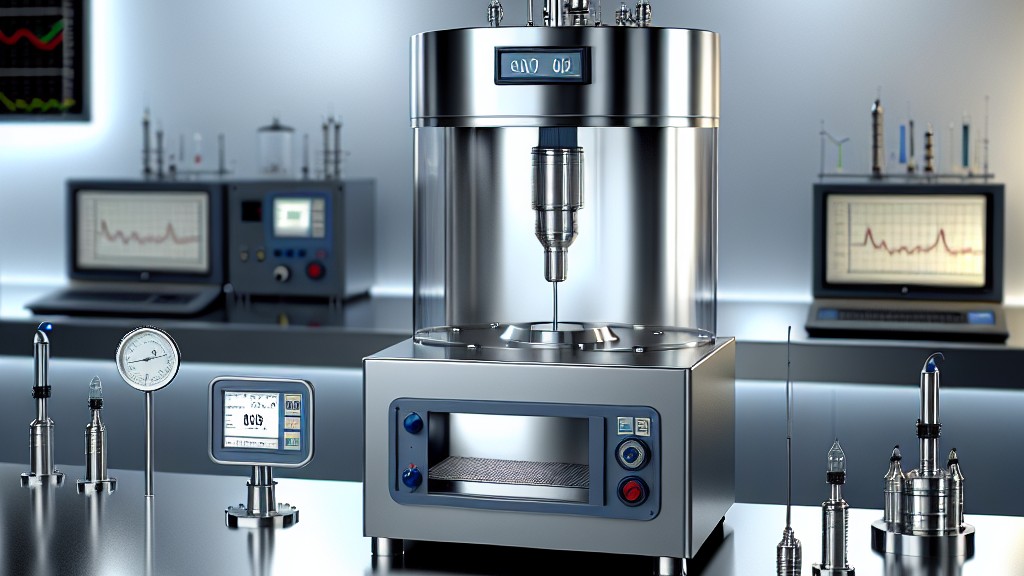
The apparatus used for measurements shall be a guarded hot plate or heat flow meter conforming to the requirements of EN 12667. This standard does not give relevant design criteria and proven performance checks or the determination of apparatus emissivity. These and specific apparatus requirements applicable to the procedures described in this standard are found in EN 1946-2 or EN 1946-3, depending on the apparatus used. Only the apparatus requirements affecting sample dimensions and tolerances are given in this standard.
Unless explicitly stated otherwise, the requirements for protected hot plate apparatus are assumed to be applicable to heat flow meter apparatus.
This standard specifies some recommended dimensions and tolerances as well as requirements for common test conditions. Further information is included in the standard appendix (Annex A).
The maximum sample thickness should be in accordance with EN 12667, taking into account the limit values in the table given in the standard for some common apparatus sizes. More information on low density samples is given in the annex of the standard (Annex A).
The procedures described in this standard may require measurements at the minimum allowable sample thickness (depending on the device parameters and test conditions). The requirements of the EN 12667 standard shall be met and the sample shall be expanded to a thermal resistance as low as 0,3 m2 K/W. The two test conditions given here should be taken into account in relation to this standard for both the protected hot plate and the heat flow meter device:
This standard does not cover specific test techniques (use of contact plates) to be applied when the thermal resistance of the sample is less than 0,3 m2K/W.
Sample preparation and processing should be in accordance with EN 12667. Specific sample preparation should be found in the appropriate product standard, which refers to the procedures described in this standard.
The procedures described in this standard can be grouped as follows:
Our organization, which has been trying to support businesses from every sector with its testing, measurement, analysis and evaluation studies carried out in a wide range for years, has a strong staff that closely follows the developments in the world in the field of science and technology and constantly improves itself. In this context, testing services are also provided to businesses in accordance with the standard “EN 12939 Thermal performance of building materials and products - Determination of thermal resistance by protected hot plate and heat flow meter methods - Thick products with high and medium thermal resistance”.
To get an appointment, to get more detailed information or to request an evaluation, you can ask us to fill in our form and reach you.

