

The European standard "EN 636 Plywood - Specification" specifies the requirements for plywood for both general-purpose use (non-structural application) and structural application in dry, damp, or outdoor conditions, as defined in "EN 313-2 Plywood - Classification and terminology - Part 2: Terminology." This standard also provides a classification system based on bending properties.
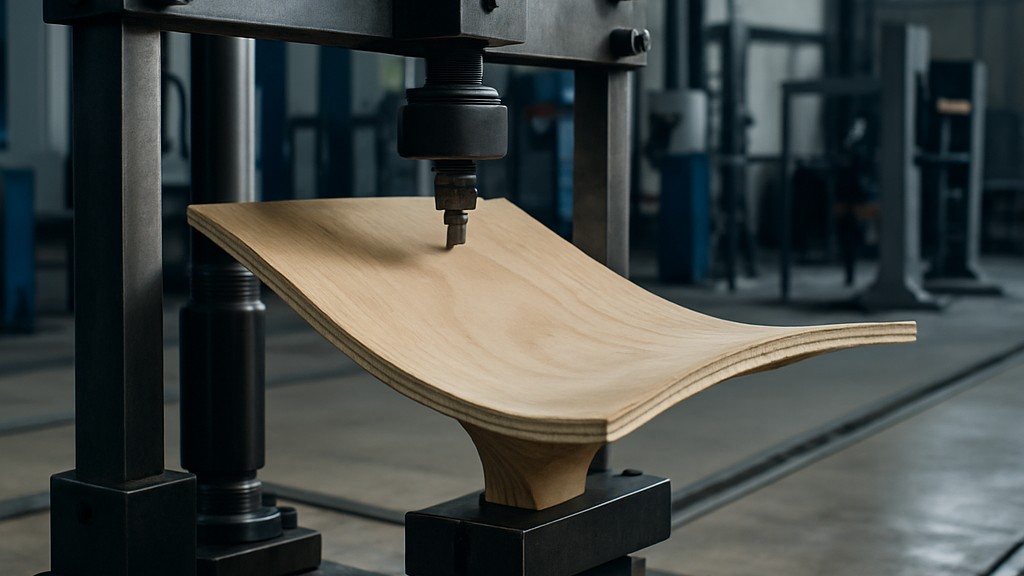
This standard is referenced in EN 13986 for construction applications. This standard is applicable to all plywoods, including veneered and overlaid plywood, as appropriate, but does not cover the materials or processes used for overlaid or overlaid plywood. It also does not cover any materials or processes used to increase biological durability.
For the purposes of this standard, the following terms and definitions apply:
All plywood, regardless of composition factors (e.g., type, number of plies, and ply thickness), can be classified under this system based on its bending properties. As an alternative to the full-scale testing required by EN 789, the classification system can be used to derive characteristic values for plywood by cross-referencing with EN 12369-2 the characteristic values for each class listed in the tables "Bending strength classes for plywood" and "Modules of elasticity in bending classes for plywood" provided within the standard.
The lower limit values for flexural strength and modulus of elasticity in bending given in the tables correspond to the 5th percentile values based on the average values determined for individual panels according to EN 310 and EN 326-2 and calculated according to EN 326-1. These values should not be used for structural design. The determination of flexural properties is described in this standard.
For a given plywood, the four grades will be given in the following order:
Dimensional tolerances must be as specified in the EN 315 standard.
Bending properties should be determined on small test pieces according to EN 310 and calculated according to EN 326-1. According to EN 326-2, 5 percentile values are determined from at least 30 panels of the same product type.
The EN 636 standard is essential because it provides clear, consistent quality and performance criteria, ensuring that plywood used in construction projects is safe, durable, and fit for purpose. The reasons for this standard's importance include:
This helps specifiers and builders choose the right type of plywood for the environment it will be exposed to.
Our organization, which has been supporting businesses across all sectors for years through a wide range of testing, measurement, analysis, and evaluation activities, has a strong team of employees who closely follow global developments in science and technology and are constantly improving themselves. In this context, we also provide testing services in accordance with the "EN 636 Plywood - Specifications" standard.
To get an appointment, to get more detailed information or to request an evaluation, you can ask us to fill in our form and reach you.

