
EN 317 Particleboards and Fibreboards - Determination of Swelling in Thickness after Immersion in Water

EN 317 Particleboards and Fibreboards - Determination of Swelling in Thickness after Immersion in Water

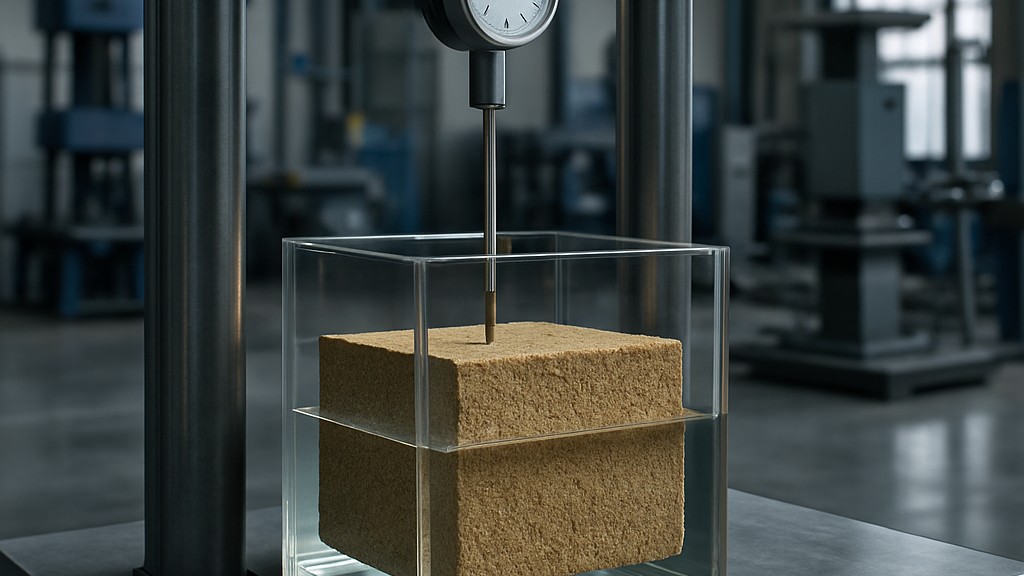
A European standard “EN 317 Particleboards and fibreboards - Determination of swelling in thickness after immersion in water” describes a procedure for determining the swelling in thickness of flat-pressed or drum-pressed particleboards, fibreboards and cement-bonded particleboards.
EN 317 Particleboards and Fibreboards - Determination of Swelling in Thickness after Immersion in Water

In principle, thickness swelling is determined by measuring the increase in thickness of the test piece after it is completely immersed in water.

EN 317 is a standard that specifies a method for determining the swelling in thickness of wood-based panels after immersion in water. This test is critical for assessing the dimensional stability and moisture resistance of products such as particleboard, fiberboard, oriented strand board, and other composite wood materials.

This standard is widely used in construction, furniture manufacturing, and other woodworking industries to ensure that materials can withstand exposure to moisture without significant dimensional changes.

The primary purpose of the EN 317 standard is to assess the thickness of a wood-based panel after being immersed in water for a specified period. Because moisture can affect the mechanical properties and durability of wood products, this test provides a vital quality control and performance metric.

Manufacturers and users rely on this standard to:

  • Ensuring product consistency
  • Comparing moisture resistance between different panel types or brands
  • Verify compliance with performance specifications
  • Improving material formulations

The EN 317 standard is valid for the following materials:

  • Particleboard
  • Oriented strand board (OSB)
  • Medium density fiberboard (MDF)
  • High-density fiberboard (HDF)
  • Other panel products specified by the manufacturer or user

Incidentally, this standard does not apply to plywood or solid wood.

In general, the testing method follows these steps:

  • Sample preparation: Test samples are cut to standard dimensions (usually 50 mm x 50 mm). The surfaces must be flat and undamaged.
  • Initial measurement: The thickness of each sample is measured at four points using a micrometer or thickness gauge and the average is recorded.
  • Water immersion: Samples are completely immersed in water at 20 degrees plus/minus 1 degree for 24 hours plus/minus 1 hour.
  • Post-immersion measurement: After immersion, the samples are quickly removed, dried to remove surface water, and their thickness is measured again in the same manner.
  • Swelling calculation: The percentage increase in thickness is calculated using the formula given in the standard.

The EN 317 standard is critical in the following areas:

  • Product classification: Panels with low thickness swelling are typically used in damp or wet environments (e.g. bathrooms, kitchens, exterior cladding).
  • Quality assurance: Manufacturers use this standard to meet internal and regulatory performance criteria.
  • CE Marking: For panels sold within the European Economic Area, compliance with the EN 317 standard may be required under the construction products regulation (CPR).

The test method described reflects only short-term water exposure (24 hours) and does not predict long-term behavior or structural performance. Results may vary depending on panel density, resin type, and fiber/particle orientation. For more comprehensive moisture performance testing, this standard can be used in conjunction with other standards such as EN 321 (cyclic testing). For professionals working with engineered wood products, understanding and applying EN 317 is important for material selection, product development, and certification.

The main reasons why this standard is considered important are:

  • Moisture resistance is critical for wood-based products: Wood-based panels such as particleboard, MDF, and OSB are highly sensitive to water. When exposed to moisture, they thicken, lose their structural integrity, warp, and eventually fail. The EN 317 standard test provides manufacturers and buyers with a clear measure of moisture resistance by demonstrating how a product responds to water.
  • Prevents costly failures in real-world applications: Using the wrong panel in a humid environment (such as a kitchen, bathroom, roof, or exterior cladding) can lead to structural failure, mold growth, premature replacement, and customer complaints. This standard helps ensure that only suitable materials are used in moisture-sensitive areas.
  • Supports product development and innovation: Manufacturers use this standard to:
    • Testing new resins or additives that increase moisture resistance
    • Comparing products with competitors
    • Developing special grade panels (such as moisture-resistant MDF or MR particleboard)

Without a standard testing method, there would be no consistent way to compare performance.

  • CE marking and market access requirements in Europe: Under the Construction Products Directive (CPR), many wood-based panels must be CE marked to be sold in European Union countries. The EN 317 standard is part of this compliance process. A product cannot be legally marketed for use in construction without passing the required tests. Test results may be required by building regulations, project specifications, or public procurement standards.
  • Informs architects, builders and end users: This standard provides a numerical value (percentage of thickness swelling), making it easier to select the right panel for floor underlay, wall cladding, furniture underlays and wet area cabinets.
  • Promotes higher industry standards: by establishing a common testing method, this standard raises the bar for quality assurance, prevents misleading product claims, and helps build trust in certified materials.

In short, this standard is important because it protects quality, performance, and safety in any application where moisture may pose a threat. It helps manufacturers create better products and gives users confidence in how they will perform.

Consequently, the EN 317 standard plays a vital role in the standardization and quality control of wood-based panels in Europe and other countries. By providing a consistent method for assessing thickness swelling due to water exposure, it ensures that wood products meet the durability and performance expectations of modern construction and manufacturing processes.

Our organization, which has been serving for many years and meticulously following global developments in science and technology, employs a team of experienced professionals and a broad infrastructure to conduct testing, measurement, and analysis in a wide range of areas for businesses across all sectors. In this context, we also provide testing services in accordance with the EN 317 Particleboards and Fiberboards - Determination of Thickness Swelling After Water Immersion standard.

WhatsApp

