

The European standard “EN 15283 Fibre-reinforced gypsum boards - Definitions, requirements and test methods” consists of the following subsections published under the same title:
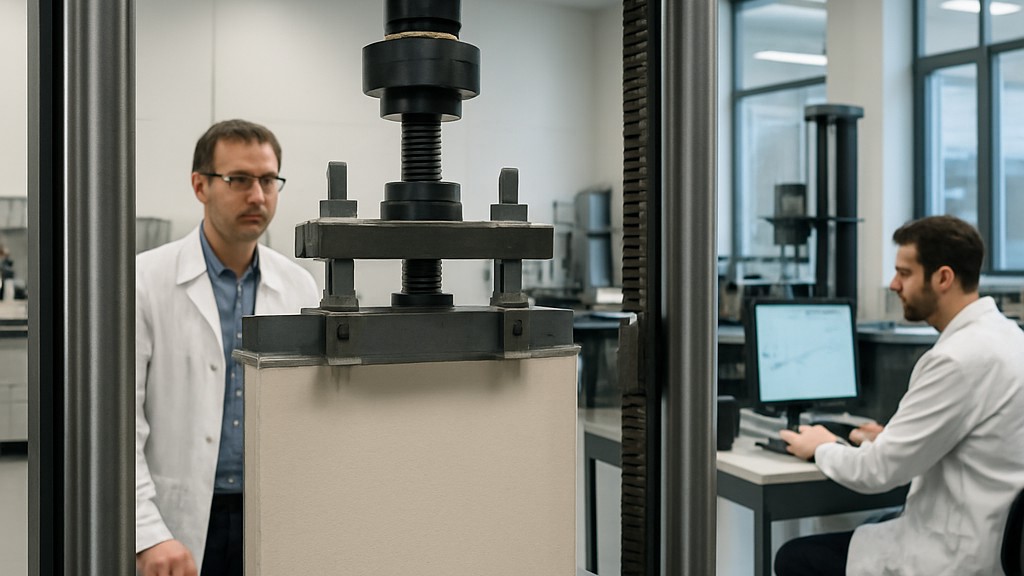
Mesh-reinforced gypsum boards are selected based on their type, size, thickness, and edge profile. The boards can be used, for example, to provide dry linings to walls, fixed and suspended ceilings, partitions, or as cladding for structural columns and beams. Other applications include floors, ventilation and smoke exhaust ducts, cable ducts, and cladding applications.
This standard covers the following product performance characteristics: reaction to fire, water vapour permeability, flexural strength and thermal resistance.
The following performance characteristics are associated with systems assembled with mesh-reinforced gypsum boards: shear strength, fire resistance, impact resistance, direct airborne sound insulation, and acoustic absorption. If necessary, tests simulating end-use conditions should be conducted on assembled systems according to relevant test methods.
This standard also includes additional technical characteristics that are important for the use and acceptance of the product and reference tests for these characteristics and enables the evaluation of the conformity of the product to this standard.
This standard does not cover mesh-reinforced gypsum boards that have undergone any secondary production processes (e.g. insulating composite panels, thin laminated boards).
Gypsum fiber boards are selected based on their type, size, thickness, and edge profile. The boards can be used, for example, to provide dry linings to walls, fixed and suspended ceilings, partitions, or as cladding for structural columns and beams. Other uses include flooring and cladding applications.
This standard covers the following product performance characteristics: reaction to fire, water vapour permeability, flexural strength and thermal resistance.
The following performance characteristics are associated with systems assembled with gypsum fiber boards: shear strength, fire resistance, impact resistance, direct airborne sound insulation, and acoustic absorption. If necessary, tests simulating end-use conditions should be conducted on assembled systems in accordance with relevant European test methods.
This standard also covers additional technical characteristics and reference tests for these characteristics that are important for product use and acceptance. It also enables the product to be assessed for conformity with this standard.
This standard does not cover gypsum fibre boards that have undergone any secondary production processes (e.g. insulating composite panels, thin laminated boards, etc.).
Overall, the EN 15283 standard is important because it ensures the quality, safety, and performance of fiber-reinforced gypsum boards used in construction. The main reasons for this importance are:
Our organization, with its competent and experienced team, has been understanding the needs of its customers for years, providing them with the advanced testing services they need, and assisting them in the establishment, implementation, and improvement of management systems. In this context, we also provide testing services in accordance with the EN 15283 Fiber-Reinforced Plasterboards - Definitions, Requirements, and Test Methods standard.
To get an appointment, to get more detailed information or to request an evaluation, you can ask us to fill in our form and reach you.

