

The European standard "EN 15824 Specification for exterior and interior plasters based on organic binders" applies to factory-made plasters and plasters based on organic binders used as exterior or interior coatings on walls, columns, partitions, and ceilings. Products are produced in paste, ready-to-use, or powder form. This standard also applies to plasters and plasters containing inorganic binders such as silicates, silanes, siloxanes, and silicones. Plasters and plasters, with or without texture, can form the final surface of a structure or provide a sufficiently smooth substrate for subsequent decorative treatments.
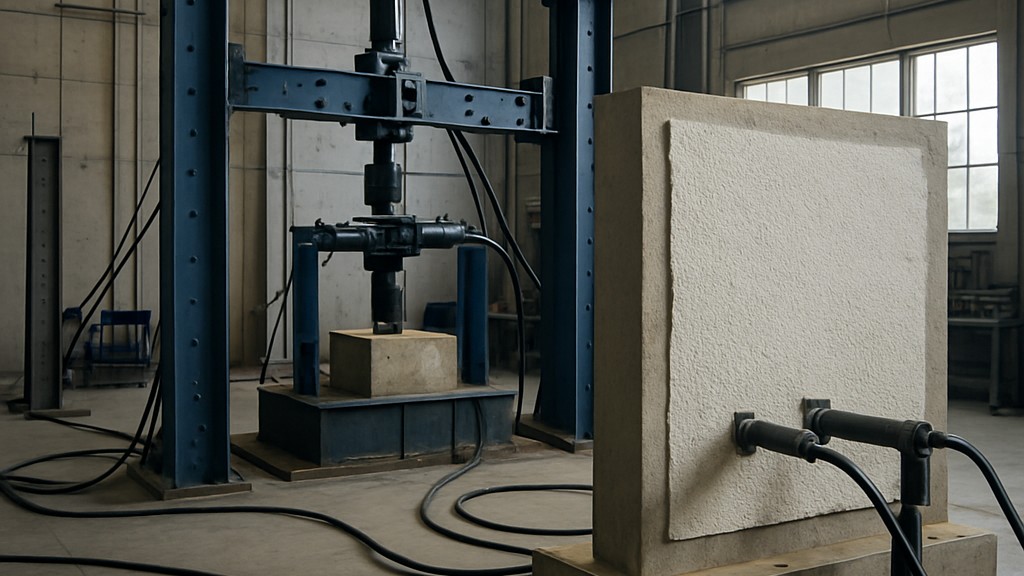
This standard includes definitions and final performance requirements. It includes relevant characteristic categories for specifying plasters and stuccos. This standard enables the assessment and verification of product consistency in performance against this standard. This also includes the marking requirement for products covered by this standard.
This European standard does not apply to coating materials and coating systems in accordance with EN 1062-1 and EN 13300. This standard does not provide recommendations for the design and application of plasters and renders. However, it can be used to describe plasters and renders in conjunction with regulations and national specifications for the execution of works.
The properties of exterior and interior plasters based on organic binders are determined primarily by the type or types of binders used and their respective proportions. Organic plasters and interior plasters can be defined according to:
Plasters and interior plasters do not achieve their final properties until they have properly dried and hardened after application. The functionality of plasters and interior plasters depends on the type of raw materials used, the thickness of the coatings, and the type of application. The manufacturer specifies the appropriate properties for the final use and appearance and must provide information on the use of the plasters or interior plasters and their associated conditions of use.
In general, the requirements for the properties of dried and hardened plasters and gypsum should be defined using the test methods and procedures specified in this standard. For these tests, plasters and gypsum in paste form should be sampled in accordance with EN ISO 15528, and plasters and gypsum in powder form should be sampled in accordance with EN 1015-2. The properties of plasters and gypsum were determined under laboratory conditions and cannot always be directly compared with properties obtained in the field. In all tests, the layer thickness recommended in the manufacturer's instructions should be used.
Water vapor permeability for exterior plasters should be determined by measuring the water vapor permeability rate according to the values specified in the table given in the standard.
For external plasters, liquid water permeability should be determined by measuring the liquid water permeability in accordance with the EN 1062-3 standard and categorized according to the values specified in the table.
The adhesion of the system must be declared and determined in accordance with EN 1542 after 28 days of drying, curing, and conditioning at a temperature of 23 degrees Celsius plus or minus 2 degrees Celsius and a relative humidity of 50 percent plus or minus 10 percent. All measured values must not be less than 0,3 MPa.
An external plaster evaluated according to this standard must be tested for resistance to freeze-thaw conditions based on its permeability to liquid water, in accordance with EN 13687-3, and adhesion must be declared after freeze-thaw cycles. All values measured after freeze-thaw cycles must not be less than 0,3 MPa.
For plasters and gypsum intended for use in elements subject to thermal requirements, the manufacturer must determine the average thermal conductivity of plasters and gypsum according to the table provided in EN 1745. For lightweight plasters and gypsum in particular, values measured in accordance with EN 1745 may be declared as an alternative. The manufacturer must state the basis for the declaration.
When plasters and plasters are tested according to EN 1745, the thermal conductivity must not be greater than the declared value.
According to EN 13820, plasters and stuccos containing at least 1,0 percent homogeneously distributed organic matter by mass or volume are classified as Class A1 fire resistance without requiring testing. According to EN 13820, plasters and stuccos containing at least 1,0 percent homogeneously distributed organic matter by mass must be tested using appropriate test methods for the relevant fire resistance class in order to be classified according to EN 13501-1.
National regulations regarding hazardous substances may require verification and declaration of releases and sometimes also of content when construction products covered by this standard are placed on the market. In the absence of European harmonized test methods, verification and declaration of releases/contents must be made taking into account national regulations at the place of use.
In short, EN 15824 applies to fabricated plasters and renders designed for both aesthetic and protective purposes. These products are used to cover surfaces in buildings, providing durability, weather resistance (for exterior applications), and decorative finishes. This standard does not provide recommendations for the design and application of plasters and renders, but can be used in conjunction with national regulations and specifications for construction work.
This standard defines performance criteria and test methods to ensure product reliability and consistency. Essential requirements include:
The EN 15824 standard establishes a framework for assessing and verifying the performance of plasters and renders. The key requirements outlined in this standard are:
These properties are critical to ensuring that plasters and stuccos perform reliably in a variety of environmental conditions.
Our organization, which has been serving for many years and meticulously following global developments in science and technology, employs a skilled team and extensive infrastructure to conduct testing, measurement, and analysis in a wide range of areas for businesses across all sectors. In this context, we also provide testing services in accordance with the EN 15824 standard: "Technical Specifications for Organic Binders-Based Exterior and Interior Plasters."
To get an appointment, to get more detailed information or to request an evaluation, you can ask us to fill in our form and reach you.

