

The standard "DIN 52182 Testing of wood - Determination of density," developed by the German Institute for Standardization (DIN), describes a precise method for determining wood density, a critical property that affects wood's strength, durability, and suitability for various applications. This standard remains an important reference in wood technology, particularly in the construction, furniture, and tool manufacturing sectors.
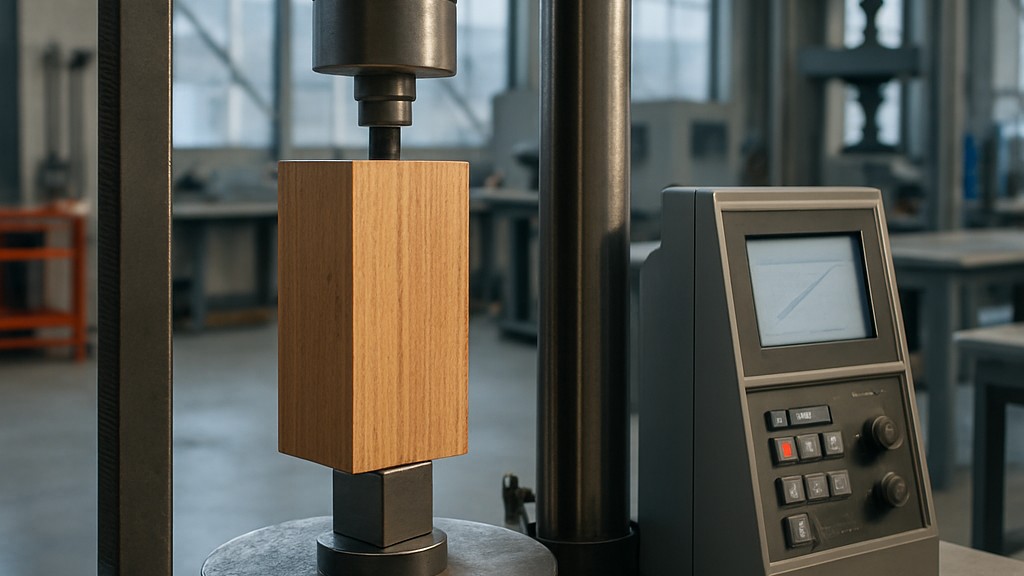
The DIN 52182 standard contains a standard procedure for determining the density of wood. Density is obtained by dividing the mass of a wood sample by its volume and is usually expressed in kilograms per cubic meter (kg/m3). This property is important in assessing the quality of wood because it affects mechanical properties such as compressive strength, hardness, and workability. This standard applies to both solid wood and engineered wood products such as sawn lumber and wood-based panels and is listed under the International Classification of Standards (ICS), code "79.040 Wood, lumber logs, and sawn lumber."
The DIN 52182 standard is used in a variety of industries where wood properties are critical. These include:
This standard is particularly important for quality control and ensures that wood products meet specific performance criteria for density under standardized conditions.
Essentially, density is the ratio of a material's mass to its volume, and like all materials that absorb water, wood's density changes with changes in moisture content. This is because moisture increases the wood's total mass and can also change its volume. Unlike specific gravity, density refers to both mass and volume at the current moisture content. In other words, density takes into account the mass of water. Wood density is one of the most common indicators of solid wood strength and hardness, elasticity, tensile strength, and pulp yield.
The DIN 52182 standard test method includes a systematic approach to accurately measuring wood density. The general steps of this method are:
Tests are performed under controlled environmental conditions to minimize variations due to temperature or humidity. Accredited laboratories can perform DIN 52182 tests using specialized equipment such as precision balances and dimensional measurement instruments.
The DIN 52182 standard plays a vital role in the wood industry for several reasons:
The DIN 52182 standard is part of a series of DIN standards related to wood testing. For example,
Collectively, these standards provide comprehensive evaluation of wood properties for a variety of applications.
The implementation of the DIN 52182 standard presents some challenges, such as:
In short, determining wood density is necessary in various sectors, especially construction, furniture manufacturing and equipment production, for the following critical reasons:
Determining wood density is essential for optimizing material selection and cost while ensuring quality, performance, and safety. DIN 52182 and similar standards provide a reliable and repeatable method for measuring this property, helping industries deliver high-quality, durable wood products.
As a result, DIN 52182 is a fundamental standard in wood technology, providing a reliable method for determining wood density to ensure quality and performance in a variety of applications, from construction to toolmaking. Its rigorous methodology and global recognition make this standard an indispensable tool for manufacturers, suppliers, and researchers. By adhering to DIN 52182, the wood industry can maintain consistency, meet regulatory requirements, and deliver high-quality products that stand the test of time.
Our organization, which has been operating for many years and meticulously follows global developments in science and technology, employs a skilled team and extensive infrastructure to conduct testing, measurement, and analysis in a wide range of areas for businesses across all sectors. In this context, we also provide testing services in accordance with the DIN 52182 "Testing of Wood - Determination of Density" standard.
To get an appointment, to get more detailed information or to request an evaluation, you can ask us to fill in our form and reach you.

